About this place
Mairie déléguée de Concourson-sur-Layon is the local town hall serving the former commune of Concourson-sur-Layon, now a delegated commune within Doué-en-Anjou in the Maine-et-Loire department, right in the historic heart of Anjou's Layon valley. The village counts roughly 560 residents, known as Concoursonnais, spread across a communal area of just under 18.2 square kilometres.
Where exactly is Concourson-sur-Layon?
The village sits in the Pays de la Loire region, on the south-eastern edge of the Armorican Massif, among the vine-covered hillsides that line the Layon river. That hillside exposure is what allows grapes here to ripen longer than in many other French wine regions, a factor that shapes the entire local winemaking tradition.
How did the mairie déléguée come about?
On 31 December 2016, Concourson-sur-Layon merged with neighbouring communes to form the new municipality of Doué-en-Anjou. The former town hall kept its role as a mairie déléguée, a local service point for residents headed by a maire délégué (currently Bruno Billy). This arrangement is common across France's recent wave of commune mergers, letting villages keep a local identity and point of contact while administration is streamlined at a higher level.
What does the local history look like?
The settlement is first mentioned as early as the 7th century, and by the 11th century it appears in records under the name Coorthgothoni. Two churches stood here at the time: one dedicated to Saint Martin, under the authority of the abbey of Saint-Maur-sur-Loire, and another dedicated to Saint Hilaire. Both operated as independent priories until they were united in the 14th century. Coal seams in the surrounding area were mined during the 16th and 17th centuries, and traces of that mining past still shape the landscape and feature on local heritage trails today.
What can visitors see on site?
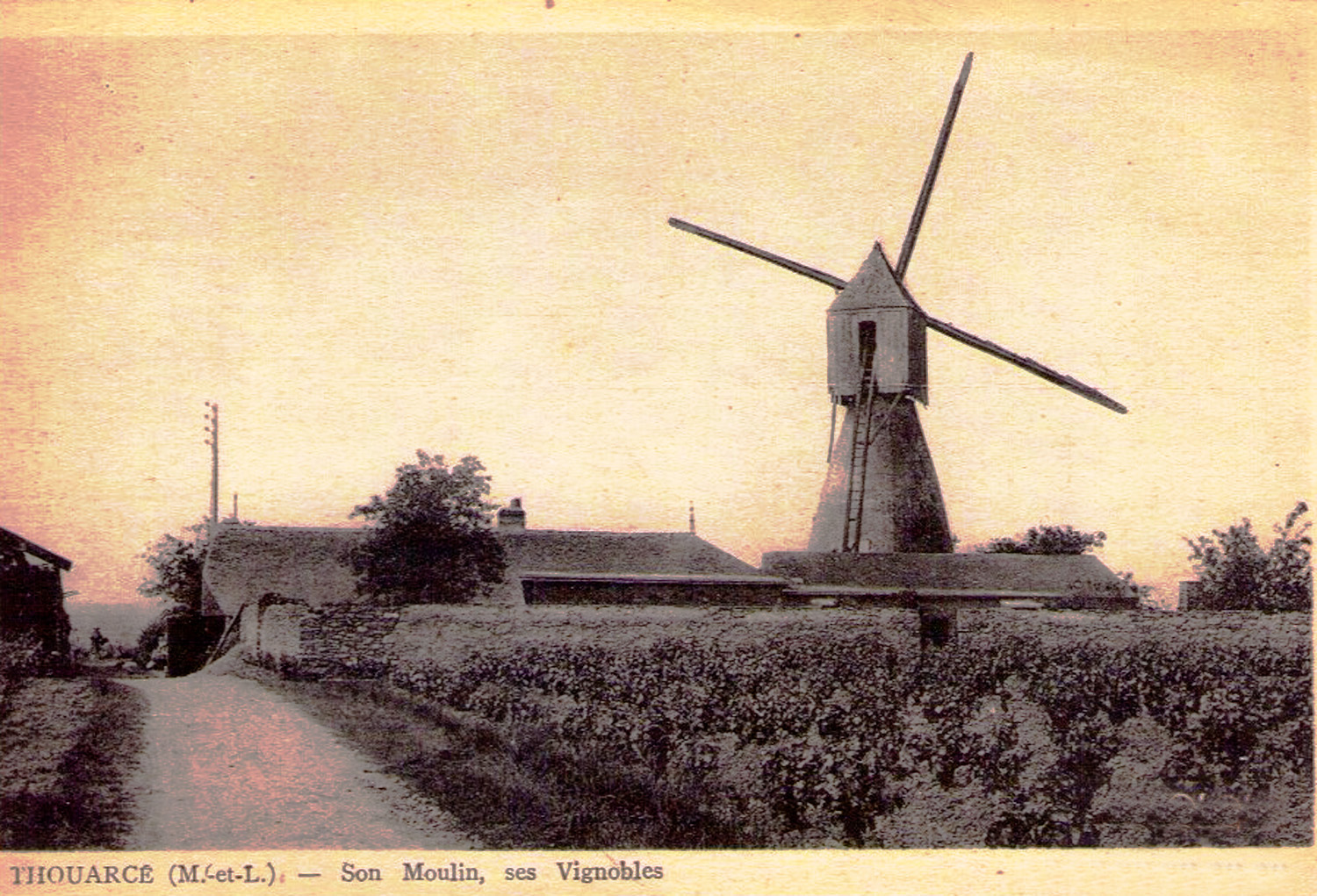
Highlights include the église Saint-Hilaire, the former Benedictine priory of Saint-Martin, and the stone vigneron cabins (cabanes de vignerons) scattered among the vineyards. Several mills survive as well, including the windmill known as the moulin des Bleuces, alongside the old manor house of the Seigneurie. Doué-en-Anjou regularly organises guided heritage walks through Concourson-sur-Layon, covering its vineyards, mills, and oldest buildings.
What is the area known for in terms of wine?
Concourson-sur-Layon lies within the Coteaux du Layon appellation, celebrated for its sweet white wines. The vineyards climb the sun-facing slopes of the Layon valley, and the local microclimate encourages noble rot, concentrating sugar in the grapes and giving the wines their distinctive sweetness.
How can visitors explore the area actively?
Hikers can follow a roughly 16.9-kilometre trail starting either in Concourson-sur-Layon or in neighbouring Saint-Georges-sur-Layon, winding through vineyards and past former coal-mining sites — a route that ties the region's industrial past to its winemaking heritage.
Frequently Asked Questions
Is Concourson-sur-Layon still an independent commune? No — since the end of 2016 it has been a delegated commune within Doué-en-Anjou, though it retains its own mairie déléguée serving residents locally.
How many people live in Concourson-sur-Layon? The village has around 560 inhabitants across an area of just under 18.2 square kilometres.
What wine is the area known for? Sweet white wine from the Coteaux du Layon appellation, grown on the sun-facing slopes along the Layon river.
What are the main things to see in Concourson-sur-Layon? The église Saint-Hilaire, the former Saint-Martin priory, vigneron cabins, several mills including the moulin des Bleuces, and remnants of the area's old coal mines.
Nearby places

Earn badges for the places you visit
Download NextOnTrip, discover new places and check off your trails.