About this place
The Luis Carrero Blanco monument in Santoña stands on the seafront promenade beside the river estuary, and it is one of the town's most recognizable — and most contested — landmarks. Rising roughly twenty meters, it has sparked debate for decades over how Santoña should remember its most famous native son.
Where is the monument and what does it look like?
The monument sits on the promenade along the river mouth (paseo de la ría), in plain view of visitors walking the waterfront. Its shape is that of a giant ship's helm, topped by a figure of an angel offering tribute alongside a compass rose. At the base of the stone monolith stand figures representing the four cardinal virtues, accompanied by plaques and bas-reliefs honoring Carrero Blanco as Santoña's "favorite son" (hijo predilecto).
Who designed it and when was it built?
The stone monument was created by Spanish sculptor Juan de Ávalos, known for several large-scale works from the Francoist era. It was built in 1976, but only formally inaugurated in 1996 — well after Franco's death and Spain's transition to democracy, a timing detail that is itself part of the ongoing controversy surrounding the piece.
Who was Luis Carrero Blanco?
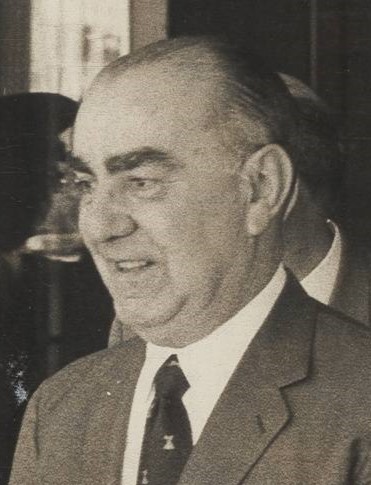
Luis Carrero Blanco was born in Santoña in 1904. He rose to become a Navy admiral and the closest, longest-serving confidant of dictator Francisco Franco, and from 1973 served as President of the Spanish Government, the equivalent of prime minister. He was killed that same year in a bomb attack carried out by the terrorist group ETA in Madrid, one of the most notorious political killings of the late Franco era.
Why is the monument controversial today?
Because Carrero Blanco remains a symbol of the Francoist power structure, the presence of a monument to him on public land in Santoña has long drawn objections from advocates of democratic memory. In May 2026, Spain's Ministry of Territorial Policy and Democratic Memory formally opened proceedings to add the monument to the official catalog of symbols contrary to democratic memory, a step that could ultimately require its removal or alteration. At the same time, local groups — including part of the town council — argue that Carrero Blanco should be recognized as a victim of terrorism, and point to that status as grounds for preserving the monument. The dispute remains unresolved, and the site still appears in the town's own tourism materials as a point of interest.
Is it worth visiting while in Santoña?
Political context aside, the monument is a fixed landmark on the riverside walking route and a piece of local history that is hard to miss along the promenade. For visitors interested in twentieth-century Spanish history and the country's ongoing reckoning with the dictatorship's legacy, it offers a concrete, physical example of that unresolved debate.
Frequently Asked Questions
Where exactly is the Carrero Blanco monument located? On the seafront promenade in Santoña, along the river estuary (paseo de la ría), in an easily accessible spot for pedestrians.
Who designed the monument? Sculptor Juan de Ávalos, known for numerous large-scale works from Spain's Francoist period.
Will the monument be removed? As of May 2026, Spanish authorities have opened a procedure to list it as a symbol contrary to democratic memory, but no final decision has been made — it remains a live political dispute at both local and national level.
Is there an entry fee? No — the monument stands on an open public promenade and can be viewed free of charge at any time.
Nearby places

Earn badges for the places you visit
Download NextOnTrip, discover new places and check off your trails.