About this place
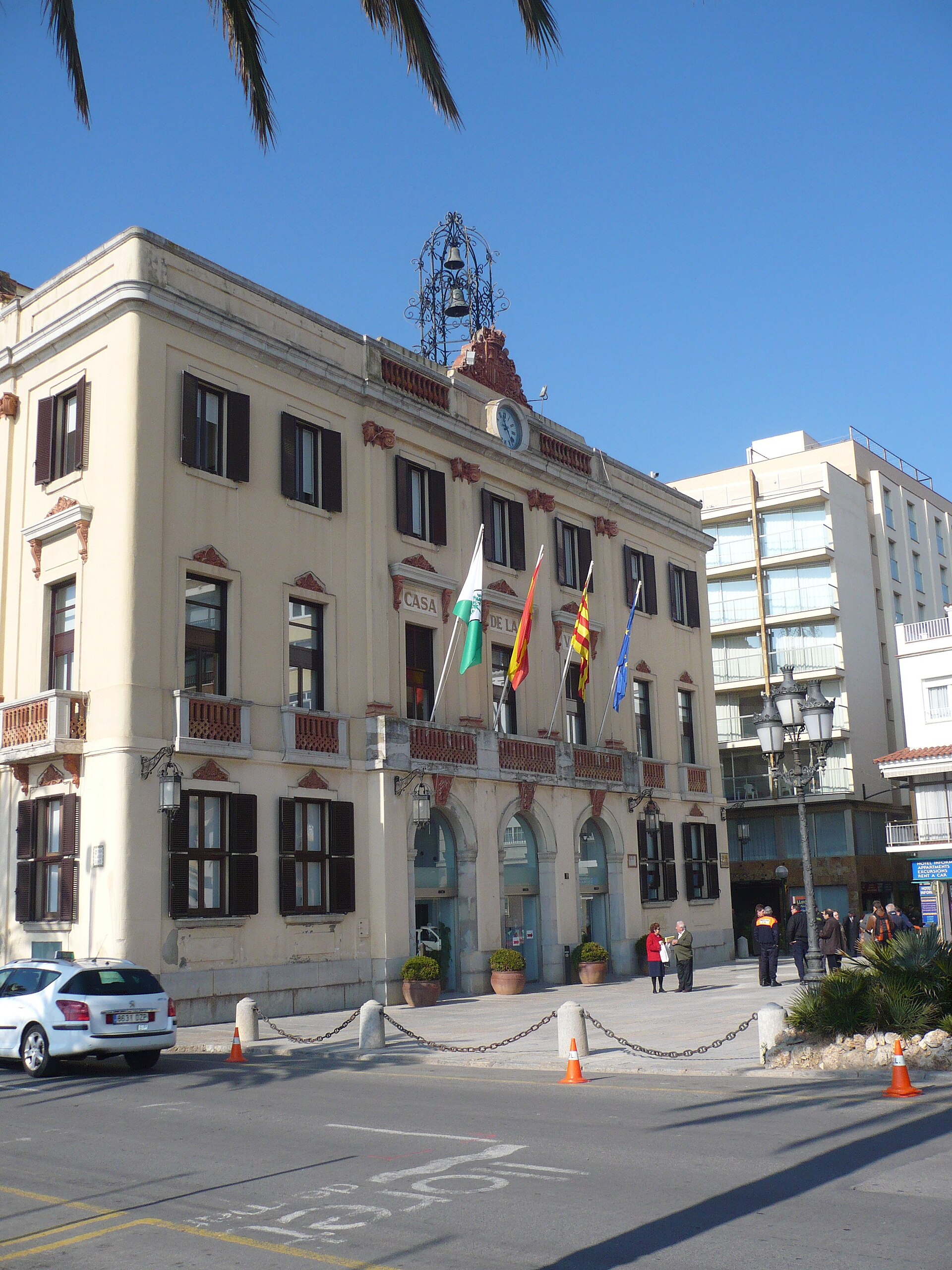
Lloret de Mar Town Hall (Ajuntament de Lloret de Mar, or Casa de la Villa) is the neoclassical seat of local government standing right on the seafront promenade of Lloret de Mar, one of the best-known resort towns on the Costa Brava. Its wrought-iron clock tower and pale facade make it one of the most recognizable landmarks along the shoreline walk.
Where does the building come from?
The town hall was built in 1872, designed by architects Marí Sureda and Félix de Azúa, during a period when Lloret was flourishing thanks to its "indianos" — locals who had emigrated to the Americas, made fortunes in trade and shipping, and returned home to invest in their native town. These returning emigrants financed many of the public buildings and villas that still define Lloret's architectural character today. The town hall itself rose beside the site of the town's former shipyards, where vessels were once built to carry emigrants across the Atlantic — a location that quietly links civic authority to the transatlantic journeys that shaped the town.
What stands out architecturally?
The building follows the neoclassical style typical of Catalan civic architecture in the second half of the 19th century: a symmetrical facade, restrained proportions, and understated decoration. Above the entrance rises a wrought-iron bell tower housing a clock installed by Barcelona clockmaker Isidre Bofill. Just above the clock survives one of the few remaining coats of arms of King Amadeo I of Savoy, who ruled Spain from 1870 to 1873 — a rare heraldic detail marking this brief but architecturally visible reign.
Where is it, and how do you spot it while walking around?
The town hall occupies a central spot on Passeig Mossèn Jacint Verdaguer, Lloret de Mar's main seafront promenade, right above the beach. It works as a natural landmark on any waterfront stroll — easy to pick out by its light-colored facade and clock tower, visible from a long stretch of the promenade. The building still functions as the working seat of local administration, so the interior isn't set up as a visitor attraction, but the facade and its surroundings form a natural stop on any route tracing the town's "indiano" heritage.
When is the best time to see it?
The promenade around the town hall is lively year-round, but early morning or evening light works best for viewing the facade, when the sun sits lower and the building's details stand out more clearly. In peak summer the area gets crowded, so it's worth treating the town hall as a brief stop on a longer walk through the historic center, combined with the nearby villas built during the indiano era.
Frequently asked questions
Can visitors go inside the town hall? The building is a working administrative office, so its interior is used mainly by people handling municipal business rather than as a tourist attraction — visits are limited to the facade and surrounding promenade.
Why does a foreign king's coat of arms appear on the building? It belongs to King Amadeo I of Savoy, who reigned over Spain from 1870 to 1873, exactly when the town hall was under construction — the detail survives as a rare trace of that short royal period in Spanish history.
What does "indiano" mean in connection with this building? Indianos were Lloret residents who emigrated to the Americas seeking fortune and later funded public buildings and villas back home; the town hall stands near the site of the old shipyards linked to their transatlantic voyages.
How long does it take to see the town hall on a walk? The facade itself takes only a few minutes to appreciate, but it's worth pairing it with a longer stroll along Passeig Mossèn Jacint Verdaguer and through Lloret de Mar's old town, which together take about an hour.
Nearby places

Earn badges for the places you visit
Download NextOnTrip, discover new places and check off your trails.