About this place
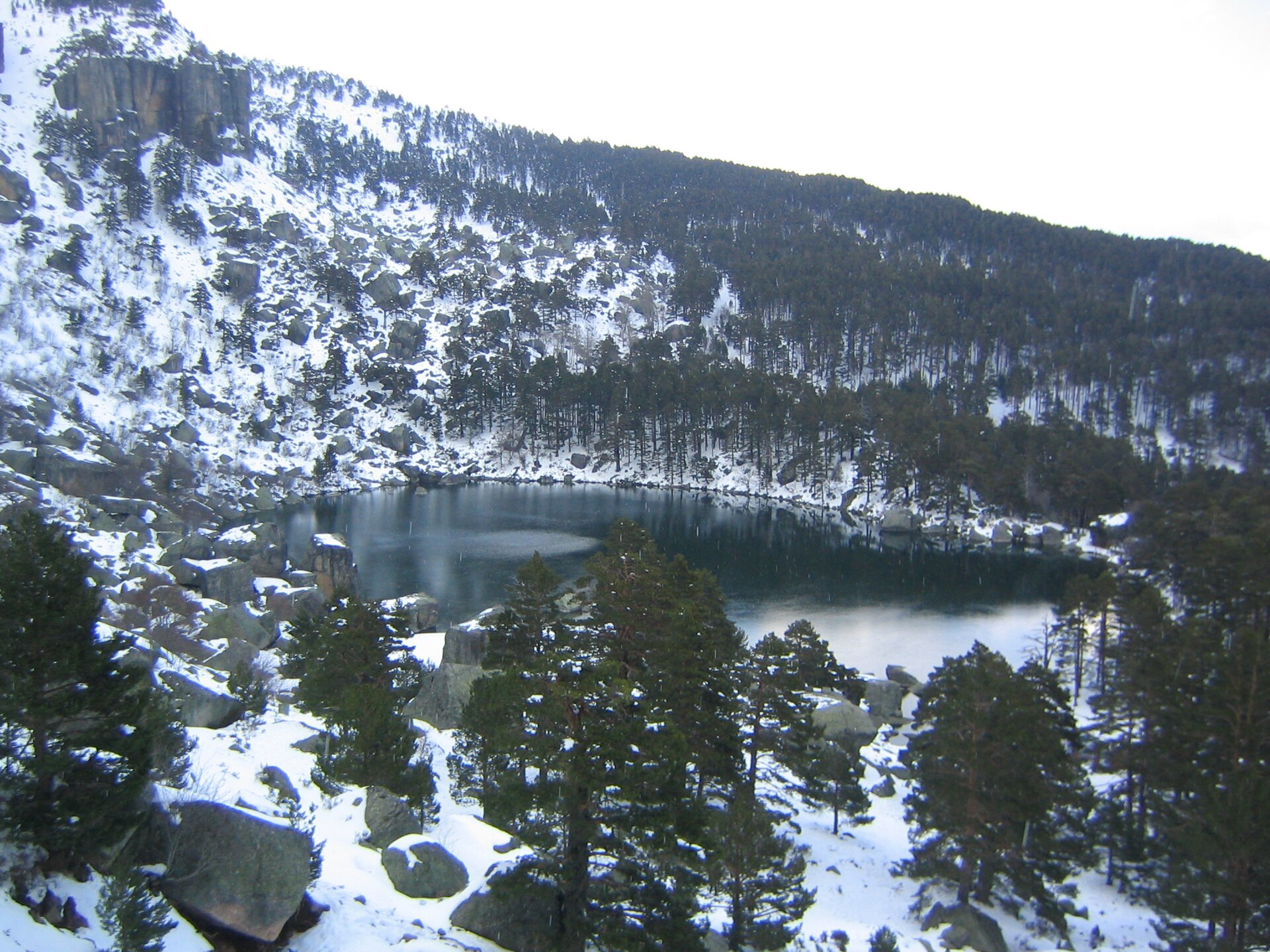
Laguna Negra de Urbión is a glacial lake in the Sierra de Urbión, within the municipality of Vinuesa, in the province of Soria, Castile and León. It formed during the Ice Age inside a glacial cirque hemmed in by rock walls, which gives the water its dark, almost black tone and its name. The lake sits within the Laguna Negra and Urbión Glacial Cirques Natural Park and ranks among the most recognizable natural landmarks in Soria province.
How do you get there?
From the city of Soria, the easiest route is the N-234 toward Burgos as far as Cidones, where you turn right toward Vinuesa. From Vinuesa, take the SO-830 toward Montenegro de Cameros, a road that winds through the scenic Revinuesa valley. After roughly 9 km, turn left and continue to the car park at Paso de la Serrá. During peak periods — summer and Easter week — this is as far as private cars can go; visitors then walk the final stretch of about 2 km or take a shuttle bus up to the lake.
What will you see there?
The lake sits inside a glacial cirque ringed by steep rock walls, with views toward the Urbión peak itself. A path circles the shore, letting visitors walk the perimeter at a relaxed pace and watch the surrounding cliffs mirrored in the still water. Local legend long held that the lake was bottomless and connected to the sea through underground channels; measurements have since shown its actual depth does not exceed 8 metres. The area also serves as a starting point for longer hikes through the Sierra de Urbión, including the ascent to the Urbión summit.
The legend of Alvargonzález
Laguna Negra is closely tied to the poet Antonio Machado, who, while teaching French in Soria, climbed to the Urbión peak in October 1910 to see the lake. Inspired by the setting, he wrote the narrative poem "La tierra de Alvargonzález," a fictional tale loosely drawing on local folklore about a family tragedy: two sons murder their father and throw his body into the lake weighted down with a stone, only to later drown themselves there, driven by guilt. This literary legend gave rise to the "Ruta de Alvargonzález," a hiking route that visitors can still follow in the area today.
When is the best time to visit?
Late spring and summer are the best times to visit, when access roads and trails are fully open and the vegetation around the lake is at its greenest. Autumn, particularly October, has its own appeal thanks to the colours of the surrounding beech and pine forests. Winter access can be difficult because of snow, so it is worth checking road conditions and any access restrictions before setting out.
Frequently asked questions
How far is Laguna Negra from the city of Soria? The lake lies about 50 km from Soria, and the drive typically takes a little over an hour, depending on the season and traffic.
Do you have to walk to reach the lake? During summer and Easter week, cars must stop at the Paso de la Serrá car park, from where it is about a 2 km walk to the lake, or you can take the shuttle bus that runs during peak season. Outside these periods, vehicle access usually reaches closer to the shore.
Is the lake really bottomless, as the legend claims? No — that is a popular myth. Measurements have confirmed that the lake's depth does not exceed 8 metres.
Where does the Alvargonzález name associated with this place come from? It comes from Antonio Machado's poem "La tierra de Alvargonzález," inspired by the Laguna Negra area, which later gave its name to a local hiking route that follows the poem's themes.
Nearby places

Earn badges for the places you visit
Download NextOnTrip, discover new places and check off your trails.