About this place
Laguna de la Nava is one of the most significant artificially restored wetlands on the Iberian Peninsula, located in the province of Palencia, Castile and León, near the town of Fuentes de Nava. The site sits at coordinates 42.0667, -4.75. While it's known today mainly as a birdwatching destination, its history stretches back much further than the last few decades and illustrates just how dramatically human activity can reshape a landscape — and, with enough determination, partially restore it.
What was Laguna de la Nava before it was drained?
Originally, this location held a vast steppe lagoon, also known as Mar de Campos, covering an area of around 2,500 hectares. It ranked among the largest wetlands on the Iberian Peninsula and held major ecological importance for the wider Castile and León region. For centuries it acted as a natural retention basin for rainwater and snowmelt draining from the surrounding plains, forming a unique steppe-wetland ecosystem.
Why did the lagoon disappear in 1968?
Throughout the 20th century, several drainage attempts were made in order to convert the land into new farmland. Eventually, in 1968, Laguna de la Nava ceased to exist as a wetland — the area was turned into agricultural fields. This decision, typical of Spain's post-war agricultural policy, resulted in the loss of one of the country's most valuable habitats for waterfowl.
How was the wetland brought back?
Since 1990, a wetland recovery project has been underway, carried out by the Global Nature Foundation in cooperation with various administrative bodies. Thanks to this work, around 400 hectares of the original wetland have been restored. That's still only a fraction of its former extent, but enough for the ecosystem to once again function as a resting and wintering ground for migratory birds.
What is the significance of Laguna de la Nava today?
Today it stands as one of the most important wetlands catalogued both nationally and internationally. In 2002, the site was included on the list of the Ramsar Convention on Wetlands of International Importance, confirming its ecological standing on a continental scale.
What birds can be seen at Laguna de la Nava?
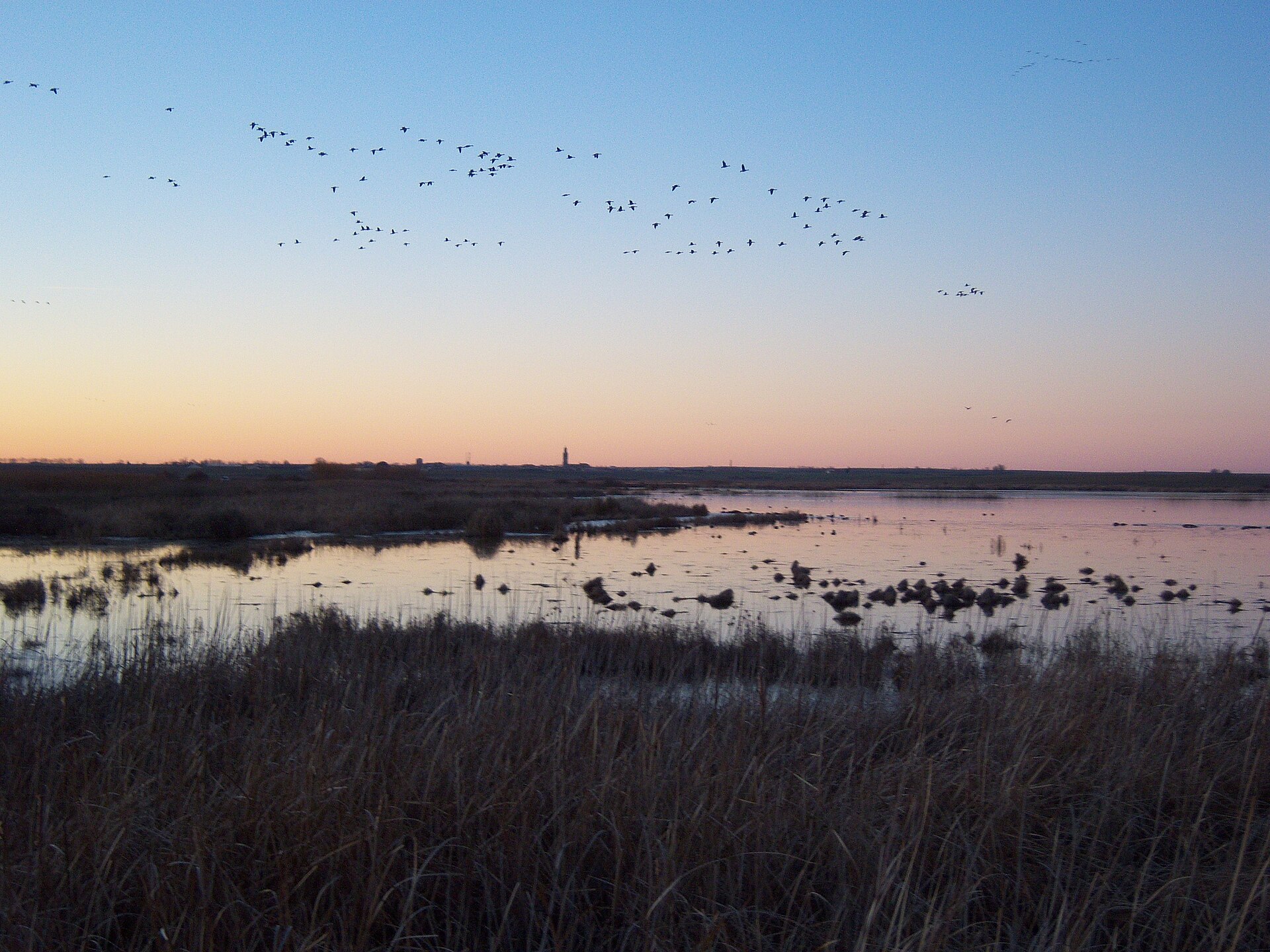
The lagoons put on a striking natural spectacle — hundreds of birds wintering in these waters. An inventory has recorded 222 bird species here, representing 41% of all species found in Spain, including the islands. In autumn, thousands of geese and ducks arrive from Northern Europe. From October to March, the lagoon hosts large contingents of waterfowl, with numbers reaching up to 20,000 birds in some winters.
How do you get there and where can you watch the birds?
The Humedal de la Nava lies along the P-940 road. Before reaching the town of Fuentes de Nava, there is a parking area on the left side of the road, and bird observation points on the right, designed to allow ornithological observation without disturbing the wildlife.
Frequently asked questions
Has Laguna de la Nava always looked the way it does today? No — the original lagoon was far larger (around 2,500 ha) and disappeared in 1968 after being drained for farmland.
When did the wetland restoration begin? Recovery efforts have been underway since 1990, led by the Global Nature Foundation together with administrative institutions.
Does the site have protected status? Yes, since 2002 it has been listed under the Ramsar Convention as a wetland of international importance.
How many birds can be seen in winter? In some winters, the number of waterfowl reaches as many as 20,000 birds, mainly geese and ducks.
Nearby places

Earn badges for the places you visit
Download NextOnTrip, discover new places and check off your trails.