About this place
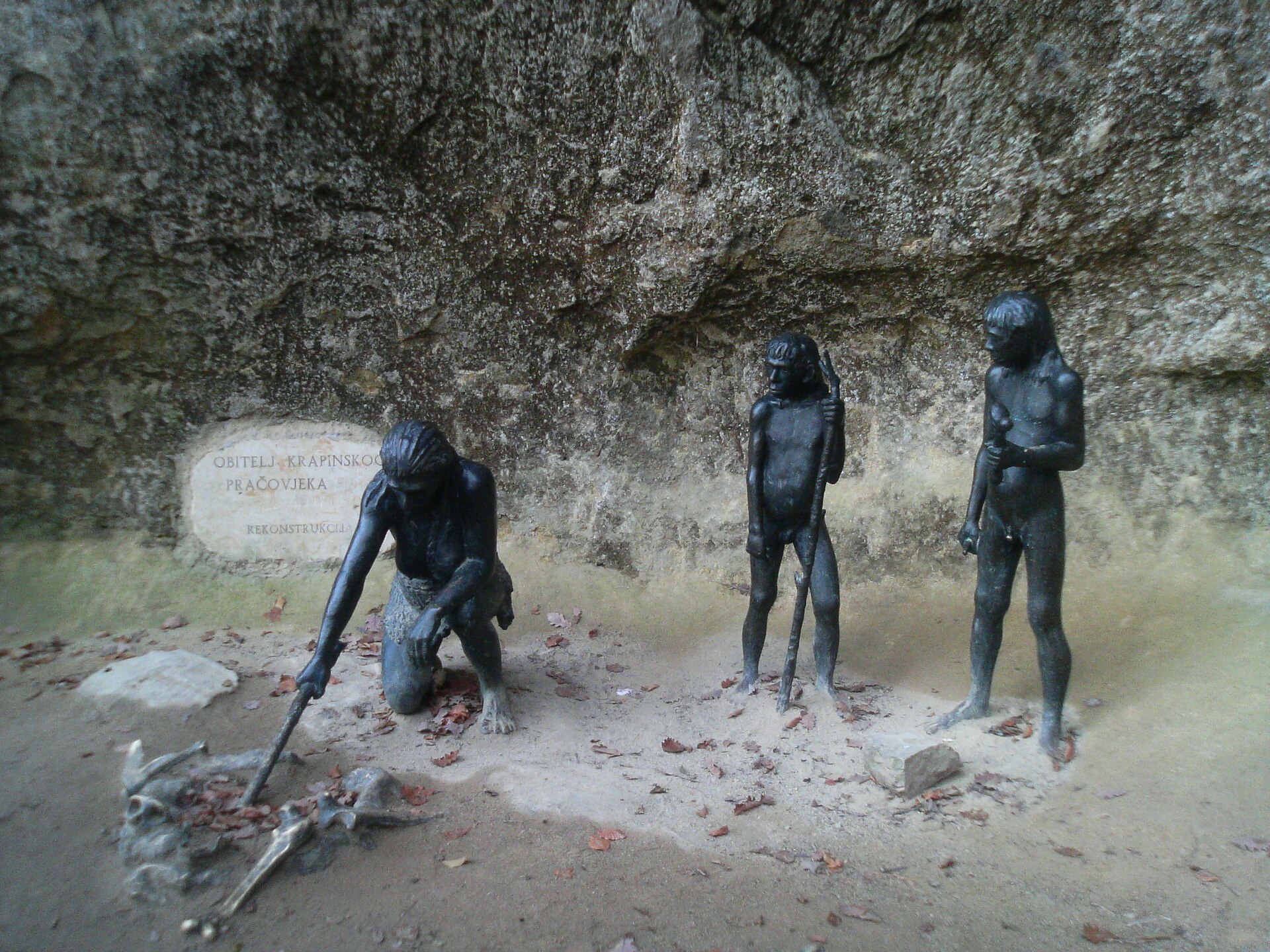
The Krapina Neanderthal Museum sits on Hušnjakovo hill right beside the town of Krapina in northern Croatia, roughly 55 km from Zagreb. It marks one of the most significant sites in world paleoanthropology — the place where the largest single collection of Neanderthal remains ever found came out of the ground.
Why does this hillside matter so much?
Between 1899 and 1905, Croatian paleontologist Dragutin Gorjanović-Kramberger excavated the cave deposits on Hušnjakovo hill and changed how Europe understood human origins. His digs turned up close to 900 Neanderthal bones, over a thousand stone tools, and thousands of animal bones, all dated to roughly 125,000 years ago. No other site on Earth has yielded that many Neanderthal remains from a single location, which is why Krapina still shows up in anthropology textbooks more than a century later.
What's actually inside the museum?
The current museum building opened in February 2010. It spreads across 1,200 square meters on two levels, built partly into the slope between Hušnjakovo and the neighboring Josipovac hill. The exhibition walks visitors through cosmic and geological history, biological evolution, and finally the story of human development and the Krapina Neanderthals themselves. The standout feature is a set of 17 hyper-realistic Neanderthal reconstructions created by French sculptor Élisabeth Daynès, whose work appears in museums worldwide. A separate section recreates 19th-century life in Krapina and the circumstances of the original discovery. A forest path leads directly from the museum building to the Hušnjakovo site itself, where visitors can see the remains of the cave the Neanderthals once inhabited.
How do you get there?
Krapina sits right on the A2 motorway connecting Zagreb and Maribor, so driving from the Croatian capital takes about an hour. Buses and trains also run from Zagreb to Krapina; from the town center it's a short walk or taxi ride up to the museum on Hušnjakovo hill. On-site parking is available.
When should you go, and what does it cost?
The museum runs guided tours in Croatian and English, plus audio guides in eight languages: Croatian, Slovenian, English, French, German, Italian, Czech, and Hungarian. Admission runs around €10–15. Plan for at least an hour and a half to two hours to cover both the exhibition and the forest walk to the actual site. Spring and autumn make for the most comfortable walk up the hill, while summer visitors are better off arriving early to beat the heat and the crowds.
Frequently asked questions
How long does a visit to the museum and the Hušnjakovo site take? The exhibition alone usually takes 60–90 minutes. Add the forest walk to the archaeological site and you should budget close to two hours in total.
What exactly was found on Hušnjakovo hill? Excavations uncovered around 900 Neanderthal bones, more than a thousand stone tools, and several thousand animal bones — the richest single-site collection of Neanderthal remains in the world.
Who led the excavations in Krapina? Croatian paleontologist Dragutin Gorjanović-Kramberger directed the digs between 1899 and 1905, and his findings remain a reference point in Neanderthal research today.
Can you reach the museum without a car? Yes — buses and trains connect Zagreb to Krapina, and the museum on Hušnjakovo hill is a short walk or taxi ride from the town center.
Nearby places

Earn badges for the places you visit
Download NextOnTrip, discover new places and check off your trails.