- Sacred Monuments
- Churches
Church of the Assumption of the Virgin Mary (Ústí nad Labem)
About this place
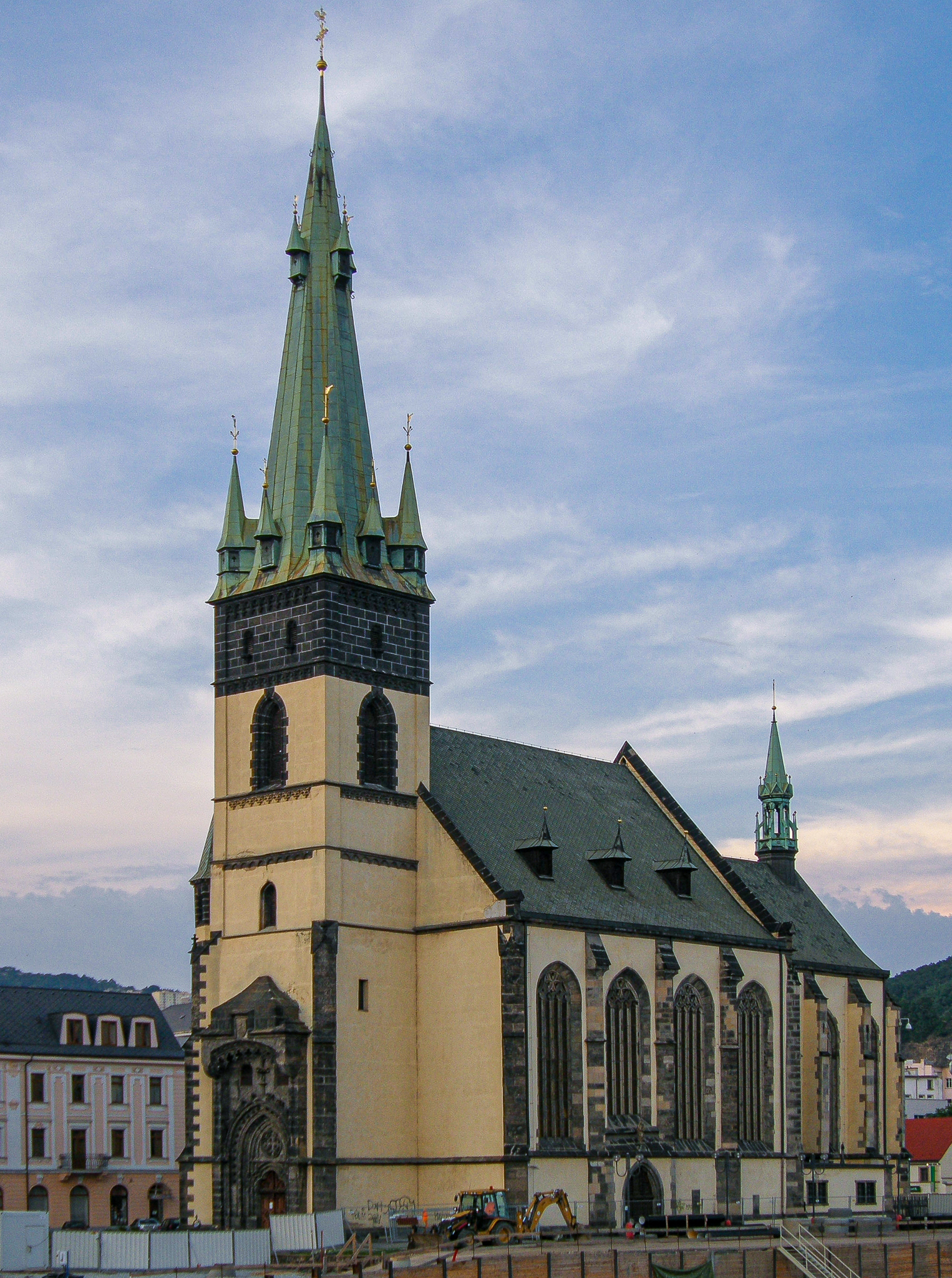
The Church of the Assumption of the Virgin Mary in Ústí nad Labem is a Roman Catholic archdeaconry church standing on Kostelní náměstí, just below the city's main square, Mírové náměstí, right in the historic centre. Its unmistakable leaning tower rises above the surrounding rooftops and has become one of the most recognisable landmarks of the city.
What is the history behind the church?
A church on this site can be traced back to the late 12th century, when it likely took the form of a Romanesque basilica with a tower set into the axis of the west front. Ústí nad Labem received town rights between 1233 and 1249 under King Wenceslaus I, and the earliest written record of the church itself dates to 1249. Following a fire that devastated the town around 1318, a new building went up on the site of its predecessor - a church built in the Bohemian-Saxon late Gothic style, architecturally related to the churches in Most, Louny and Pirna just across the border in Saxony.
The building suffered again during the Hussite Wars: Hussite forces plundered it in 1426, and reconstruction did not begin until the 1450s. The hall-type, three-aisled interior visitors see today dates from that post-war rebuilding. Its present, largely neo-Gothic appearance is the result of a late-19th-century renovation carried out under architect Josef Mocker, the same architect who worked on the completion of St. Vitus Cathedral in Prague.
Why does the tower lean?
The church's most distinctive feature - its tower - owes its tilt to the closing months of the Second World War. During the bombing of the city in April 1945, the tower was damaged and shifted off its vertical axis. Today, at 65 metres tall, it leans by just over 2 metres, making it the fourth most tilted church tower in Europe. That quirk of history is precisely what draws architecture enthusiasts to seek the church out.
What can visitors see inside?
Inside stands the main altar, a winged late Gothic piece dated to 1498 and attributed to the workshop of P. Breuer and H. Hesse - one of the more valuable pieces of sacred art in the Ústí region. The leaning tower itself still holds three bells: one known as Susanna, weighing 250 kilograms and the largest bell in the entire Ústí nad Labem district, another called Willeborte, and a third late Gothic bell.
How to get there and when to visit?
The church sits right in the middle of Ústí nad Labem, on Kostelní náměstí, only a short walk from the central Mírové náměstí - an easy stop on foot while exploring downtown. Thanks to its tilted tower, visible from a distance above the rooftops, the building is hard to miss even for first-time visitors navigating the centre. Visiting during daylight hours is recommended, since natural light makes it far easier to appreciate the extent of the tower's lean and to pick out the architectural details of the façade.
Frequently asked questions
Why does the church tower lean? The tower was damaged during the bombing of Ústí nad Labem in April 1945, near the end of the Second World War, and has leaned more than 2 metres off vertical ever since.
Is it the most tilted tower in Europe? No, but it ranks fourth among the most leaning church towers on the continent.
What architectural style is the church built in? It combines Bohemian-Saxon late Gothic elements - the body of the church and its three-aisled interior - with a neo-Gothic remodelling completed in the late 19th century by architect Josef Mocker.
What is the most valuable object inside? The late Gothic main altar from 1498, attributed to P. Breuer and H. Hesse.
Nearby places

Earn badges for the places you visit
Download NextOnTrip, discover new places and check off your trails.