About this place
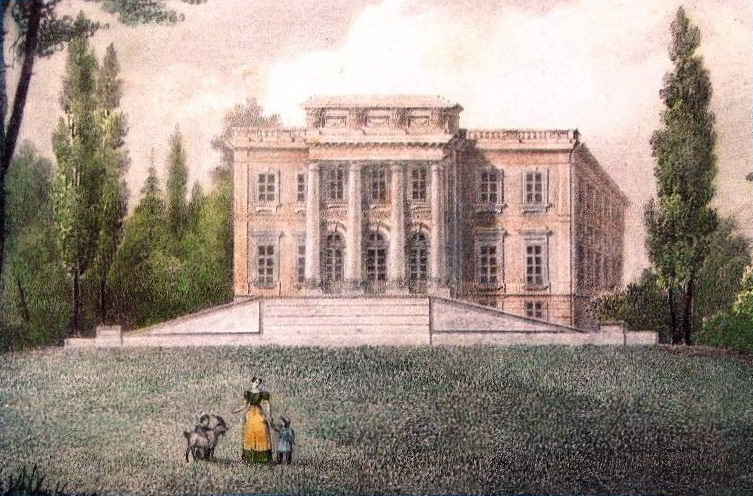
Kasteel Ruffo de Bonneval is a brick castle in swirling nineteenth-century eclectic style, standing between the Waregemsestraat and Vijverdamstraat in Nokere, a village belonging to the municipality of Kruisem in East Flanders, Belgium. The building sits within a seven-hectare landscape park laid out in the English style, making it a rewarding stop for anyone interested in nineteenth-century architecture or a quiet walk through greenery not far from Ghent.
Where does the castle's name come from?
The name refers to the Ruffo de Bonneval family, an Italian-French noble line linked to the estate's major nineteenth-century transformation. It was on the request of Marquis Pierre Ruffo de Bonneval that the building received the distinctive appearance it still has today.
How did the building change over time?
The estate's history goes back to the late eighteenth century, when a forest pavilion belonging to the nearby Kasteel Casier was built here in the Empire style. It was only in 1880, at the initiative of Marquis Pierre Ruffo de Bonneval, that architect Charles De Craene added towers to the structure, giving it the compact, turreted silhouette typical of nineteenth-century eclecticism. In the same period, a water tower was built on the grounds and a winding, serpentine pond was dug, both of which remain characteristic features of the park today.
What does the interior of the castle look like?
The preserved interior largely dates from the nineteenth century. At its core is a central hall, around which a series of reception rooms, or salons, are arranged. This layout, common in aristocratic residences of the period, allowed guests to move smoothly between rooms intended for receiving visitors without passing through separate corridors.
Who was the last family owner, and what happened to the castle afterwards?
One of the last family members connected to the estate was Jacques Ruffo de Bonneval, a nephew of Queen Paola of the Belgians. He sold the castle to a Waregem-based entrepreneur named Renson, who undertook its restoration. The renovation work was completed in 2007, which helped preserve the building in good condition to this day; it remains privately owned.
Why is the castle considered an example of eclectic architecture?
Nineteenth-century eclecticism involved freely combining elements drawn from different historical periods and styles — neo-Gothic, Renaissance, or Baroque — into a single, coherent composition. Kasteel Ruffo de Bonneval, with its towers added to an earlier, more restrained Empire-style structure, is exactly this kind of example: it merges the simplicity of late eighteenth-century forms with the more decorative, picturesque architectural language of the later nineteenth century. For this reason, the building is listed in the Flemish inventory of immovable heritage.
What else can be found around the castle?
The seven-hectare park was designed in the spirit of an English landscape garden, with irregular paths, clusters of trees, and the already-mentioned winding pond. A water tower once stood on the grounds as well, built alongside the 1880 works, and it remains one of the local landmarks of the area around Nokere today.
Frequently asked questions
Where exactly is Kasteel Ruffo de Bonneval located? In Nokere, a village within the municipality of Kruisem, East Flanders, Belgium, between the Waregemsestraat and Vijverdamstraat.
Can the castle be visited? The building remains privately owned following its 2007 restoration — it is worth checking local tourism information about park and building access before planning a visit.
What architectural style does the castle represent? Eclectic, with roots in the late eighteenth-century Empire style and towers added in 1880.
Who commissioned the castle's nineteenth-century transformation? Marquis Pierre Ruffo de Bonneval, at whose request architect Charles De Craene designed the towers added to the existing building.
Nearby places

Earn badges for the places you visit
Download NextOnTrip, discover new places and check off your trails.