About this place
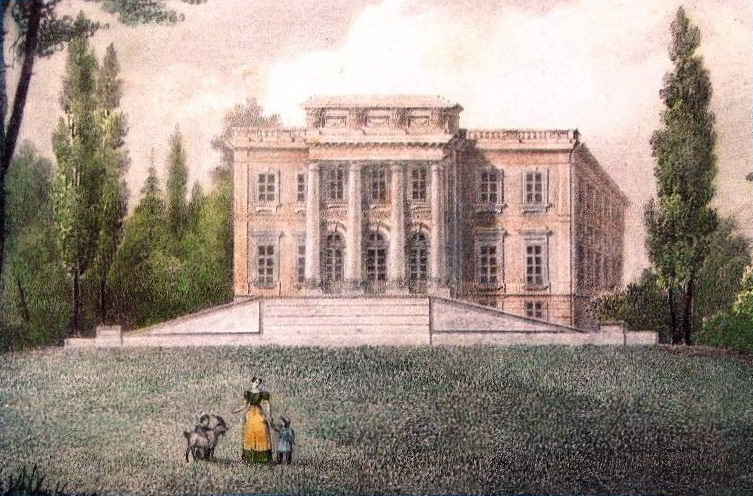
Castle of Wannegem-Lede is a classical country residence in the village of Wannegem-Lede, now part of the municipality of Kruisem, in the East Flanders province of Belgium. It is sometimes nicknamed the Flemish "Petit Trianon" for its restrained, classically inspired architecture in the Louis XVI idiom — a comparison to the small pavilion at Versailles, admired for a similar sense of balance and symmetry.
Where does the estate's history begin?
The land on which the castle now stands once belonged to the old lordship of "Ten Heuverhuus", first recorded as far back as the 13th century. In 1765 the estate was bought by Baron François Baut de Rasmon, a wealthy merchant from Ghent. His grandfather had been among the co-founders of the Imperial and Royal Indies Company, also known as the Ostend Company, established in 1722 with a trading monopoly covering Africa and Asia. The wealth generated by this colonial trading venture gave later generations of the family the means to build a residence befitting their status.
Who designed the castle?
The present classical building was constructed in 1783 on the commission of Baron Alphonse Baut de Rasmon. The design came from Gilles-Barnabé Guimard, an architect trained under Jacques-Ange Gabriel, one of the architects associated with the Palace of Versailles. Guimard went on to shape parts of central Brussels, designing the Königsplein (today's Place Royale), the Warande park and the Palace of the Nation, which places him among the leading figures of late 18th-century classicism in the Southern Netherlands. Work on the Wannegem-Lede residence continued through 1785-86.
How was the surrounding park laid out?
The park follows the classic "goose-foot" (patte d'oie) design, with three avenues radiating from a single vantage point — a layout widely used in 18th- and 19th-century garden compositions across Europe. The park's design is said to have drawn on the ideas of the German horticultural theorist Christian Cay Lorenz Hirschfeld, a debt commemorated by a memorial stone still standing within the grounds. Around 1900 the estate was enriched with features typical of country properties of that period: a walled kitchen garden with an orangery, an aviary, a walled orchard, and a gamekeeper's cottage supporting the day-to-day running of the domain.
What protection status does the estate hold today?
The castle and its surrounding park were protected as a landscape by royal decree on 8 September 1971. That protection was further refined by a second royal decree on 24 February 1975. As a result, both the building itself and the historic layout of its grounds — the avenues, garden walls, orangery and aviary — remain legally safeguarded elements of East Flanders' architectural and landscape heritage.
Frequently asked questions
Where exactly is the castle located? In the village of Wannegem-Lede, part of the municipality of Kruisem, in the East Flanders province of Belgium.
In what architectural style was it built? In a classical style echoing Louis XVI aesthetics, which is why it draws comparisons to the "Petit Trianon".
Who was the architect? Gilles-Barnabé Guimard, a pupil of Jacques-Ange Gabriel, also known for several projects in central Brussels.
Can the park be visited? The park has held landscape-protection status since 1971, reflecting its historical value, though public access depends on the current arrangements set by the owners or the estate's managers.
Which family is linked to the estate? The Baut de Rasmon family, whose fortune originated in 18th-century colonial trade conducted through the Ostend Company.
Nearby places

Earn badges for the places you visit
Download NextOnTrip, discover new places and check off your trails.