About this place
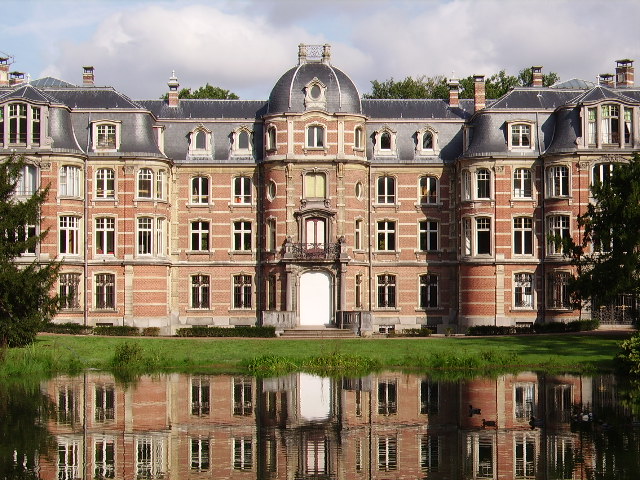
Kasteel Ravenhof is a historic castle located west of the village of Putte-Stabroek, in the municipality of Stabroek in the Belgian province of Antwerp, on the estate of the same name near Oud Broek and Moretusbos. The site layers several centuries of history, from a medieval farmstead to a residence tied to one of Antwerp's most famous printing families.
What are the origins of the castle?
The earliest traces of settlement at this location date back to the 13th or 14th century, when a farmstead stood here. During the 14th and early 15th century, the estate belonged to the Van Steenland family, who called it "Goet van Steenlant." In the 15th century, ownership passed to the Van Immerzeel family, and in 1552 the estate was sold to Cornelis van Tongerlo.
Who actually built the castle?
It was under Cornelis van Tongerlo that a castle in the proper sense was constructed. By 1569, the building was already described as a moated pleasure house ("lusthuis") — a type of leisure residence favored by wealthy townspeople and nobility in the Low Countries during this period.
What is the castle's connection to the Moretus family?
In 1679, the owner at the time transferred the estate to Balthasar Moretus, a descendant of the renowned Antwerp printer Jan Moretus and an heir of Christoffel Plantin, founder of one of the most significant publishing houses in European history. From that point on, the estate was called Moretushof, though it was popularly known as "Crayenhof."
Where does the name Ravenhof come from?
In 1810, the castle was rebuilt in Neo-Louis XV style by Philippe Antoine Joseph de Pret, nephew of Johannes. This section survives today as the central projecting bay (risalit) of the current castle. It was during this period that the name Ravenhof came into use.
How did the castle take its current shape?
Between 1911 and 1920, the then-owner Charles Moretus Plantin added two side wings, giving the castle the form it largely retains today. Charles Moretus Plantin also served as mayor of Stabroek until his death in 1960, making him one of the more notable figures in the municipality's history.
What happened to the castle in the 20th century?
After the expansion, the estate passed into the hands of the Assumptionist Fathers and was renamed Assumptiehof, serving various Catholic organizations over the following decades. In 1979, the municipality of Stabroek purchased the castle along with its outbuildings and park, taking over stewardship of the historic complex.
What can visitors do here today?
Since 1982, various socio-cultural associations have been based at the castle and its grounds, keeping the site a living community hub rather than a purely museum-like monument. The surrounding park and the wider Ravenhof estate also serve as a recreational area, popular among residents and visitors exploring the area around Antwerp.
Frequently asked questions
Where exactly is Kasteel Ravenhof located? West of Putte-Stabroek, in the municipality of Stabroek in the province of Antwerp, near Oud Broek and Moretusbos.
How old is the castle? The site's history dates back to the 13th–14th century, but the castle's current architectural form largely took shape in the 19th and early 20th century, built on the foundations of an earlier 16th-century structure.
Is the castle publicly owned? Yes, since 1979 the castle, its outbuildings, and the park have been owned by the municipality of Stabroek.
What is the castle's link to the printing trade? From 1679, the estate belonged to the Moretus family, heirs of printer Christoffel Plantin, and was known for many years as Moretushof.
Nearby places

Earn badges for the places you visit
Download NextOnTrip, discover new places and check off your trails.