About this place
Kasteel Menten de Horne is a small neoclassical castle in Melveren, a district of Sint-Truiden in the Belgian province of Limburg. Set within a park of mature trees and surrounded by orchards, it is a quiet, lesser-known corner of the region, appreciated more by lovers of local history and residential architecture than by mass tourism.
Where does the name come from?
The name comes from the de Menten de Horne family, whose members lived here during the feudal era. The estate itself, however, has a much older lineage — until the 16th century it belonged to the Abbey of Nonnenmielen, a Benedictine convent based nearby in Metsteren, close to Sint-Truiden. Only from the 16th century onward did the site become independent of monastic authority, opening the way for its later development as a secular estate.
What happened to the family?
The true noble branch of the family, bearing the name de Menten de Horne, was formally established in 1823. The line, however, came to a dramatic end: the youngest male heirs died heroically during the Second World War, causing the family to die out abruptly. It was this family that gave the estate the name by which it is still known today, even though its presence in Melveren dates back much further.
What earlier history does the building hold?
Although the current building dates from the second half of the 19th century, the site had already witnessed dramatic events well before that. In 1792, during the turbulent period of the Revolutionary Wars, monks from the abbey in Sint-Truiden hid their reliquaries here, protecting them from looting or destruction. This episode shows that the estate had long served as a safe refuge in times of danger.
What does the castle's architecture look like?
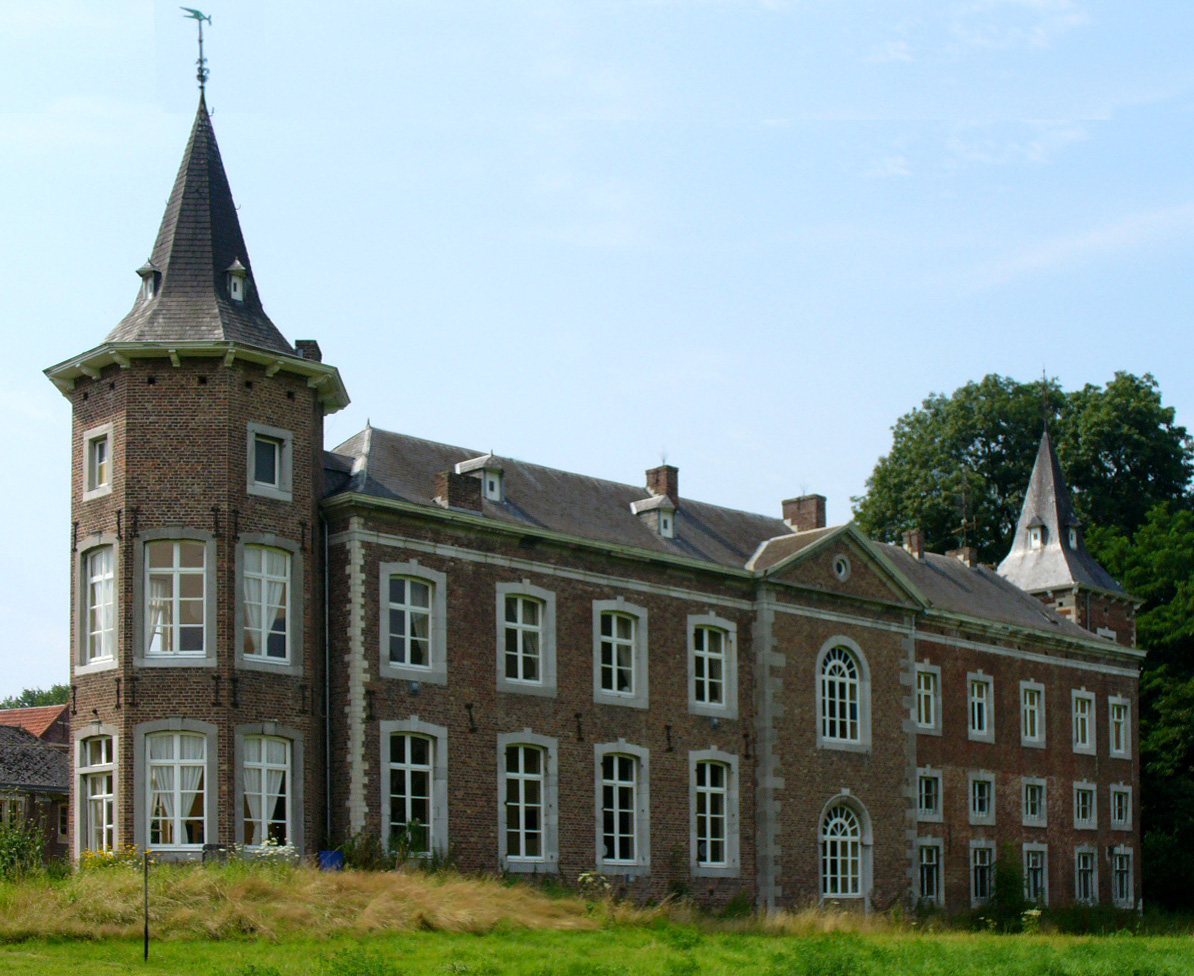
The present building was constructed in the second half of the 19th century in neoclassical style, an architectural direction drawing on ancient models of symmetry and restraint. Built of brick, it stands out for its distinctive round entrance section, reached by a staircase and crowned with a dome. This detail lends the building a sense of lightness and elegance, setting it apart from the sterner, defensive forms of medieval strongholds — even though the name "kasteel" (castle) still echoes the site's earlier feudal tradition.
What is worth seeing around it?
The small castle is surrounded by a park with beautiful, mature trees, itself a landscape asset of the region. On one side, the park borders a meadow with old fruit trees; on the other, a large plantation of low-stem fruit trees, mainly apples and pears. This contrast between a manicured manor park and working orchards captures well the character of Melveren as a place combining historical heritage with the agricultural tradition of Limburg.
Why visit Melveren?
Melveren, as part of Sint-Truiden, lies at the heart of a region known for fruit growing — the surrounding area is famous for stone fruit and apple orchards, which fits naturally with the orchards surrounding the castle. For anyone travelling through Limburg, this is an interesting stop offering a glimpse of a lesser-known but authentic piece of local noble history, away from the busiest tourist routes.
Frequently asked questions
Can Kasteel Menten de Horne be visited inside? Available information mainly covers the estate's history and surroundings; since the building remains privately owned, it is worth checking current access conditions before planning a visit.
Where does the castle's name come from? From the de Menten de Horne family, whose noble branch was established in 1823 and died out during the Second World War.
How old is the estate itself? The estate's history is much older than the current building — until the 16th century it belonged to the Abbey of Nonnenmielen.
What notable event took place here in 1792? Monks from the abbey in Sint-Truiden hid their reliquaries at the site during the unsettled period of the Revolutionary Wars.
Nearby places

Earn badges for the places you visit
Download NextOnTrip, discover new places and check off your trails.