About this place
The Jewish Cemetery in Slatina is a secluded, overgrown burial ground on a wooded hillside near the small village of Slatina in the Klatovy District, in the Plzeň Region of western Bohemia, Czech Republic. For more than two centuries it served the area's Jewish community, and today it remains one of the few physical traces of that community's presence in the region.
Where is it and how do you get there?
Slatina is a small village first recorded in 1254, roughly 34 km east of Klatovy and just under 50 km southeast of Plzeň, with Prague about 90 km further away. The cemetery itself lies about a kilometer north of the village, on an isolated, wooded rise roughly 8 km northeast of the town of Horažďovice. There is no signage marking the site — visitors reach it through a gap in a broken masonry wall and a gate that no longer locks.
A short history
The oldest part of the burial ground predates 1668, and the cemetery was extended in 1723. The earliest legible tombstone dates from around 1750, and the last recorded burial took place in 1937 — shortly before the Second World War brought a violent end to Jewish life across the region. By the 1930 census, no Jewish residents were recorded in Slatina itself, suggesting the community had already dispersed to larger towns before the war.
What survives on site
Spread across just over one hectare (0.1061 ha), the cemetery holds an estimated 100 to 500 tombstones, most still standing in their original positions. They are flat or double-form matzevot cut from granite and limestone, including around 170 stones in Baroque and Classicist styles. Inscriptions appear in three languages — Hebrew, German and Czech — reflecting the mixed cultural background typical of rural Jewish communities in Bohemia. There are no mass graves, buildings or designated sections; it is a modest, typical village Jewish cemetery.
Current condition
The site is heavily wooded and isolated, which has offered some protection from deliberate damage but has also allowed vegetation to take over much of the grounds. The main threats today are uncontrolled visitor access, overgrowth, vandalism, and natural weathering of the stones. The cemetery holds no formal protected-monument status and receives no regular conservation care, so the condition of individual tombstones varies considerably depending on their material and position.
Beyond the cemetery: the village of Slatina
The village itself has shrunk dramatically over time — from 443 residents in 1869 to roughly 90 today. It has a chapel dedicated to Saint John of Nepomuk, and the Czech actress Helena Růžičková once lived there.
Frequently asked questions
When was the Jewish cemetery in Slatina established? Its oldest section predates 1668, the grounds were extended in 1723, and the earliest surviving tombstone dates from around 1750.
How many tombstones remain? Across roughly 0.1061 hectares, an estimated 100 to 500 tombstones survive, including about 170 Baroque and Classicist stones.
What languages appear on the inscriptions? The tombstones carry inscriptions in Hebrew, German and Czech.
Is the cemetery easy to visit? It is unmarked and sits on an isolated, wooded hillside about a kilometer from the village; entry is through a broken wall and an unlocked gate, and the site receives no regular upkeep.
Nearby places
-

Jewish cemetery in Kasejovice
Kasejovice
-
Jewish cemetery in Horažďovice
Horažďovice
-
Church of Saint John the Baptist
Horažďovice
-
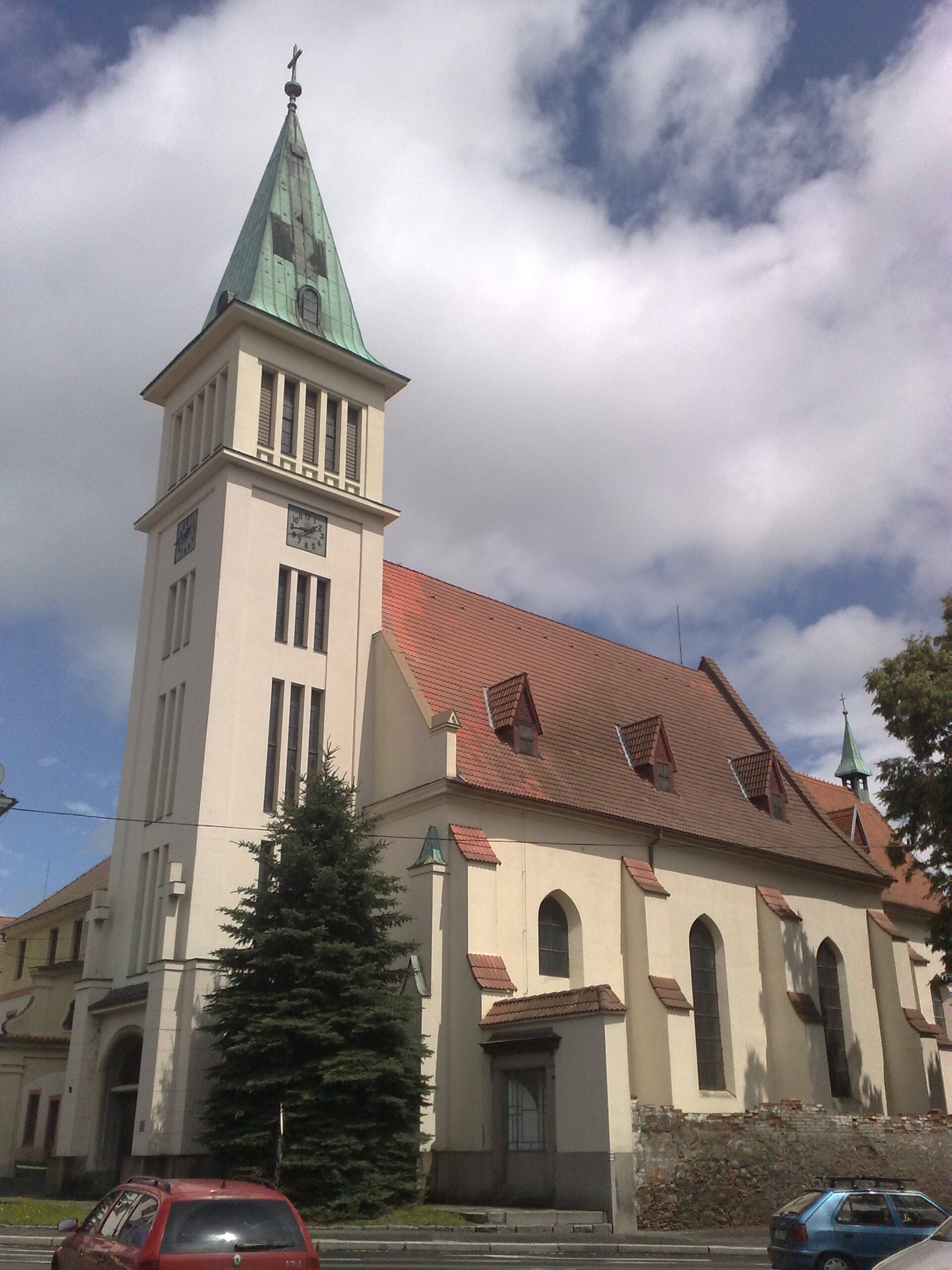
Church of the Assumption of the Virgin Mary
Horažďovice
-
Church of Saints Peter and Paul in Horažďovice
Horažďovice
-
Church of the Assumption of the Virgin Mary in Myslív
Milčice
Earn badges for the places you visit
Download NextOnTrip, discover new places and check off your trails.