About this place
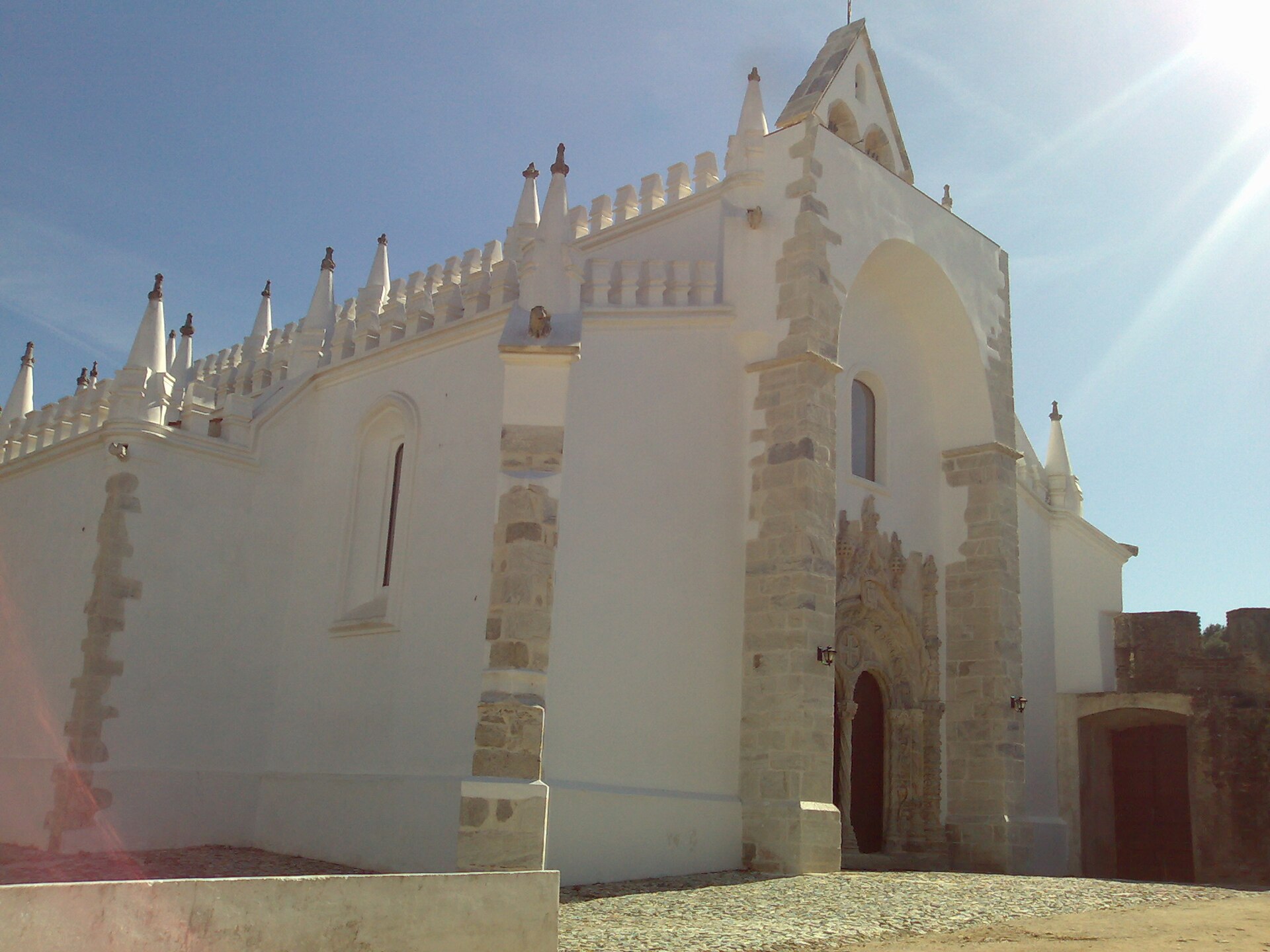
Igreja de Santo Amaro is one of the oldest churches in Beja, a town in Portugal's Alentejo region. Today it houses the Núcleo Visigótico, the Visigothic Nucleus of the Beja Regional Museum (also known as the Museu Rainha D. Leonor). The building has been a National Monument since 1936. It is a rewarding stop for anyone who wants sacred architecture and a rare Visigothic collection in one place.
Where is the church and how do you spot it?
The church stands on Largo de Santo Amaro in central Beja, at roughly 38.0177 N, 7.8661 W. It is a modest, compact building, easy to miss if you are not looking for it. Treat it as one stop on a walk through the old town, alongside the city's other monuments.
How old is Igreja de Santo Amaro?
Many authors link the site to an early Christian basilica. More recent studies propose a different date: construction in the 10th century, during the Islamic period, by Beja's Mozarabic community. Mozarabs were Christians living under Muslim rule who kept their own faith and rites.
The church was remodelled repeatedly over the centuries. The present building dates from the 15th and 16th centuries, so what you see reflects several layers of history rather than a single style.
What can you see inside?
The church opened in 1981 as the Visigothic Nucleus of the regional museum. Some authors consider the collection the most significant from the Visigothic period in Portugal. It includes the largest group of Visigothic capitals in the country.
The museum project aimed to recover the interior space and present the collection systematically. Objects are displayed in relation to the remains of the ancient early Christian basilica, so they are not detached from the place around them. Visitors see both the artefacts and traces of the earlier architecture.
Who is it for?
- Anyone interested in the early Middle Ages and the Iberian Peninsula.
- Visitors curious about how sacred architecture changes over centuries.
- Travellers exploring the Alentejo who want something beyond beaches and vineyards.
The site is small, so a visit is short. Usually a few dozen minutes is enough, and it combines easily with the rest of the town's sights.
Frequently asked questions
Is Igreja de Santo Amaro still a working church? Not in the usual sense. It serves as a museum space and forms part of the Beja Regional Museum as the Núcleo Visigótico.
When was it built? Older accounts point to an early Christian foundation, but newer research suggests the 10th century and a Mozarabic community. The current building dates from the 15th and 16th centuries.
What is the highlight of the collection? The largest group of Visigothic capitals in Portugal, within a collection some scholars regard as the most important of its period in the country.
Is it a National Monument? Yes, it has held that status since 1936.
Can I combine it with other sights in Beja? Yes. It lies in the town centre, so it fits easily into a walk through the old town. Check current opening hours on the municipal or museum website before you go, as they can change.
In short
Igreja de Santo Amaro brings together several layers of history: the site's early Christian tradition, the Mozarabic period, later rebuilding, and a modern museum. If you want to understand what art and architecture looked like in Portugal before the medieval Reconquista, this is one of the most compact and interesting stops in Beja.
Nearby places

Earn badges for the places you visit
Download NextOnTrip, discover new places and check off your trails.