About this place
Kaznějov Cemetery
Kaznějov Cemetery is a historic burial ground surrounding the Church of the Mother of God, one of the oldest features of this small town's historic core in the Plzeň-North region of the Czech Republic. Its irregular layout and the arrangement of its paths suggest that the site's origins reach back to the medieval period, even though many of the surviving features were added over later centuries.
What does the layout of the cemetery look like?
The grounds follow an irregular plan wrapped around the church walls. The main entrance sits on the northern side, where a cemetery gate connects to the town square. A newer gate was added on the southern side, giving easier access from that part of town. Inside, gravel paths and smaller walkways cross the grounds, and a narrow stone corridor runs around the church building itself.
What historic features survive on the grounds?
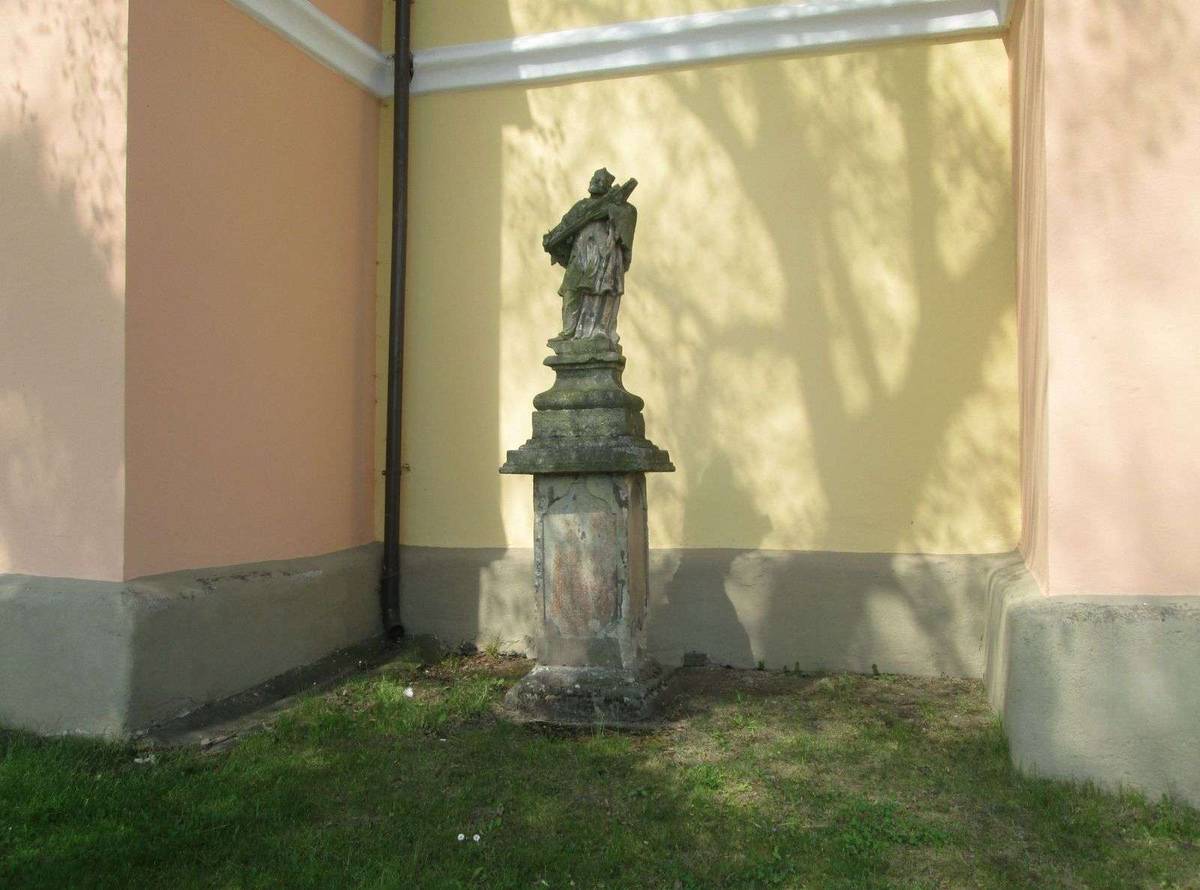
The cemetery preserves numerous old tombstones, some dating back to the 16th century or earlier. Among them are several burial monuments of notable artistic and historical value, hinting at the relative wealth of certain families who lived in Kaznějov in past centuries. Standing apart from the main cluster of graves is the Chapel of Saint Roch, accompanied by an outdoor stone pulpit — an unusual feature suggesting the site once hosted open-air services, particularly during plague outbreaks, when Saint Roch was venerated as a protector against disease.
In the northeastern corner of the grounds stands a mortuary building. Unlike the cemetery itself and most of its individual features, this building is not under heritage protection, pointing to a selective approach in how different structures on the site have been classified.
What is known about more recent burial history in Kaznějov?
It's worth distinguishing the old churchyard cemetery from the newer municipal cemetery that opened in Kaznějov in January 1934. From that point on, residents of the town stopped being buried at the cemetery in Obora, where burials had previously taken place. The first person interred at the new cemetery was a schoolgirl named Jaroslava Macháčková — a detail that has been remembered locally as a symbolic marker of a new chapter in the town's burial history.
Frequently asked questions
Is Kaznějov Cemetery a protected heritage site? Yes, the cemetery itself is under heritage protection, though not every structure on its grounds — the mortuary building in the northeastern corner, for instance, is not covered by the listing.
Where does the oldest part of the cemetery come from? The layout and character of the grounds around the Church of the Mother of God point to medieval origins for this burial site, although the surviving tombstones mostly date from the 16th century onward.
What is the Chapel of Saint Roch on the cemetery grounds? It's a freestanding chapel with an outdoor stone pulpit, connected to the veneration of a saint traditionally regarded as a protector against epidemics.
Is this the same cemetery that opened in 1934? No — the historical record points to two distinct burial sites in Kaznějov's past: the older grounds around the church, and a new municipal cemetery opened in January 1934, after which burials at the Obora cemetery ceased.
Can visitors tour this cemetery? Given the historic character of its tombstones and chapel, the site does attract visitors interested in local history and sacred architecture from the Plzeň-North region.
Nearby places

Earn badges for the places you visit
Download NextOnTrip, discover new places and check off your trails.