About this place
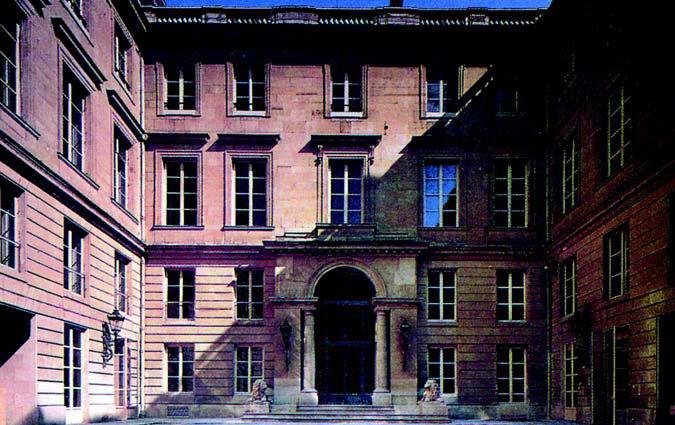
Hôtel de Crozat was a grand Paris townhouse that no longer stands, yet its story still echoes through the opera house built where its garden once bloomed.
Where did the Hôtel de Crozat once stand?
The mansion rose on the western side of the rue de Richelieu, just south of where the street meets the Grand Boulevard — right in the heart of Paris's right bank, an area now dotted with theatres around the Place Boieldieu. Walking that stretch today, few passers-by would guess a private palace once occupied the ground beneath their feet.
Who commissioned the building, and why?
The residence went up in 1704 for Pierre Crozat, a financier and art collector who ranked among the wealthiest men in France at the time. He entrusted the design to architect Jean-Sylvain Cartaud, who was then building homes for the capital's most prosperous banking and aristocratic families. For Crozat, the house was more than a residence: it served as a backdrop for one of the era's most celebrated private art collections, filled with paintings and sculpture he spent decades assembling.
What became of the mansion after Crozat's death?
Ownership passed on until 1750, when the property was bought by the Duke of Choiseul, a powerful statesman and diplomat under Louis XV. From that point the building took on his name, becoming known as the Hôtel de Choiseul. The duke's tenure, however, proved short-lived — three decades later, in 1780, the mansion was torn down.
Why did the building disappear from the map?
Once demolished, the land was carved into smaller plots. On the site of the former garden rose a new public building: the Salle Favart, home to an opera company and today recognised as the Opéra-Comique. That theatre, rather than the mansion itself, is the structure that has survived — and it marks, almost precisely, where Crozat's residence once stood.
What's worth noticing there today?
Nothing remains of the Hôtel de Crozat above ground, but the spot still ties together two threads of Paris history: the fortunes of early 18th-century high finance and the story of the city's operatic stage. Anyone walking the rue de Richelieu toward the Grand Boulevard can pause at the Opéra-Comique and picture the banker whose art collection once outshone many royal galleries.
Frequently asked questions
Can visitors still see the Hôtel de Crozat? No — the building was demolished in 1780. The Opéra-Comique (Salle Favart) now occupies the site of its former garden.
Who was Pierre Crozat? He was a Parisian banker and art collector, one of the richest men of his era, for whom the mansion was built in 1704 on the rue de Richelieu.
Why is the mansion also known as the Hôtel de Choiseul? Because the Duke of Choiseul, an influential diplomat at the court of Louis XV, purchased the property in 1750, and the building was known by his name from then on.
Who designed the original building? The architect was Jean-Sylvain Cartaud, who worked for several of the wealthiest financial families in early 18th-century Paris.
Nearby places

Earn badges for the places you visit
Download NextOnTrip, discover new places and check off your trails.