About this place
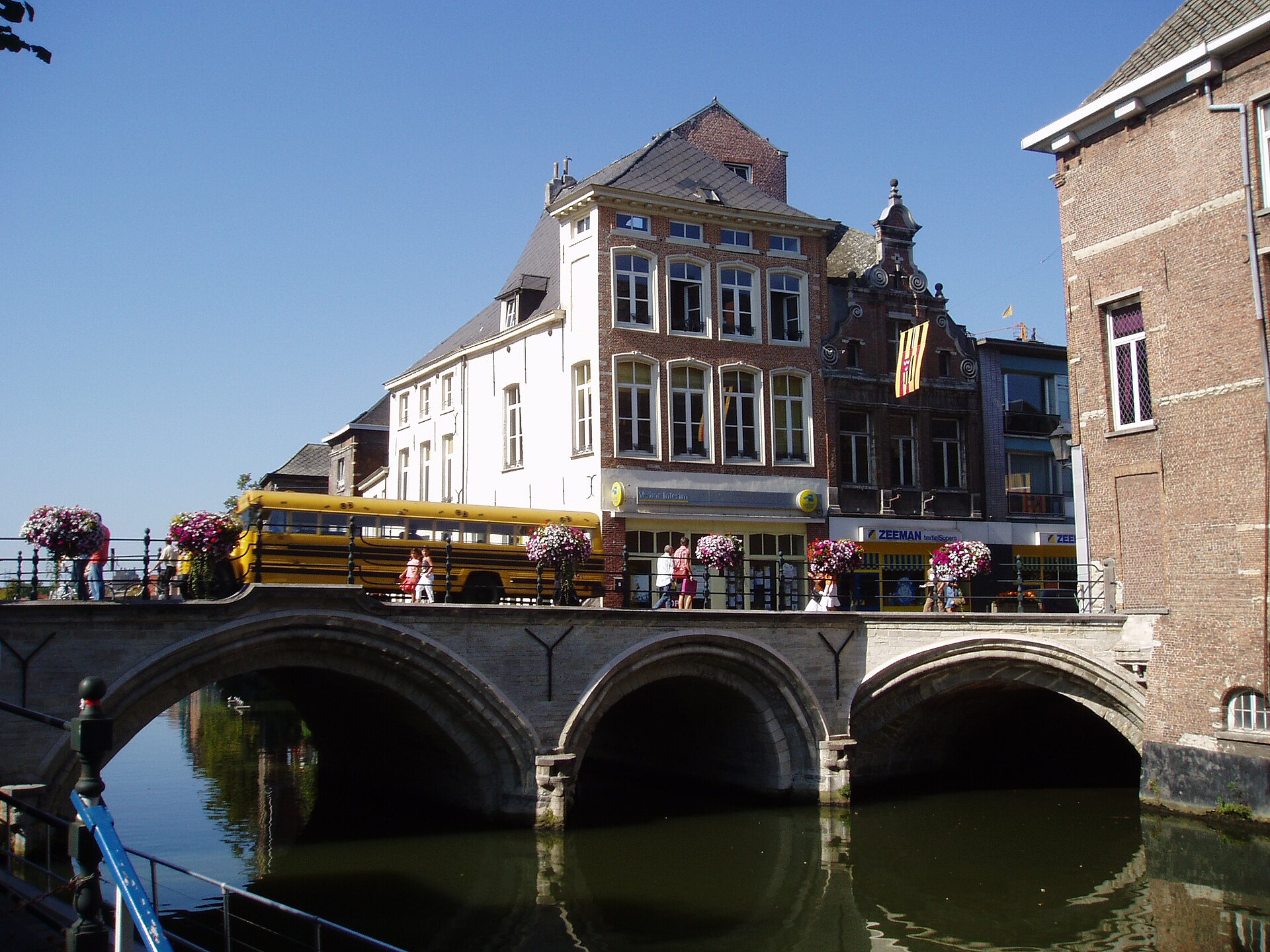
Hoogbrug (also known as Grootbrug) is the oldest stone bridge in Mechelen, and by some accounts the oldest surviving stone bridge in Flanders. It spans the Dijle river, connecting the busy IJzerenleen with Guldenstraat and forming one of the most recognisable crossings in the city's historic centre.
When was Hoogbrug built?
The bridge was constructed from sandstone in the last quarter of the 13th century. That dating is what makes Hoogbrug stand out among river crossings in the region — a stone structure that has survived for more than seven centuries in the heart of a densely built medieval city.
What does the bridge structure look like?
Hoogbrug is an arch bridge made up of four vaults of different spans — measuring roughly 6, 10, 7 and 5 metres. This staggered arrangement of arches allowed builders to cross the Dijle's channel without relying on a single massive central pier, a notable technical achievement for 13th-century engineering.
Did the bridge serve a defensive purpose?
Yes. The bridge was fitted with battlements because it formed part of the city's fortifications. In a medieval city, river crossings were strategic weak points — whoever controlled the bridge controlled access to the centre, so crossings like Hoogbrug were fortified in much the same way as the surrounding city walls.
Was there a toll on the bridge?
The Grootbrug once functioned as a toll bridge. Payment was collected both from traffic passing underneath on the water and from traffic crossing on foot or by cart above. This dual collection system reflects how important the crossing was as both a road and a waterway node for medieval Mechelen.
What used to flow beneath the bridge?
Beneath the section facing IJzerenleen, a small watercourse known as a vliet used to run alongside the main channel of the Dijle. While the surrounding waterscape has changed considerably since the Middle Ages, the existence of this side channel points to the complex water management system once maintained in the city's historic core.
Did a cross once stand on the bridge?
Until the French Revolution, a wrought-iron crucifix stood on Hoogbrug. Marking prominent public spots with religious symbols was a common practice in cities of the Southern Netherlands, one that largely disappeared as revolutionary political change swept away many such monuments at the end of the 18th century.
Is the bridge protected today?
The Grootbrug/Hoogbrug has been a protected monument since 25 March 1938. That legal protection reflects its recognised value as a piece of medieval engineering and urban history in Mechelen.
Frequently asked questions
Are Hoogbrug and Grootbrug the same bridge? Yes, both names refer to the same crossing over the Dijle in central Mechelen.
Where exactly is the bridge located? It connects IJzerenleen and Guldenstraat, right in the historic city centre.
What material was it built from? Sandstone, dating to the last quarter of the 13th century.
How many arches does it have? Four, of varying spans: approximately 6, 10, 7 and 5 metres.
Nearby places

Earn badges for the places you visit
Download NextOnTrip, discover new places and check off your trails.