About this place
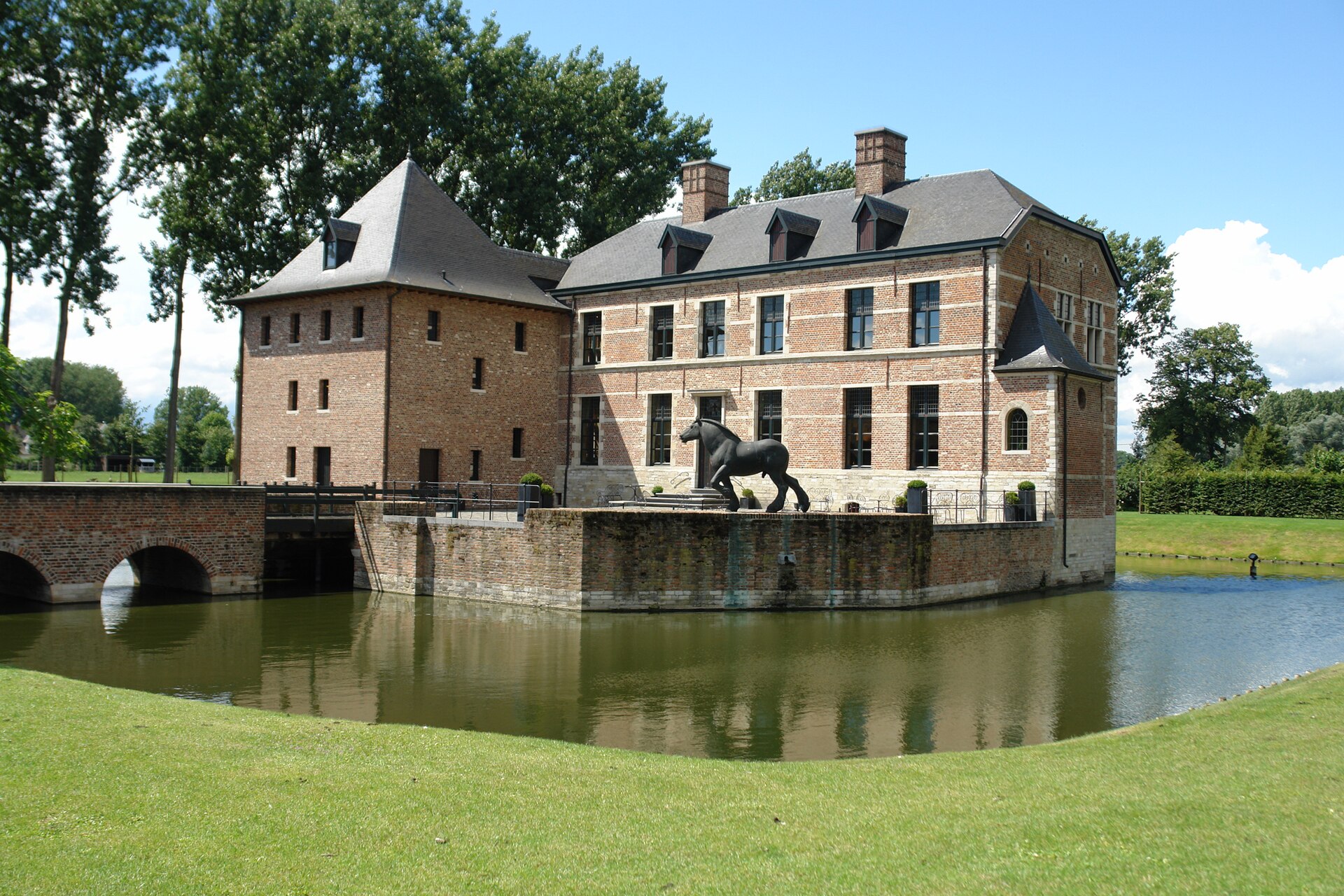
Hof te Melis is a historic castle estate in Lippelo, a village within the municipality of Puurs-Sint-Amands in the Belgian province of Antwerp. The site first appears in written sources in 1448 under the name "Melisheim," and over the following centuries it changed hands several times while functioning as a feudal estate tied to the lords of Grimbergen.
Where does the name come from and what is the history of the site?
The earliest documented reference to the settlement dates to the mid-15th century. For generations, Hof te Melis operated as a landed estate inhabited by noble families connected to the Grimbergen region. Since the 18th century, the property has belonged to the de Beughem de Houtem family, making it one of the longer-held single-family estates in this part of Flanders.
The estate's history was not limited to quiet rural aristocratic life, though. In 1745, during the War of the Austrian Succession, the property was occupied by troops of Louis XV, with the castle serving as a headquarters for French forces stationed in the area. Nearly two centuries later, in 1914, during the opening months of the First World War, the castle came under shellfire from the nearby Fort of Bornem, one of the forts in Antwerp's defensive ring.
What does the castle complex look like today?
The original layout of Hof te Melis followed a model typical of the region's manor farms: a residential building surrounded by outbuildings, arranged around an inner courtyard fully enclosed by structures. A distinctive feature of the complex was a square tower, which served both defensive and representative purposes.
The park surrounding the castle borders directly on the Lippelobos, a forest complex made up of an inner forest enclosed by a moat and an outer forest beyond it. This combination of water defenses and woodland is characteristic of Flemish noble residences built on the low-lying, marshy terrain typical of the region.
Why is the site protected?
Because of its historical, scientific, and aesthetic value, the entire complex — the castle itself along with its park and the adjoining Lippelobos — is protected as a landscape in Flanders. The area is considered one of the better-preserved examples in Antwerp province of a noble residence integrated with its surrounding forest landscape.
Frequently asked questions
When was Hof te Melis first established? The site is first mentioned in 1448 under the name Melisheim, though its present layout took shape over the following centuries.
Who owns the castle today? Since the 18th century, the estate has remained in the hands of the de Beughem de Houtem family.
Can visitors tour the castle? Hof te Melis is a private family estate. The park and the adjoining Lippelobos forest are protected as landscape heritage, but the castle itself does not function as a conventional public tourist attraction.
What role did the castle play in military history? It served as a headquarters for French troops in 1745 and came under fire during fighting around Fort Bornem in 1914, linking it to two conflicts fought on Belgian soil centuries apart.
What is the Lippelobos? It is the forest complex adjoining the castle park, consisting of an inner forest surrounded by a moat and an outer forest — together with the castle, it forms a protected historic landscape.
Nearby places

Earn badges for the places you visit
Download NextOnTrip, discover new places and check off your trails.