About this place
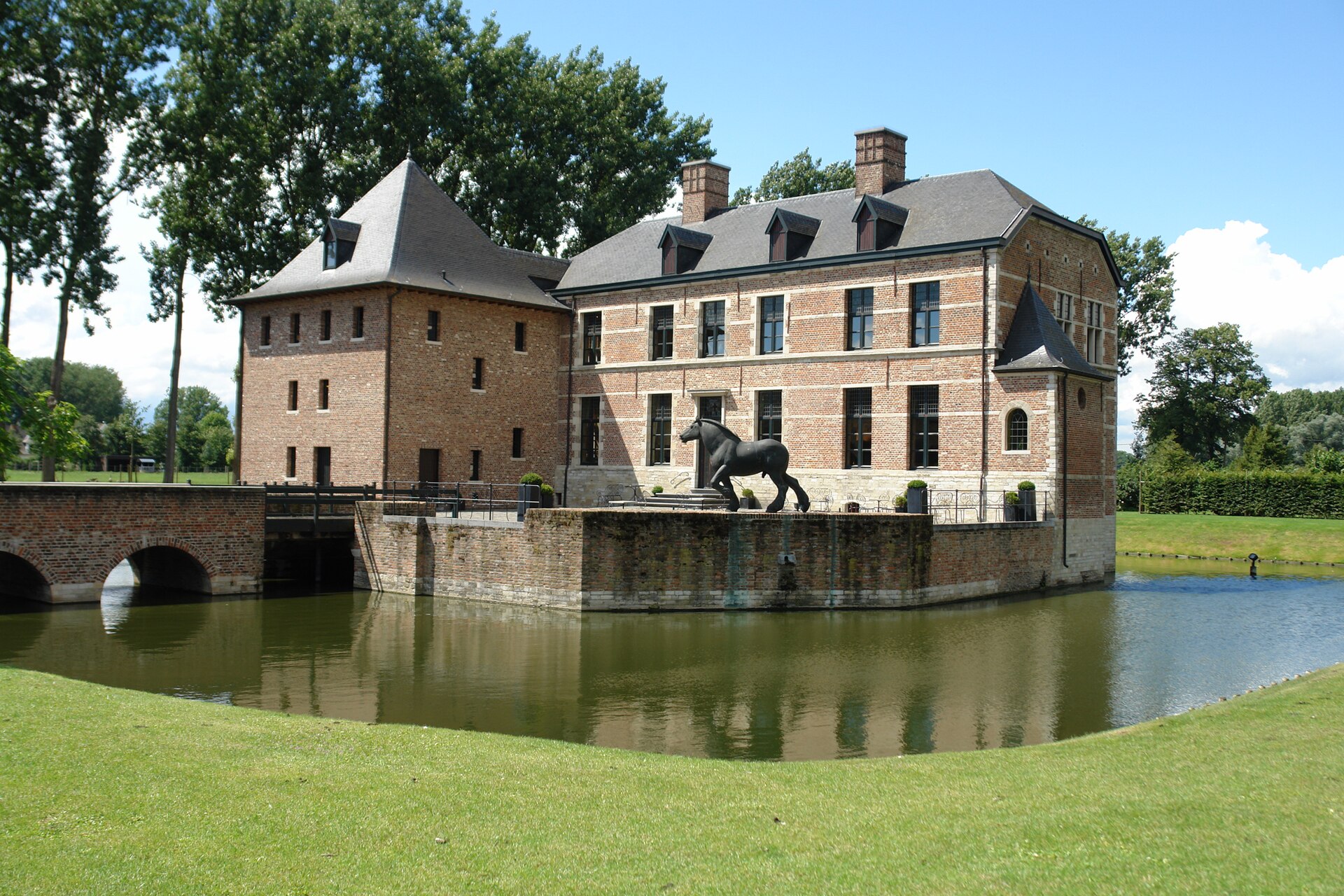
Diepensteyn Castle is a fortified moated residence in Steenhuffel, part of the municipality of Londerzeel in Flemish Brabant, with a history stretching back to the mid-12th century. The story begins in 1147, when Wouter van Craynhem — later known as van Wange and then van Bouchout — built a wooden watchtower on the site as part of the defense line of the Duchy of Brabant. That timber structure, however, did not remain in its original form for long.
How did the stone stronghold come about?
In 1290 the wooden watchtower was replaced by a stone keep enclosed within a wooden palisade. Construction continued over the following decades, and the moated castle proper was only completed in 1357, surrounded by a moat fed by a nearby stream. The name Diepensteyn reflects the building's setting — a stone structure rising from low, marshy ground. In 1460 the stronghold was further expanded with a new gatehouse and drawbridge, reinforcing its defensive role.
Who ruled from the castle?
For centuries the castle and the neighboring village were controlled by the Lords of Bouchout, with Diepensteyn serving as the seat of their lordship. Originally held as a fief of the Duchy of Brabant, the estate became the center of a county under the Counts of Maldeghem in 1685. A turning point came in 1598, when the property passed to Pierre Micault, a knight of the Order of the Golden Fleece. He carried out a significant renovation, adding a gallery with Venetian arches in 1616 and a private chapel in 1618, giving the once purely defensive stronghold a more residential character.
What changes did the Maldeghem family make?
Through marriage the castle passed to the Maldeghem family, who in 1675 expanded the complex with an additional gatehouse, a coach house, and horse stables. These additions reflect Diepensteyn's growing importance as a representative noble residence that combined defensive origins with the comforts of a manorial estate.
Why did the castle fall into decline, and how was it restored?
After the French Revolution the last residents left the castle, marking the start of a long period of gradual decay. The situation changed only in 1980, when the building was granted protected status as part of Flanders' immovable heritage. Since 1989 the property has been owned by NV Diepensteyn, which carried out restoration and reconstruction work between 1993 and 1995. During this project the pond surrounding the castle was recreated together with the garden park, restoring the estate's character as a historic moated residence.
What should visitors know before planning a trip?
Diepensteyn today illustrates centuries of evolving defensive architecture — from a wooden watchtower, through a stone keep, to a residential castle-and-park complex. Visitors can trace the successive building phases and see the reconstructed park surrounding the moat.
Frequently asked questions
When was Diepensteyn Castle built? The first wooden watchtower was erected in 1147, replaced by a stone keep in 1290.
Who built the castle? It was founded by Wouter van Craynhem (van Bouchout), with later expansions carried out by the van Bouchout family, Pierre Micault, and the Maldeghem family.
Why did the castle fall into ruin? After the French Revolution the last residents left the estate, leading to gradual decline until the building received heritage protection in 1980.
When was the castle restored? A full restoration and reconstruction took place between 1993 and 1995, after NV Diepensteyn acquired the property in 1989.
Nearby places

Earn badges for the places you visit
Download NextOnTrip, discover new places and check off your trails.