About this place
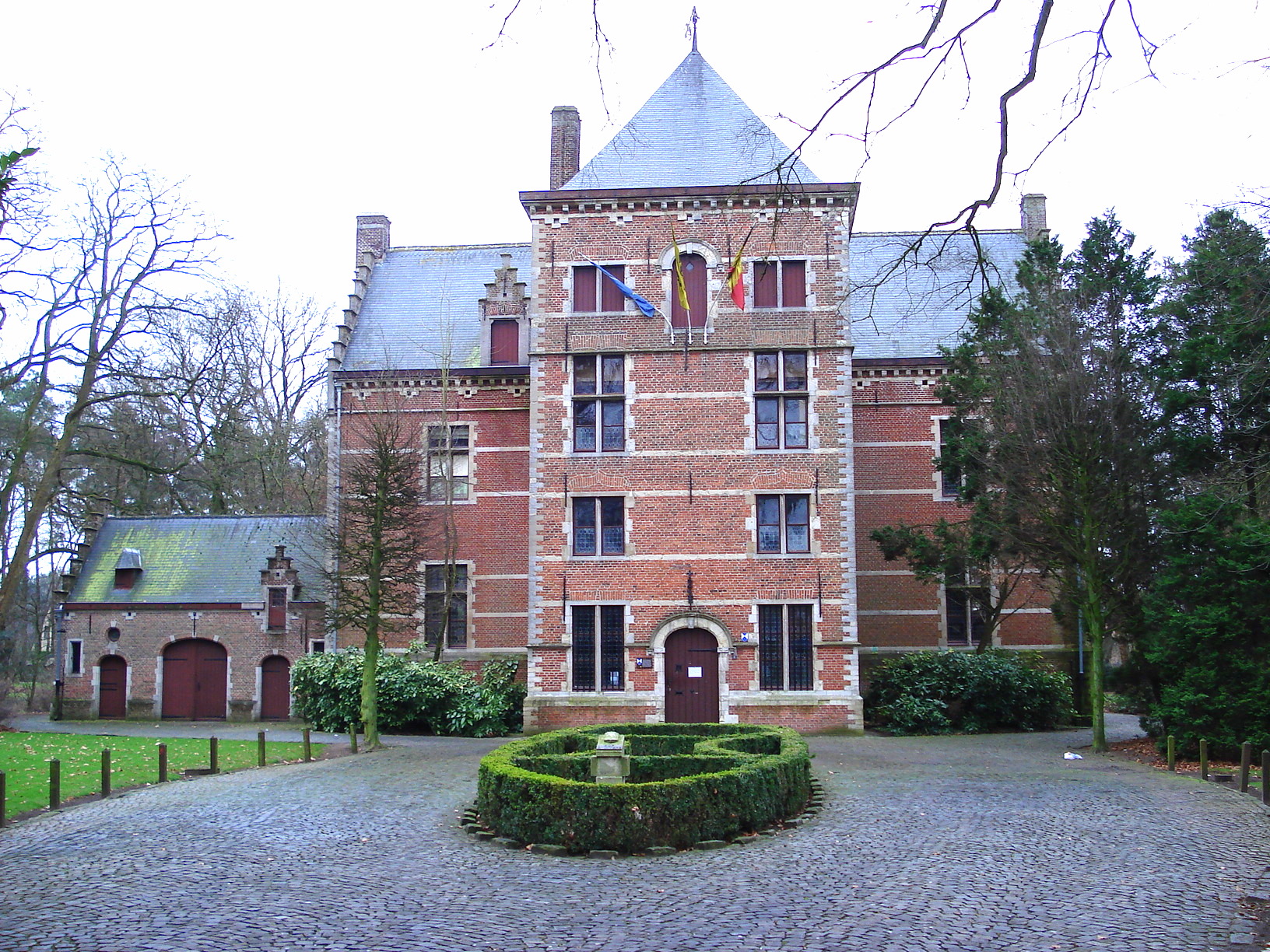
Hof d'Intere is a moated Renaissance manor house in Wechelderzande, part of the municipality of Lille in Antwerp province, Belgium. Set within grounds of just over a hectare, the building stands at Pastorijstraat 2 and today serves the local community as a public library and community center.
Where does the name come from?
The name predates the building itself. In 1444, Philip the Good granted the areas of Wechelderzande, Gierle and Lille as a fief to Ambrosius van Dynter. The manor court that convened to administer this fief became known as "Hof d'Intere" — also recorded as Hof van Dynter — after its holder's name. The title therefore originally referred to a legal institution rather than a specific structure.
When was the current building constructed?
Fief rights eventually passed to Johan de Proost, then lord of Wechelderzande, who in 1649 rebuilt the manor on the foundations of an earlier 16th-century castle. The result is what stands today: a structure combining brick with layers of sandstone, a building style typical of the region during that era. Its most distinctive feature is a tower-like avant-corps rising four storeys, set in front of a rectangular wing of two storeys beneath a pitched roof. Notably, what is now the main façade originally served as the rear of the building.
How did the building's function change over time?
In 1686, Johan de Proost was forced to sell the property, which passed to the parish priest of Wechelderzande. From that point until 1964, the building served as the parsonage. It then became the town hall of Wechelderzande until 1977, when the municipality merged with Lille. Since then, Hof d'Intere has functioned as a municipal center, housing a library and a park open to residents and visitors alike.
What restoration work has the building undergone?
The manor has been altered more than once. In 1867, architect J. Van Gastel oversaw significant repair work, and in 1907 another architect, J. Taeymans, drew up further renovation plans. It was during this period — between 1900 and 1911, following the 1907 restoration designs — that the building's characteristic stepped gables were added. Though they now read as a hallmark of traditional Flemish architecture, they are in fact a relatively late addition to the original 1649 structure.
What is worth seeing inside?
Inside the entrance hall, a marble plaque commemorates residents of Wechelderzande who died in the First World War. It's a modest but telling detail, a reminder that the building has witnessed centuries of local history — from feudal disputes, through parish life, to its present-day civic role.
Why is Hof d'Intere worth a visit?
The moat encircling the manor, its brick-and-sandstone façade with cross-frame windows and stone banding, and the quiet grounds surrounding it have made Hof d'Intere a recognized stop on hiking routes through the Antwerp countryside. Few sites combine a medieval feudal history, Renaissance-era fortified architecture, and an active civic function quite so neatly — a combination best appreciated on foot while exploring Wechelderzande.
Frequently asked questions
Can Hof d'Intere be visited? As the seat of the local library and a community center, the grounds and park around the building are open to visitors, though the interior spaces serve administrative and library functions.
Where does the castle's name come from? From Ambrosius van Dynter, who received the surrounding lands as a fief in 1444.
How long did the building serve as a parsonage? From 1686 to 1964 — nearly three centuries.
Nearby places

Earn badges for the places you visit
Download NextOnTrip, discover new places and check off your trails.