About this place
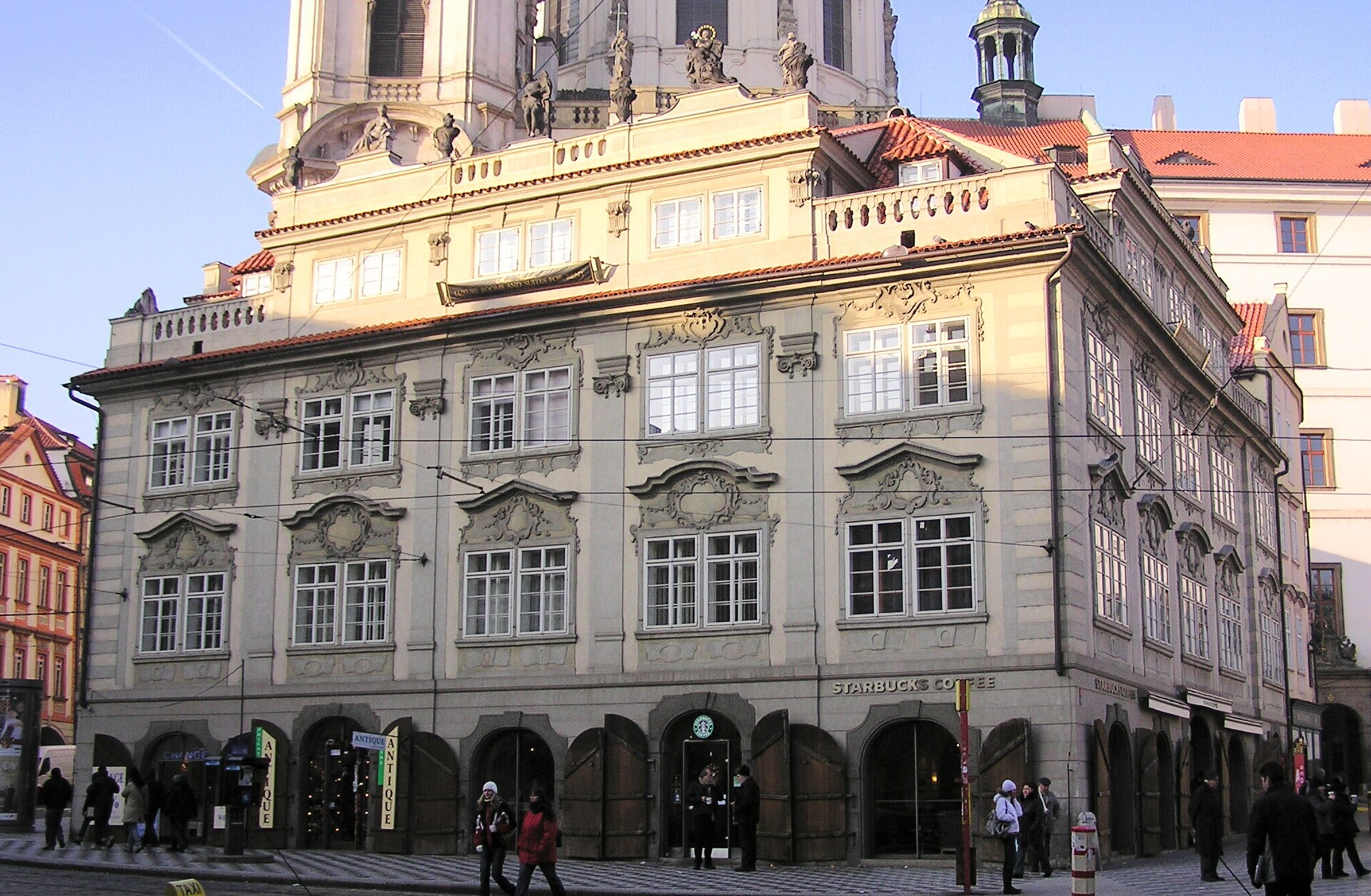
Hartig Palace (Hartigovský palác) is a Baroque palace on Malostranské náměstí, the main square of Prague's Lesser Town, now home to the rectorate of the Prague Academy of Performing Arts. Over three centuries the building carried at least four different names, each tied to a different owner who left a mark on it.
What stood here before the palace?
The plot at what is now Malostranské náměstí 259/12 originally held two separate Gothic houses. Lumps of mortar found in their foundations show that lime mortar was already being used in this part of the city as far back as the 9th century, long before the current structure existed. The two houses were joined into a single property in 1645.
Who designed the Baroque palace?
The real transformation began after 1701, when the merged houses were rebuilt in Baroque style to a design by Giovanni Battista Alliprandi, one of the leading architects working in Prague at the time. Construction was finished by František Maxmilián Kaňka. Around 1795, the rear façade facing Tržiště street was reworked by Matyáš Hummel.
Where does the Hartig name come from?
The palace changed hands to Anna Josefa Černínová in 1722, but it was the next owner who gave the building the name it still carries: in 1735 the property passed to Terezie Hartigová, widow of Ludvík Josef of Hartig. The Hartig family kept the palace for close to a century, until 1821.
What happened to it in the 19th century?
In 1827 the palace was bought by John Parish Senftenberg, which is why it is sometimes still called Senftenberský palác. His heirs sold the building in 1873 to the Bohemian Land Fund (Zemský fond království českého), giving rise to yet another name, Zemský dům. Between 1908 and 1913 the palace was enlarged again with the addition of a three-storey wing.
What is the palace used for today?
The building today houses the rectorate of the Academy of Performing Arts in Prague (Akademie múzických umění, AMU), one of the country's leading arts schools, training actors, musicians and filmmakers. It has been listed as a protected cultural monument since 1964.
Frequently asked questions
Can visitors go inside Hartig Palace? The building functions as an academic administrative seat (the AMU rectorate), so it is not a general tourist attraction with public opening hours; access is normally tied to university business.
Where does the palace's name come from? From the Hartig family, who owned it between 1735 and 1821. At other points in its history it was also known as Senftenberský palác and Zemský dům, after later owners.
Who designed the palace? The Baroque rebuilding after 1701 was designed by Giovanni Battista Alliprandi and completed by František Maxmilián Kaňka.
Where exactly does the palace stand? On Malostranské náměstí 259/12, in the heart of Prague's historic Lesser Town square.
Nearby places

Earn badges for the places you visit
Download NextOnTrip, discover new places and check off your trails.