About this place
Gure Aitaren Etxea is a monumental sculpture by Eduardo Chillida standing in Guernica (Basque: Gernika), one of the most significant works of public art in the town. The Basque title translates as "Our Father's House" and refers to the idea of the family home as a symbol of the enduring identity of the Basque people.
What does the monument depict?
The sculpture takes the form of an open bow, cast in concrete finished with iron filings, which gives it a raw, earthy texture. The structure rises to nearly 8 metres in height. A deep gap cuts through its massive walls, forming a window that frames a view toward the legendary Tree of Gernika, a long-standing symbol of Basque self-governance and freedom. At the centre of the piece stands a steel stele, read as a sign of peace and of life lived in a spirit of tolerance and liberty.
Why was it built in Guernica?
The monument was commissioned by the Basque Government and unveiled in April 1988, to mark the 50th anniversary of the bombing of Guernica in 1937 — one of the most devastating episodes of the Spanish Civil War, later immortalised by Pablo Picasso in his famous painting "Guernica". Unlike Picasso's work, which is a cry of protest against the horror of war, Chillida's sculpture takes a very different approach. It does not dwell on suffering but on resilience: the open-bow form is meant to express the will of the Basque people to move forward, rebuild, and endure beyond the tragedy of the past.
Where exactly is the sculpture located?
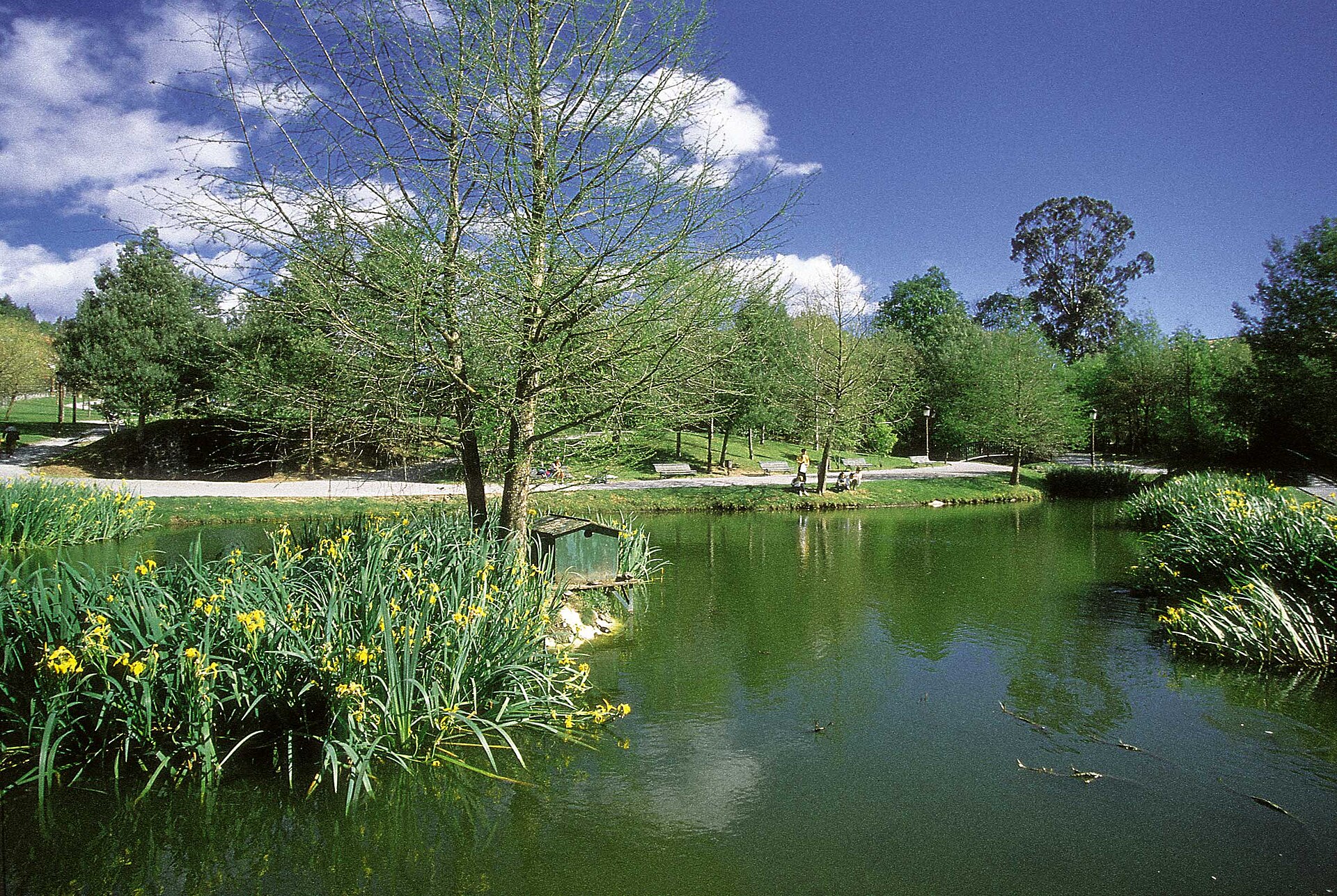
Gure Aitaren Etxea stands in the Park of the Peoples of Europe (Parque de los Pueblos de Europa), one of Guernica's central green spaces, surrounded by other works of public art and monuments connected to the town's history. For decades the park has served as a place of reflection on that history and a symbol of recovery, with Chillida's sculpture as one of its focal points.
Who created the sculpture?
Eduardo Chillida (1924–2002) was one of the most important Spanish artists of the 20th century, a Basque sculptor renowned worldwide for monumental forms worked in steel, iron, granite and concrete. His pieces, often set directly within landscape and public space, combine the rawness of the material with a deep meditation on freedom, memory and identity. Gure Aitaren Etxea is one of several works by Chillida dedicated to Basque themes and the history of the region.
Frequently asked questions
What does the name "Gure Aitaren Etxea" mean? In Basque, the phrase translates as "Our Father's House" and refers to the symbolic weight of the family home as a foundation of Basque identity and community.
When was the monument created, and why? The sculpture was unveiled in April 1988 at the initiative of the Basque Government, as part of commemorations for the 50th anniversary of the 1937 bombing of Guernica.
Where in Guernica can visitors see the sculpture? It stands in the Park of the Peoples of Europe, one of the town's main public spaces, alongside other monuments and art installations.
Is it worth comparing this work to Picasso's painting "Guernica"? Both works respond to the same historical event but differ sharply in tone — Picasso's painting is a protest against the horror of war, while Chillida's sculpture focuses on rebuilding, resilience and peace.
Nearby places

Earn badges for the places you visit
Download NextOnTrip, discover new places and check off your trails.