About this place
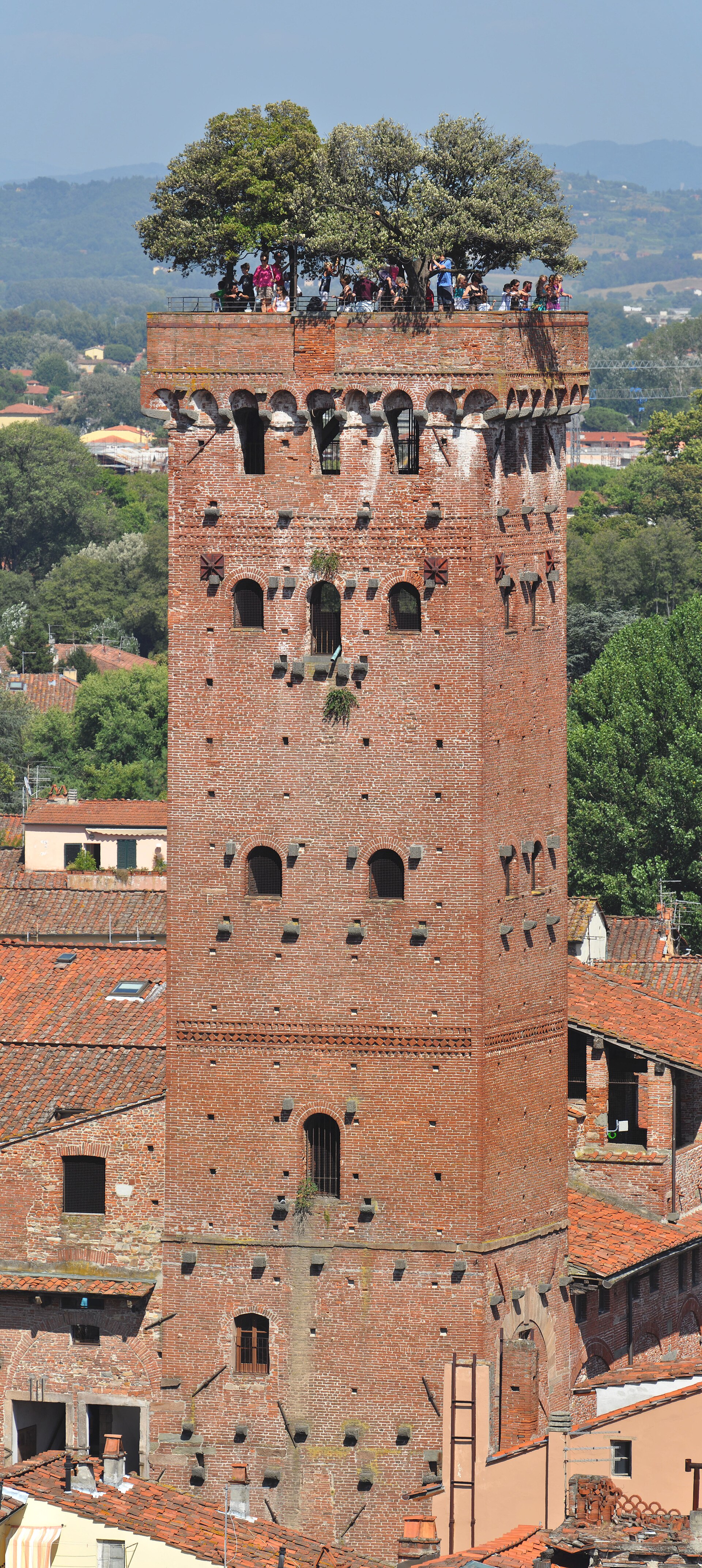
Guinigi Tower is the medieval landmark that rises above the rooftops of Lucca, one of the few surviving noble towers from a city that once counted them by the dozen. Built in the late 14th century by the wealthy Guinigi family of silk merchants, it remains the single most photographed structure in the historic centre and a near-mandatory stop for anyone visiting Lucca, even on a short day trip.
What makes this tower different?
Standing 45 metres tall, Guinigi Tower is a textbook example of the local Romanesque-Gothic style: a plain, sturdy brick structure built more for status and defence than decoration, typical of medieval Tuscan cityscapes. What sets it apart from the many towers that once crowded Lucca's skyline is visible only once you look up — a small grove of holm oak trees growing right on the rooftop terrace, their canopy poking above the tower's crown. Planting trees atop a tower was a medieval status symbol: the taller and more distinctive the structure, the higher the family's standing in the city. The Guinigi family made sure their tower would never be mistaken for another.
How do you get to the top?
Reaching the rooftop terrace means climbing 230 steps spread across 28 flights of stairs. It's a genuine workout, not a casual stroll — comfortable shoes and a bit of patience go a long way, especially in summer heat when the stairwell warms up quickly. The staircase is narrow and winds tightly, which slows the pace further during busy hours. Visitors with knee issues or limited stamina should expect to pause a few times along the way.
What do you see once you're up there?
The effort pays off. From the terrace, the view stretches across the entire historic centre of Lucca — terracotta rooftops, narrow lanes, church towers, and the Renaissance-era walls that still encircle the city. On clear days, the Apuan Alps are visible on the horizon. It's one of the very few spots in town where you can take in Lucca's whole urban layout at once, including the distinctive oval shape of Piazza dell'Anfiteatro, built over the footprint of the city's former Roman amphitheatre.
When should you visit?
The tower welcomes visitors on most days of the week, with morning and evening opening hours and Wednesday as a closing day. Because hours shift seasonally, it's worth checking the current schedule or calling ahead before your visit. The quietest moments are right after opening in the morning and during the evening slot, when the fading light adds extra warmth to the panorama. During peak season (July–August), expect a short queue to reach the entrance.
Who is this attraction for?
Guinigi Tower appeals broadly — to architecture and history enthusiasts as much as to anyone chasing a memorable photo over the Tuscan rooftops. That said, the steep, narrow staircase makes it a difficult climb for visitors with limited mobility, and it isn't stroller-friendly, so families with young children should plan accordingly.
The tower sits right in the heart of the old town, within easy walking distance of Lucca's other major landmarks, making it simple to fold into a broader walking route through the historic centre.
Frequently Asked Questions
How many steps does it take to reach the top of Guinigi Tower? The rooftop terrace is reached via 230 steps across 28 flights of stairs.
Why are there trees growing on top of the tower? Holm oak trees were planted on the terrace back in medieval times as a status symbol for the Guinigi family — the more striking the tower, the higher the family's social standing.
How long does a visit take? Climbing up, taking in the view, and coming back down typically takes 30 to 45 minutes, depending on how busy it is.
Is the tower accessible for visitors with limited mobility? No — the narrow, winding, steep staircase has no elevator, making the climb difficult for anyone with mobility issues and unsuitable for strollers.
Nearby places

Earn badges for the places you visit
Download NextOnTrip, discover new places and check off your trails.