About this place
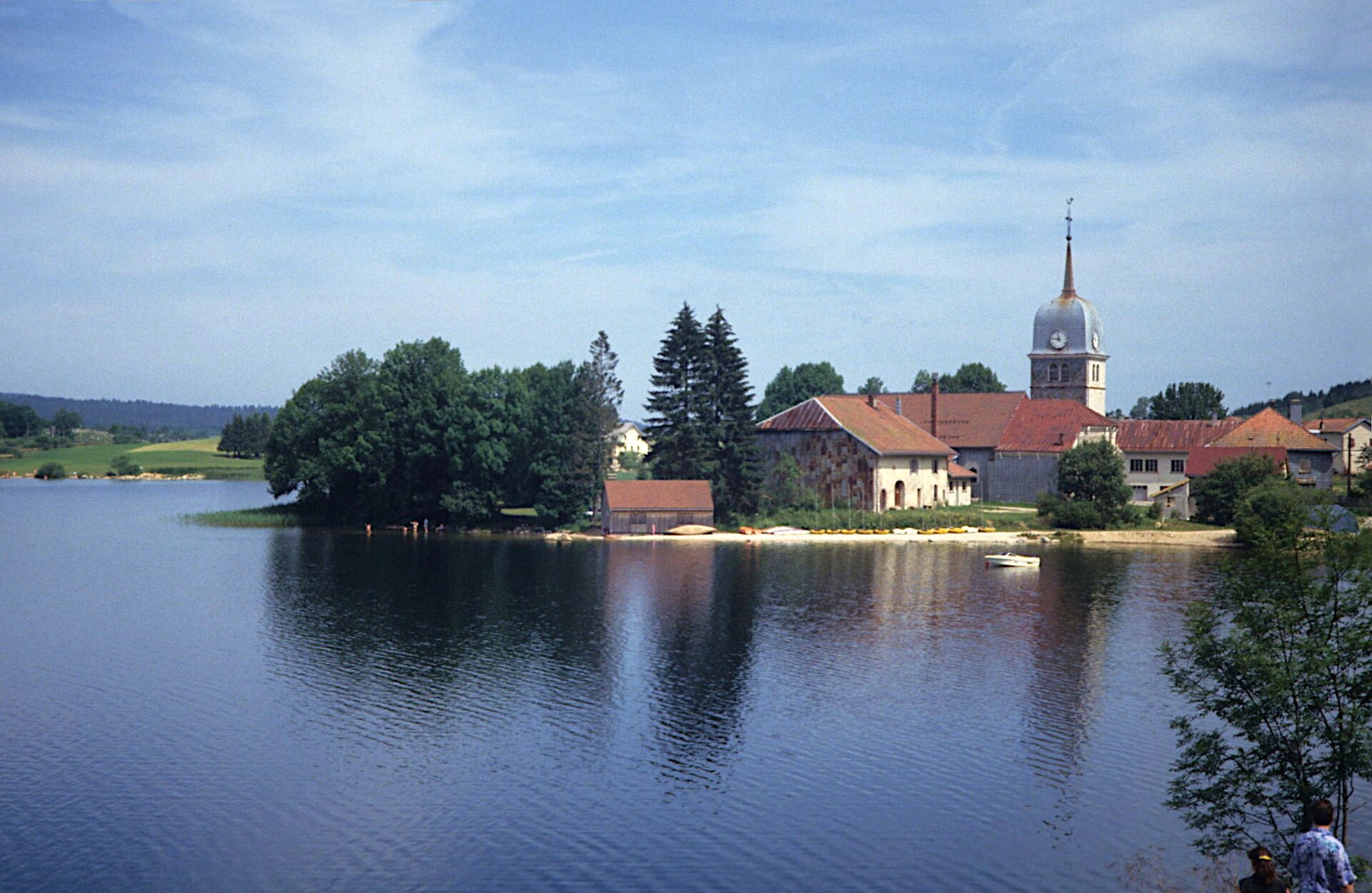
Grand Lac de Clairvaux is the larger of two lakes bordering the village of Clairvaux-les-Lacs in the Jura department of eastern France. Turquoise water, a sandy beach and a shoreline that hides thousands of years of prehistory make it one of the more unusual lake destinations in the region.
Where is Grand Lac de Clairvaux?
The lake covers roughly 64 hectares and sits right next to the smaller, privately owned Petit Lac (21 hectares), where swimming and fishing are not allowed, leaving it in a more untouched state. Grand Lac lies at the edge of Clairvaux-les-Lacs village, on the doorstep of the Jura plateau, close to the Hérisson valley with its string of waterfalls.
What is the beach like?
The beach along Grand Lac has fine sand and a gentle slope into the water, making it a comfortable spot for families with young children. The bathing area holds Blue Flag certification (Pavillon Bleu) for water quality and facilities. A lifeguard station operates in July and August, and the site includes adapted seating for visitors with reduced mobility under the "handiplage" label, along with children's play areas and picnic spots.
What can visitors do on the water?
Motorised boats are banned except for electric-powered craft, which keeps the lake calm and suited to swimmers and paddlers alike. Pedal boats, stand-up paddleboards, canoes and windsurfing equipment are all available on site. Anglers fish for pike, perch and carp. Footpaths and cycling trails circle the lake, letting visitors walk or ride around the entire shoreline.
Why does the area matter archaeologically?
On the northern shore, at a site known as Motte-aux-Magnins, excavations uncovered the remains of Neolithic villages built on wooden piles driven into the shallow lakebed and shoreline. The dig revealed settlement layers more than five metres deep, spanning roughly 4000 to 800 BCE. Eleven separate village groupings had been identified there by 2001. The acidic, waterlogged soils of the surrounding wetlands slowed the decay of organic material, preserving timber structures and everyday objects in unusually good condition.
Together with the neighbouring Lac de Chalain, Grand Lac de Clairvaux forms one of the most significant clusters of pile-dwelling settlements in Europe. On 27 June 2011, these sites were inscribed on the UNESCO World Heritage List as part of a wider series of more than a hundred prehistoric pile-dwelling sites around the Alpine arc, spanning Germany, Austria, France, Italy, Slovenia and Switzerland.
Frequently asked questions
Can you swim in Grand Lac de Clairvaux? Yes, the bathing area on Grand Lac is officially supervised and Blue Flag certified for water quality. The neighbouring Petit Lac is private and closed to swimming.
What water activities are available? Pedal boats, stand-up paddleboarding, canoeing, windsurfing and fishing. Petrol-powered boats are prohibited; only electric motors are allowed.
What are the pile-dwelling sites near the lake? They are the remains of Neolithic villages built on wooden stilts along the lake's marshy edge, dated to roughly 4000-800 BCE. The acidic wetland soil preserved timber and other organic remains that would normally have decomposed.
Can the archaeological sites be visited directly? The settlements lie buried underground or underwater and are not open for direct visits, but they form part of the protected, UNESCO-listed heritage of the region and are covered by local tourist information points.
What else is worth seeing nearby? The Hérisson waterfalls, a scenic valley with dozens of cascades, are close by, as is Lac de Chalain, the other major Neolithic lake site in the region.
Nearby places

Earn badges for the places you visit
Download NextOnTrip, discover new places and check off your trails.