About this place
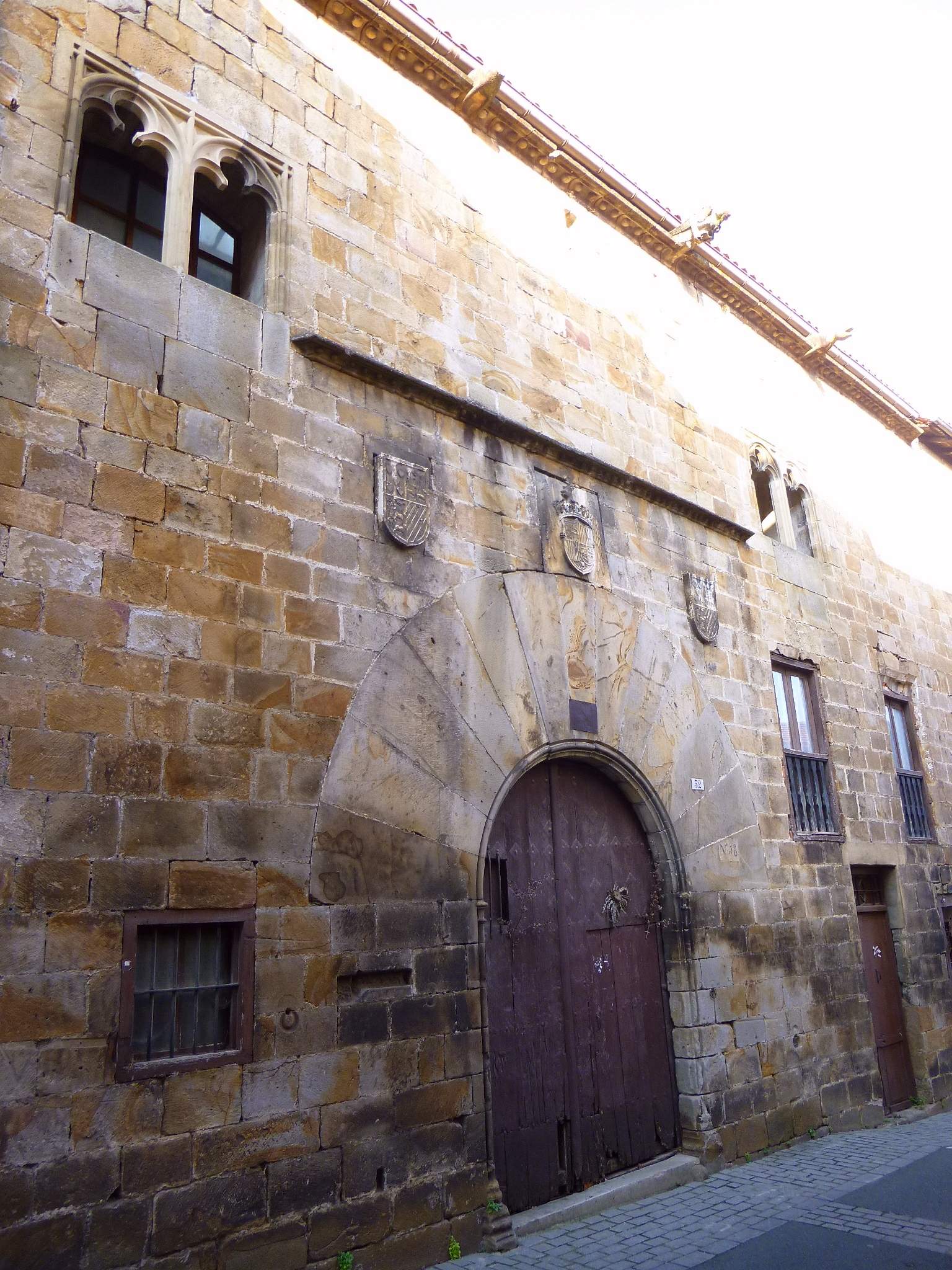
Gebara jauregia is a Gothic town palace standing in the historic center of Segura, a small town in Gipuzkoa, in the Basque Country. Raised in the second half of the 15th century, it remains one of the finest surviving examples of late medieval urban palace architecture in the region.
Who built it, and why here?
The palace was commissioned by Nikolas Gebara, a member of one of the most influential noble lineages in Gipuzkoa at the time. The Gebara family already owned a medieval defensive tower nearby, and its members held positions at the court of the Catholic Monarchs, Isabella of Castile and Ferdinand of Aragon. Choosing to build a new residence right in the center of Segura, against the town walls, was a deliberate statement: rather than staying isolated in a fortified tower outside town, the family wanted its presence felt at the heart of civic life.
The builders fitted the palace into the existing street layout, sharing party walls with neighboring houses — giving it a compact, urban character quite different from a freestanding ancestral tower. Architectural historians describe Gebara jauregia as a transitional building, still carrying the austerity of the medieval tower while anticipating the elegance of the Renaissance palace, with a composition that echoes contemporary Castilian urban mansions.
What will you see on the façade?
The most distinctive feature is the entrance portal: an arched doorway built with large, wedge-cut voussoirs, characteristic of secular Gothic construction of the period. Above it sits a twin window divided by a slender stone mullion, which once lit the reception rooms on the upper floor.
Three heraldic shields are prominently displayed on the façade, a clear signal to passersby of the family's noble standing. The same gesture — carving coats of arms into a house front — recurs on several other patrician homes in Segura, reflecting the prestige rivalry among families who had grown wealthy on the iron trade and ironworking crafts.
Given its historical and architectural value, the palace has been listed as a Monumento Histórico-Artístico (Historic-Artistic Monument).
How do you get to Segura?
Segura sits inland in Gipuzkoa, at the foot of the Aizkorri mountain range, along the old royal road that once connected Gipuzkoa with Álava — a historically important trade and pilgrimage route. The town borders Zegama, a popular starting point for hikes into the Aizkorri-Aratz range. The easiest way to arrive is by car, since Segura lies close to the main roads linking the Gipuzkoa coast with Álava and Navarre. The historic center itself is small and best explored on foot.
What else is worth seeing nearby?
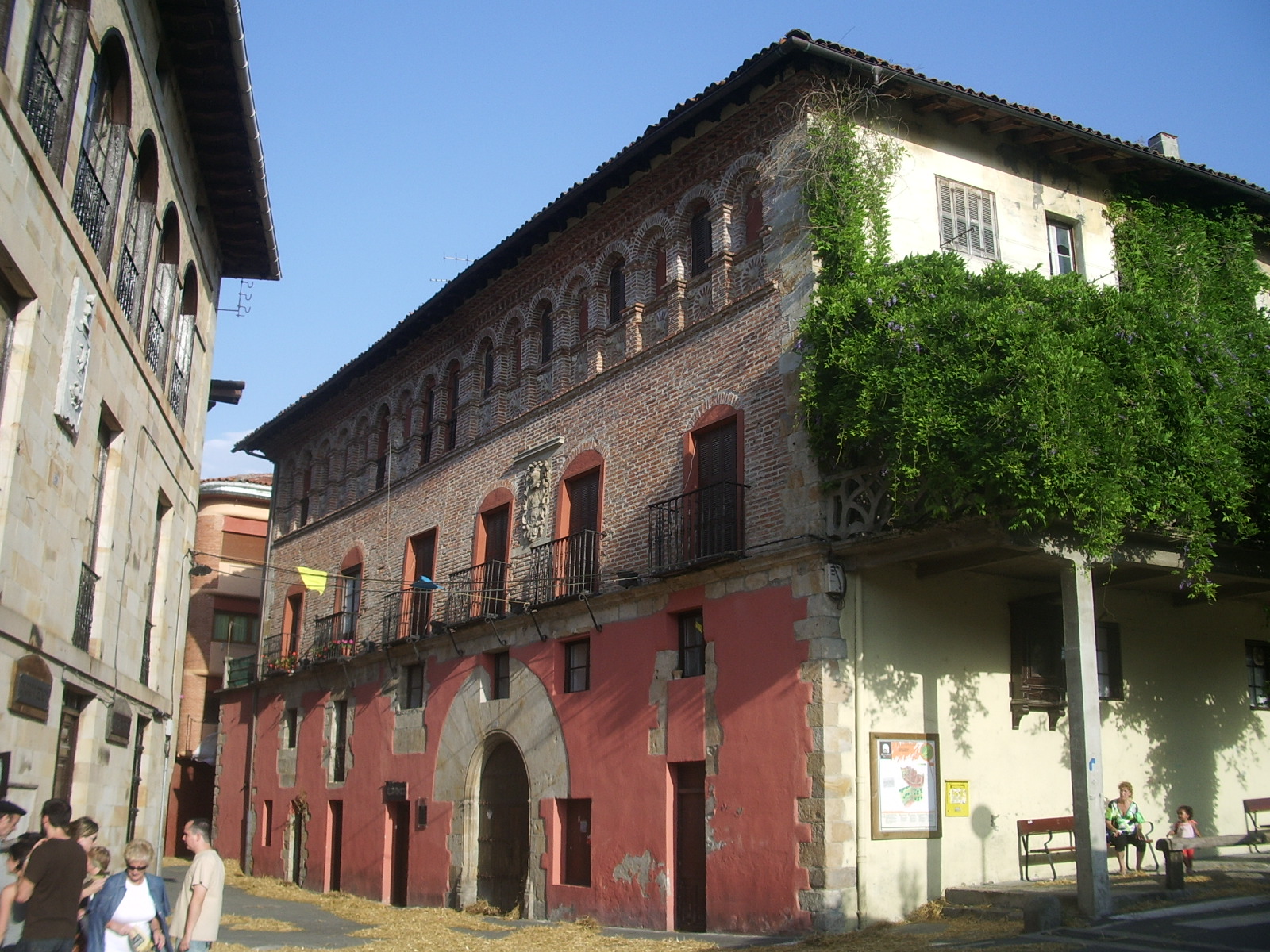
Gebara jauregia is just one piece of Segura's remarkably well-preserved historic ensemble. Within the line of the old town walls stand several other imposing noble houses, built on fortunes made in the iron industry, along with two surviving town gates. Segura is often called the "cradle of Gipuzkoa" — it was here, in 1256, that the town received its founding charter, making it one of the oldest urban settlements in the province.
When should you visit?
Given its mountain setting, spring and summer are the most pleasant seasons for exploring the historic center on foot and combining the visit with a trip into the nearby Aizkorri range. Autumn and winter tend to be cold and rainy here, though the stone architecture of Segura takes on a particularly austere, atmospheric character in that weather.
Frequently asked questions
Can you go inside the Gebara palace? The building serves a private or administrative function and is not open to the public as a museum — visits are generally limited to admiring the façade and portal from the street.
How long does it take to see Segura's historic center? Walking through the compact old town, taking in the Gebara palace, the other noble houses and the town gates, typically takes one to two hours.
Does Segura work as a day trip from the coast? Yes — the town lies within easy reach of Gipuzkoa's main roads and pairs well with a trip to the Aizkorri mountains or neighboring Zegama.
Why does the façade display three coats of arms? It reflects the prestige of the Gebara lineage — displaying multiple shields was a way of asserting the founders' noble standing among Segura's other patrician families.
Nearby places

Earn badges for the places you visit
Download NextOnTrip, discover new places and check off your trails.