Save this place and discover nearby attractions with NextOnTrip
In the app you can add it to your favorites, see what else is worth visiting nearby on the map, and earn a badge for your visit.
The app is available for iPhone and Android.
About this place
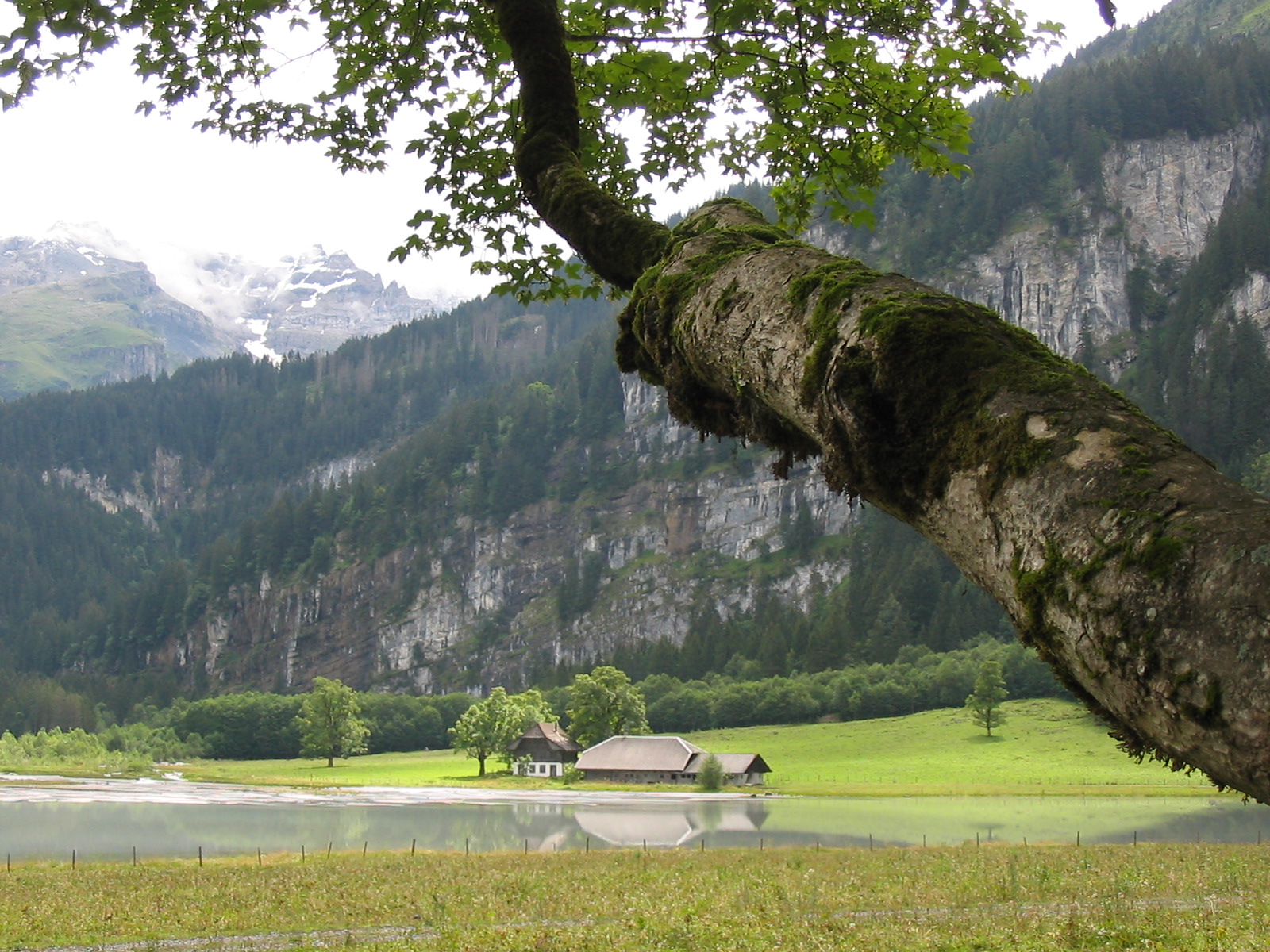
The former Tschingelsee in Reichenbach im Kandertal (canton of Bern) is a lake that has almost vanished. It appeared overnight in 1972 in the Kiental valley, and today it is a silted-up floodplain inside a nature reserve. It is a good stop if you want to see how quickly a mountain stream can redraw a landscape.
How did the lake form?
During the night of 18 to 19 July 1972, a violent storm sent a mass of rock and mud down the slopes of the Ärmighorn. The debris blocked the lower Tschingelalp valley and dammed the Gornerenbach stream. Within hours, water piled up behind a natural barrier roughly six metres high, creating a lake nearly 800 metres long. Sources describe the trigger in different words (debris flow, rock and mud avalanche, rockfall), but they agree on the date and the outcome.
What can you see today?
You will not find an open sheet of water. The stream, which some sources call the Gamchibach, has carried gravel and sand into the basin for decades, helped along by the retreat of the Gamchi glacier. The lake bed is now practically filled in. The scene keeps shifting: the channel wanders, side arms split off, and gravel bars and riverside vegetation take hold. For nature lovers it is a live case study in how a lake fills up and turns into alluvial land.
The canton of Bern has protected the area as a nature reserve since 1987. Under recent plans, the protected area grows from 44.5 to 77.8 hectares and gains status as an alluvial landscape of national importance. Steep Ärmighorn slopes and high peaks frame the view and explain how it all began.
How do you get there?
Kiental lies in the Bernese Oberland, within the municipality of Reichenbach im Kandertal. The former lake sits at about 46.552 N, 7.743 E. You can reach the valley by car or public transport from Reichenbach, and a steep PostBus line runs from Kiental up towards Griesalp. The site is a waypoint on a popular hiking route: Kiental, Tschingelsee, the Griesschlucht gorge, Pochtenalp and Griesalp.
When should you visit?
Hiking season, from late spring to autumn, when trails are clear of snow. In summer the stream carries more water and the terrain is at its most dynamic. After heavy rain the channel and water levels can change, so keep your distance from the banks.
Frequently asked questions
Does Tschingelsee still exist?
Not as an ordinary lake. Sediment brought by the stream has practically filled the basin, and the site is now an alluvial landscape.
When and how did it form?
On the night of 18 to 19 July 1972, when debris from the Ärmighorn slopes dammed the Gornerenbach.
Is the area protected?
Yes. It has been a nature reserve since 1987, and the protected area is planned to grow to 77.8 hectares.
Can you hike here?
Yes. The site lies on the route from Kiental through the Griesschlucht gorge and Pochtenalp to Griesalp, and a PostBus line also links Kiental with Griesalp.
Nearby places

Earn badges for the places you visit
Download NextOnTrip, discover new places and check off your trails.