About this place
Espace Killy is the joint ski area linking Val d'Isère and Tignes (including La Daille) in the Tarentaise Valley, in the Savoie region of the French Alps. The name honours Jean-Claude Killy, a skier raised in Val d'Isère who won three Olympic gold medals and became one of the most recognisable figures in French skiing.
Where does the name Espace Killy come from?
Val d'Isère and Tignes had long been neighbouring ski resorts, but it was the expansion of a shared lift network that turned them into one connected ski domain. The name Espace Killy was chosen in honour of Jean-Claude Killy, who grew up in Val d'Isère and swept gold in downhill, slalom and combined at the 1968 Winter Olympics in Grenoble. His sporting success gave both resorts international name recognition well beyond the Alps.
How is the ski area laid out?
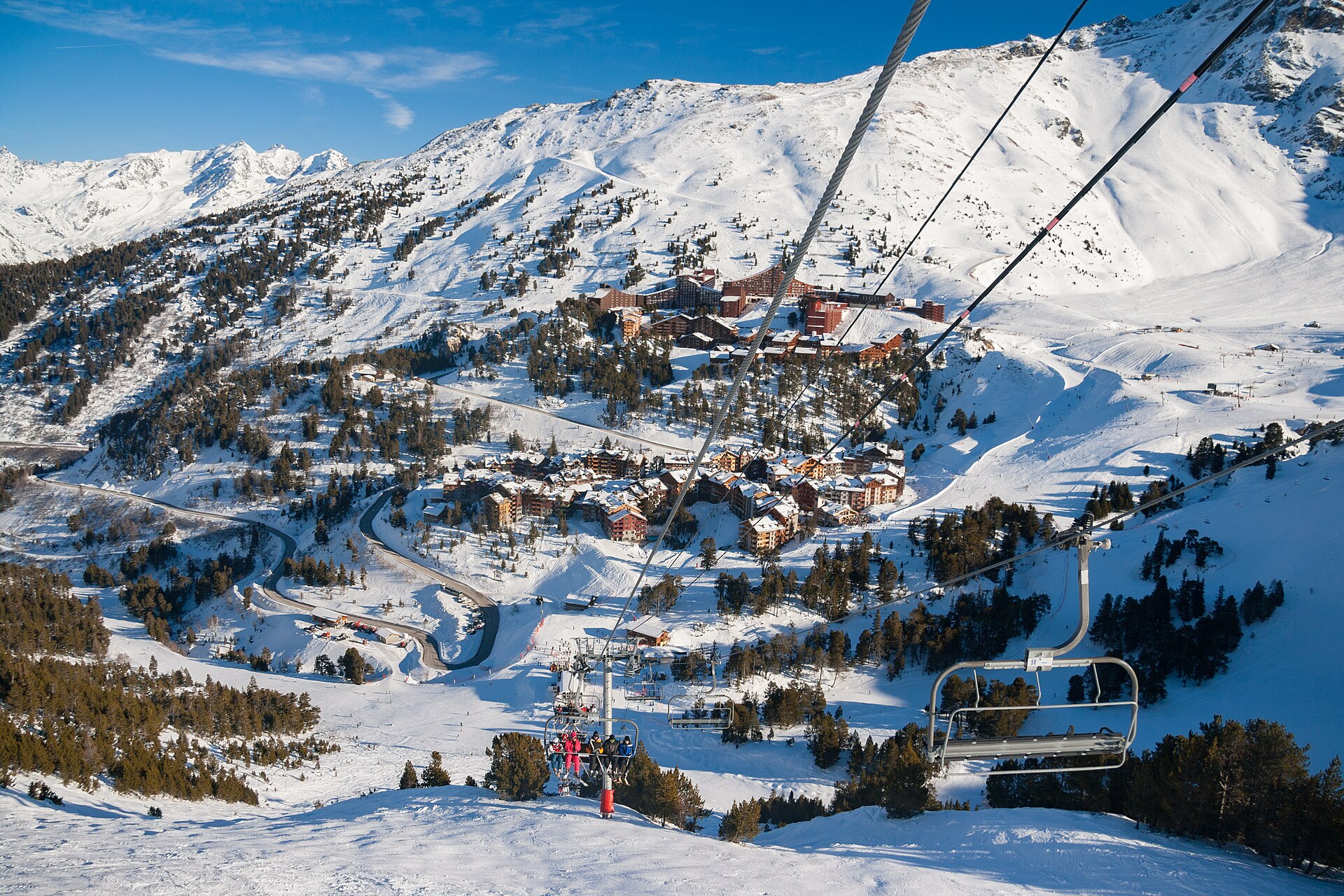
Val d'Isère and Tignes are two separate, historically distinct resorts joined by a lift network that lets skiers move between them without taking off their skis. Tignes is made up of several villages at different altitudes — from La Daille and Le Lac up to Val Claret — known for its functional 1960s and 70s concrete architecture, built deliberately close to the slopes. Val d'Isère, by contrast, has kept a more traditional mountain-village character. The area's standout feature is the Grande Motte glacier on the Tignes side, which pushes skiable terrain above 3,000 metres and has traditionally allowed skiing beyond the usual winter calendar. That altitude also helps keep snow conditions reliable through most of the season.
How do you get there?
The nearest major airports are Chambéry, Grenoble, Lyon and Geneva, all served by coaches and ski transfers running directly to Val d'Isère and Tignes. The closest train station is Bourg-Saint-Maurice, from where buses or a car can take you up the valley toward both resorts, on the road heading up in the direction of the Col de l'Iseran. Driving yourself means following the Tarentaise Valley road, a well-used route for skiers arriving from France, Switzerland and Italy alike.
When's the best time to visit?
The ski season typically runs from late November to early May, and the altitude of the terrain — much of it above 3,000 metres — means snow conditions hold up well even after lower resorts have lost theirs for the year. Peak periods fall around the Christmas holidays and February, when both resorts see the heaviest crowds. Travellers looking for quieter slopes and better prices tend to aim for January or April instead. In summer the area shifts to hiking and mountain biking, though winter remains its main draw.
Frequently asked questions
What's the difference between Espace Killy and the individual Val d'Isère and Tignes resorts? Espace Killy is the shared marketing and organisational name for the combined ski area — buying an Espace Killy lift pass gives access to the slopes of both resorts at once.
Can you get between Val d'Isère and Tignes without a car? Yes, the two resorts are linked by a network of ski lifts, so during the winter season you can ski between them directly; outside the season you'll need road transport.
Is this ski area suited to beginners or advanced skiers? Espace Killy has runs across the difficulty range, but its reputation rests mainly with advanced skiers and those drawn to high-altitude conditions, including skiing on the Grande Motte glacier.
Can you ski here in summer? The high altitude of parts of the terrain, particularly around the Grande Motte glacier, has historically allowed skiing outside the standard winter season, though conditions and access should always be checked before you go.
Nearby places

Earn badges for the places you visit
Download NextOnTrip, discover new places and check off your trails.