About this place
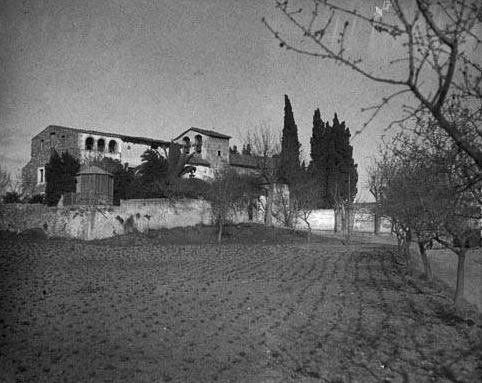
Ermita romànica de Santa Justa is a small Romanesque hermitage in the municipality of Lliçà d'Amunt, in the Vallès Oriental region of Catalonia. Listed in Catalonia's inventory of architectural heritage, the building stands in a dense grove on the left bank of the Tenes river, in the northern part of the municipality, close to the route of an old Roman road that once linked Aquae Calidae (today's Caldes) with Granularius (Granollers).
How do you get there?
The hermitage sits outside the center of Lliçà d'Amunt, tucked among trees along the Tenes river, near the road connecting the area to Caldes and Granollers. Visitors mostly reach it on foot or by bike, since it's marked along a local hiking route — handy if you don't want to rely purely on GPS coordinates, though it's still worth carrying a map or saving the location beforehand. You can drive to the nearest local road, then finish the approach on foot through the grove.
What will you see?
The chapel follows a single-nave layout with a semicircular apse facing east, covered by a quarter-sphere vault. Its walls are decorated with Lombard pilaster strips and blind arches arranged in groups of four, each section framing a double-splayed window — a hallmark of the Lombard Romanesque style. The building dates to the 11th–12th centuries, representing a typical example of Catalan religious architecture from that period: modest in scale, but precise in its stonework detail.
The site's history stretches back further than the current structure. Santa Justa is first mentioned in a document from 1072, with further records confirming its existence in 1101 and 1125. Even earlier, in 1039, Count Guislabert I of Barcelona granted the church of Santa Justa to his daughter Arsenda — evidence that the site already carried significance in the first half of the 11th century, predating the building as it stands today. The hermitage survived the centuries but not the Spanish Civil War: it was burned in 1936. Reconstruction only began in 1975, carried out with care to preserve the original structure, and the restored temple was formally inaugurated on November 14, 1982. The chapel's full dedication is to Santa Justa i Santa Rufina, two sister martyrs.
When should you visit?
Given its small scale and lack of on-site tourist facilities, the hermitage is best visited during daylight hours, when the light brings out the stonework on the façade — mornings or afternoons in spring and autumn tend to work best, before the surrounding grove dries out under the summer sun. It makes a rewarding stop along a longer walking or cycling route through the Vallès Oriental rather than a standalone day-trip destination.
Frequently Asked Questions
Is the hermitage open to visitors? The building stands on publicly accessible land, but the interior is often closed outside of occasional services or local festivities — it's worth checking with the Lliçà d'Amunt town council before visiting.
What architectural style does the building represent? It's an example of 11th–12th century Lombard Romanesque style, recognizable by its pilaster strips and blind arches grouped in sets of four, along with double-splayed windows.
Why was the hermitage rebuilt so late? The temple burned down in 1936 during the turmoil of the Spanish Civil War, and systematic reconstruction respecting the original structure only began in 1975, concluding with its inauguration in 1982.
Who is the chapel dedicated to? Its full dedication is to Santa Justa i Santa Rufina, two sisters venerated as martyrs — the church under this name is first documented in 1072.
Nearby places

Earn badges for the places you visit
Download NextOnTrip, discover new places and check off your trails.