About this place
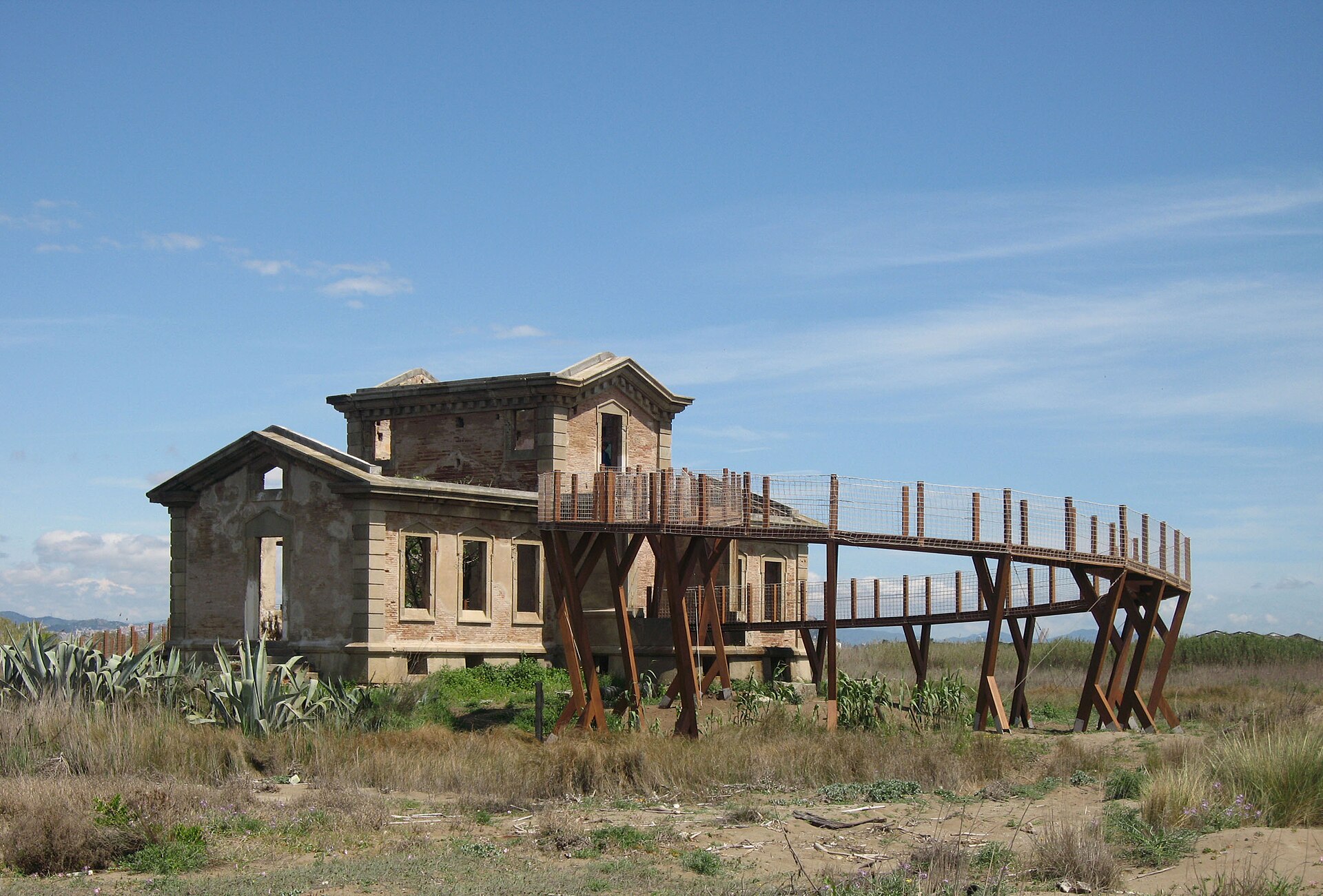
El Semàfor (la casa dels Senyals) is the ruin of a former signal station standing in the Llobregat Delta, within the town of el Prat de Llobregat, close to where the river meets the Mediterranean. The building dates from the second half of the 19th century and spent decades serving maritime communication — today it's a physical trace of an era when ships talked to the shore with flags and optical telegraphs rather than radio or satellite links.
What was this building for?
The station's official name was Semáforo del Río Llobregat. Its job was to regulate maritime traffic along the coast and cut down on accidents among ships heading toward the mouth of the Llobregat. It did this through a system of semaphores fitted with an optical telegraph: using a pre-arranged signal code, the station's crew could pass information to passing vessels about conditions near the river mouth and along the shoreline. Casa dels Senyals was also linked by signal to Montjuïc Castle in Barcelona, extending the chain of coastal observation posts further along the coast.
How was the station built to survive on delta ground?
The Llobregat Delta is low-lying land, regularly at risk from storm surges and high water. To keep the building safe, the ground beneath it was raised three metres above sea level before construction. The station itself had a rectangular floor plan with a lookout point at its centre, from which staff could keep watch over ship movements offshore. Underneath the building sat an underground cistern that collected rainwater — a common solution for isolated outposts where running drinking water wasn't available.
What does El Semàfor look like today?
The station stopped performing its original function long ago and now stands as a ruin. Even so, enough of its architectural form survives that it has been listed as a cultural asset within Catalonia's heritage register. It sits inside the Delta del Llobregat natural park, surrounded by the kind of landscape typical of a river delta — coastal dunes, scrubland and wetlands that today form an important nature conservation area, and that once made for a demanding, isolated posting for the people who staffed the signal station.
Why is it worth a visit?
El Semàfor isn't a conventional tourist attraction — there's no ticket booth or guided route. It appeals to visitors interested in maritime history and pre-radio communication engineering, as well as to anyone exploring the Llobregat Delta for its wildlife who wants to spot a trace of the coast's older infrastructure along the way. The ruined station, set against the delta landscape and the nearby sea, gives a sense of how 19th-century authorities managed shipping safety before modern technology existed.
Frequently Asked Questions
What was El Semàfor (casa dels Senyals)? It was a 19th-century signal station that used an optical telegraph and flag system to regulate ship traffic at the mouth of the Llobregat and to communicate with Montjuïc Castle.
Can the building be visited today? It survives only as a ruin, standing within the Delta del Llobregat natural park — a remnant of historic infrastructure rather than a staffed attraction.
Why was the ground under the building raised three metres? The Llobregat Delta sits at low elevation and is exposed to flooding from the sea, so the station's foundation was raised to protect the structure from water.
Is El Semàfor a protected heritage site? Yes, the building is listed as a cultural asset in Catalonia's historic heritage register.
Nearby places

Earn badges for the places you visit
Download NextOnTrip, discover new places and check off your trails.