- Theaters
- Culture and art
Edificio del Círculo Mercantil e Industrial y Teatro Cervantes
About this place
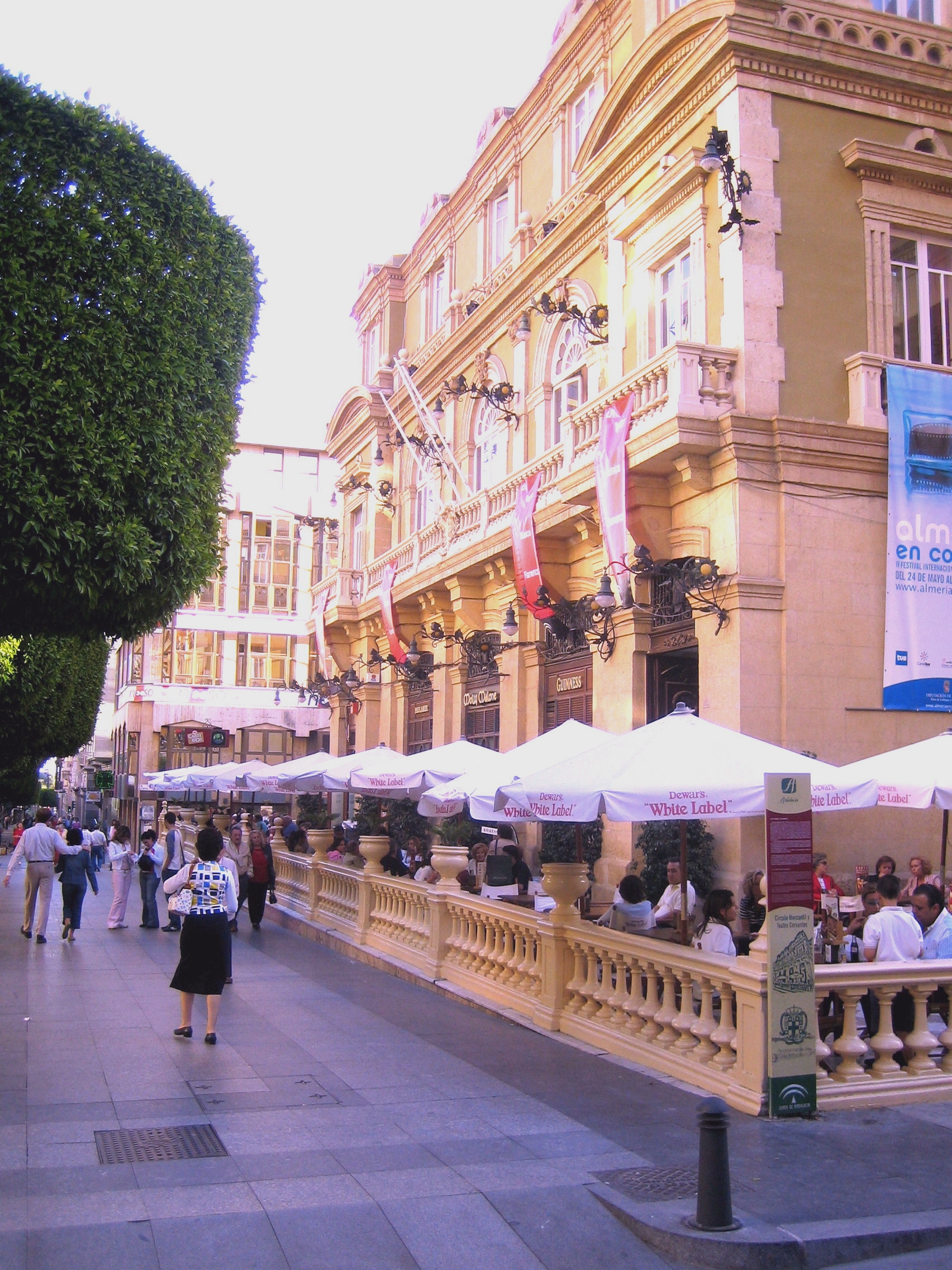
The Edificio del Círculo Mercantil e Industrial y Teatro Cervantes is one of Almería's most distinctive landmark buildings, standing on Paseo de Almería in the heart of the city. Behind a single ornate facade, it holds two institutions at once: a working theatre and the historic seat of a merchants' and industrialists' association.
Why does the building have two names?
The double name reflects its dual purpose. Teatro Cervantes traces its roots to 1864, when José Cassinello Baglietto drove the creation of the Sociedad Propietaria y Constructora del Teatro Cervantes, a company set up to build and run a theatre for the city. The Círculo Mercantil e Industrial, a club for local merchants and industrialists, was founded separately in 1889 and only settled permanently into this building in 1921.
When was it built, and who designed it?
The architect Enrique López Rull drew up the design in 1898. Construction and interior finishing took over two decades, and the building was formally inaugurated on 16 July 1921. From that date onward it has served simultaneously as a stage for public performances and as the club's headquarters.
What does the facade look like?
The building combines late-19th-century eclectic architecture with Art Nouveau decorative flourishes typical of the period in Spain. It has four facades, but the one facing Paseo de Almería is by far the most elaborate: a three-storey projecting section with five window bays, dressed in pilasters, dentilled cornices, balustrades and curved pediments. Reliefs referencing theatrical themes, carved mask ornaments, and a round medallion bearing Cervantes' portrait complete the decoration, while the street lamps along the front carry a sunflower motif.
Is the building protected as heritage?
Yes. The Círculo Mercantil e Industrial and Teatro Cervantes building was declared a Bien de Interés Cultural, in the Monument category, by a decree of the Andalusian regional government issued in March 2002. This is the highest level of legal protection Spain grants to sites of historical and artistic value.
What happens inside the building today?
The theatre continues to host cultural events for the city, and the Círculo Mercantil e Industrial still operates as an association carrying on a tradition stretching back more than a century. More recently, the cultural management of the building has been tied to a long-term agreement with Fundación Cajamar, covering the site's use for the next hundred years.
Frequently asked questions
Where exactly is the building located? On Paseo de Almería, the main boulevard through the centre of Almería, in southern Spain.
Is this the same Teatro Cervantes as the one in Málaga? No. They are two separate theatres in different Andalusian cities — this one is in Almería, not Málaga.
When did the building open to the public? On 16 July 1921, although the architectural design dates back to 1898.
Who was the architect? Enrique López Rull.
Can visitors go inside? The building is an active theatre and club headquarters, so interior access usually depends on scheduled performances or Círculo Mercantil events — it's worth checking the local programme before visiting.
Nearby places

Earn badges for the places you visit
Download NextOnTrip, discover new places and check off your trails.