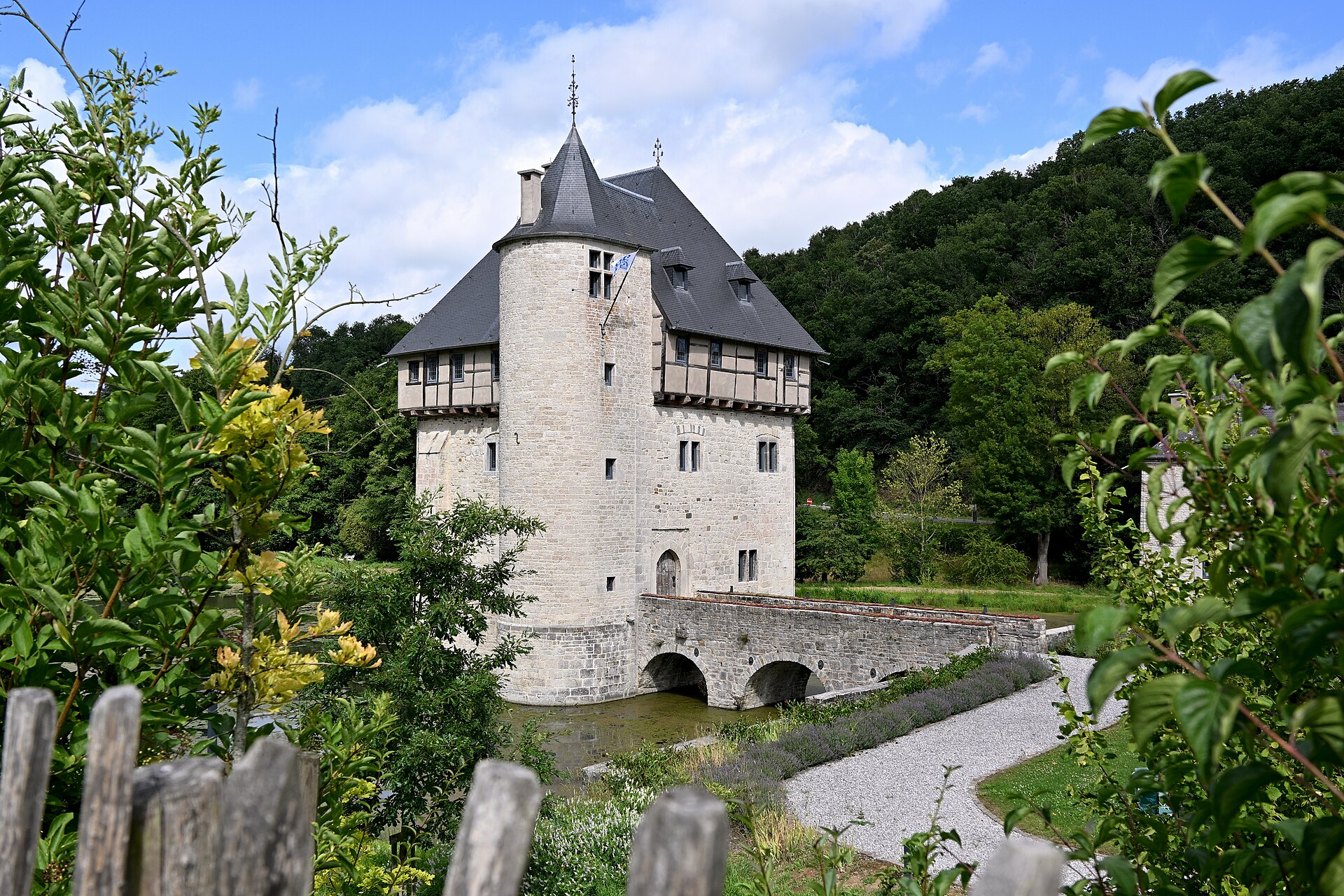
About this place
Crupet Castle — also known as Carondelet Castle — is a medieval moated donjon standing in the small village of Crupet, in Wallonia, Namur province, Belgium. Since 1977 the village has belonged administratively to the municipality of Assesse, following a nationwide reform that merged smaller communities into larger administrative units. The castle was built in the 11th or 12th century, making it one of the older surviving fortified structures in this part of Wallonia.
What kind of building is Crupet Castle?
Crupet Castle is described as a moated donjon, meaning a defensive residential tower surrounded by a water-filled ditch, and also as a ferme-château — a fortified farmhouse combining defensive architecture with agricultural and residential functions. This dual character was typical of minor noble families in the region, who needed a defensible home base while also managing the surrounding farmland. The moat around the central tower served as a practical barrier, slowing any approach to the main living quarters.
Where does the name Carondelet come from?
The alternative name, Carondelet Castle, refers to the Carondelet family, historically associated with the property. This name appears frequently in English-language sources and materials aimed at visitors from abroad, and it is used interchangeably with the geographic name Crupet, particularly in guides and reference works covering the Namur region.
How did the castle's political allegiance change over time?
The lords of Crupet Castle later became vassals of Liège — that is, of the Prince-Bishopric of Liège, one of the most influential centers of secular and ecclesiastical power in medieval west-central Europe. Such feudal dependence was common among the lesser nobility of the Namur region, who had to navigate relationships with several neighboring powers, including the County of Namur, the Prince-Bishopric of Liège, and later Burgundy. The recorded vassalage to the bishops of Liège places the castle within this broader medieval network of feudal obligations.
Where exactly is the castle located?
Crupet is a small village in Wallonia, in Namur province, in the French-speaking eastern part of Belgium. Since 1977, the village has formed part of the municipality of Assesse, created as part of Belgium's municipal merger reform, which combined a number of smaller villages into larger administrative units. The area lies within the wider Meuse valley region and features the gently rolling terrain typical of central Wallonia, a landscape that has preserved several similar fortified residences from the medieval period.
Frequently asked questions
How old is Crupet Castle? It was built in the 11th or 12th century, making it one of the older fortified structures still standing in Namur province.
Are Crupet Castle and Carondelet Castle the same building? Yes — Carondelet Castle is an alternative name for the same structure, derived from the Carondelet family historically linked to the property.
Which municipality does Crupet belong to today? Since 1977, the village of Crupet has been part of the municipality of Assesse, in Namur province.
What type of structure is it? It is a moated donjon — a defensive tower surrounded by a moat — also described as a ferme-château, combining fortification with farmhouse functions.
Who were the castle's lords vassals to? At a certain point in its history, the lords of the castle became vassals of the Prince-Bishopric of Liège.
Nearby places

Earn badges for the places you visit
Download NextOnTrip, discover new places and check off your trails.