About this place
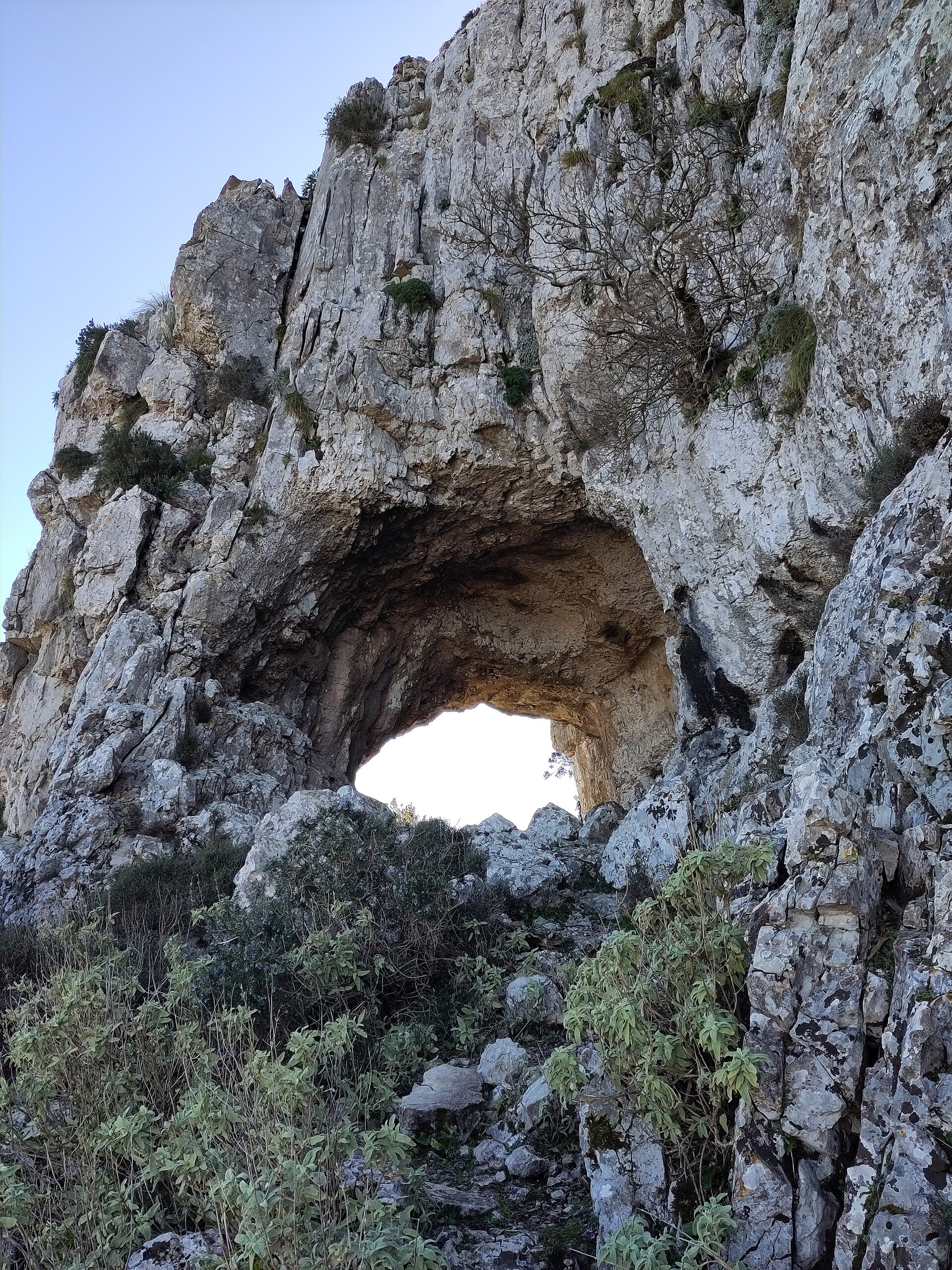
Cova de Massana is a small prehistoric cave site in the municipality of Campanet, in the northern part of Mallorca, at the foot of the Serra de Tramuntana. It suits travellers looking for a genuine link to the island's deep past rather than a polished tourist attraction — there are no lights, no ticket booth, and no marked visitor path.
What exactly is Cova de Massana?
It is a hypogeum — a cave used or shaped for burial purposes — dated to the second phase of the pre-Talayotic period, the earliest stage of Mallorca's prehistory, predating the island's better-known Talayotic culture. The site sits close to Cuculla de Massana, a modest 331-metre hill that acts as a natural landmark in this stretch of the Tramuntana range. The surrounding land once formed part of the old Massana estate, split in 1993 into Massana Vell and Massana Nou.
It is worth clearing up a common mix-up straight away: Cova de Massana is not the same place as the well-known Coves de Campanet — the show cave with stalactites discovered in 1945 and set up for guided tours. Cova de Massana is a separate archaeological site with a completely different character: unlit, non-commercial, and left largely as it was found.
What does the surrounding area look like?
The cave lies in the rocky, hilly landscape typical of inland Tramuntana — low Mediterranean scrub, dry stone walls marking old field boundaries, and dry valleys. This is terrain for visitors ready for a walk over uneven ground, ideally in sturdy hiking shoes. There is no visitor infrastructure nearby — no information panels, no signposted trail, no staffed access point — so it is worth checking a topographic map or a hiking app before setting out.
Who is this site for?
Cova de Massana appeals mainly to people interested in archaeology and Balearic prehistory, as well as travellers who prefer Mallorca's quieter corners, away from the coastal crowds. It also works well as a stop for hikers already exploring the hills around Campanet, rather than as a stand-alone, full-day destination on its own.
Anyone hoping for dramatic rock formations, lit passageways, and full tourist facilities should head instead to Coves de Campanet, located in the same municipality. Cova de Massana offers a different kind of experience: a direct, low-key encounter with one of the earliest traces of human presence on the island, set within the natural landscape of the Tramuntana mountains.
What should visitors know before going?
Because there is no official infrastructure or signage, it is best to confirm the exact location in advance using a detailed map or a local Campanet hiking guide. The village of Campanet itself makes a sensible starting point, with paths leading up into the Tramuntana hills. Bring water, a torch if you plan to look inside, and appropriate footwear — the ground can be stony and uneven, particularly closer to Cuculla de Massana.
Frequently Asked Questions
Is Cova de Massana the same as Coves de Campanet? No. Coves de Campanet is a commercial show cave discovered in 1945, with lighting and guided tours. Cova de Massana is a separate prehistoric archaeological site with no tourist facilities.
Can the cave be visited independently? Yes, but without marked trails or signage — reaching it requires some navigation and preparation, including hiking shoes and a map or trail app.
What is inside the cave? It is a burial hypogeum from the second phase of the pre-Talayotic period, one of the oldest traces of human presence on Mallorca, predating the Talayotic culture.
Where exactly is Cova de Massana located? In the municipality of Campanet, in northern Mallorca, near the 331-metre Cuculla de Massana hill, on the land of the former Massana estate.
Nearby places

Earn badges for the places you visit
Download NextOnTrip, discover new places and check off your trails.