About this place
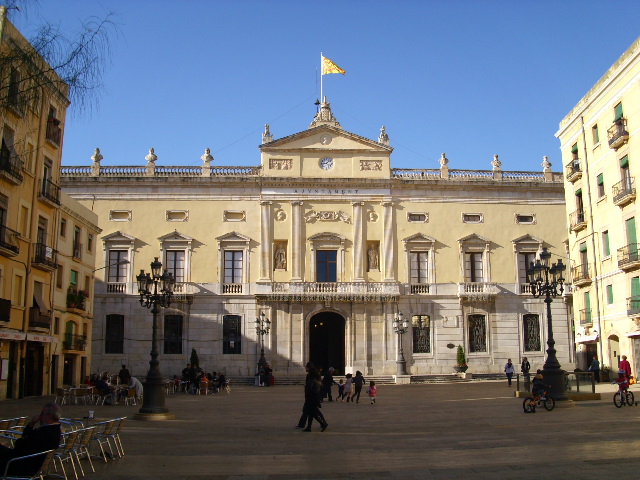
The City Hall of Tarragona (Ajuntament de Tarragona) sits on Plaça de la Font, right in the heart of the old town of this Catalan city on the Mediterranean coast.
How do you get there?
Plaça de la Font lies within the walls of Tarragona's old town, just a few minutes' walk from the city's major Roman sites — the amphitheatre and the circus. It's the most convenient starting point for exploring the historic centre on foot, with narrow streets fanning out toward the cathedral and the Balcó del Mediterrani viewpoint. The Tarragona train station is a comfortable fifteen-minute walk away, and since the old town core is largely pedestrianised, drivers are better off parking on the edge of the historic district and continuing on foot.
What will you see?
Plaça de la Font itself occupies part of the site of the old Roman circus, a chariot-racing venue once woven into the layout of ancient Tarraco. The square takes its name from a well built here in the 14th century, around which the neighbourhood's public life gradually took shape. The town hall building, erected in the 19th century on the grounds of a former convent, is neo-gothic in style, with an Ionic-influenced façade and a distinctive clock tower that rises above the buildings lining the square.
Inside the courtyard stands a two-tiered sarcophagus dedicated to King James I the Conqueror — a symbolic tribute, since the monarch's actual remains rest at the Poblet Monastery, a UNESCO World Heritage Site. The building on Plaça de la Font has served as Tarragona's seat of local government since 1852, when the council moved here from what is now known as the Antic Ajuntament, the former city hall that had held this role from the 15th century until the mid-19th century.
The square around the town hall is lively throughout the day, ringed by cafés and restaurant terraces that make it a natural resting point between visiting the Roman ruins and exploring the cathedral quarter.
When should you visit?
Tarragona has a classic Mediterranean climate, so spring (April to June) and early autumn (September and October) offer the best balance of mild temperatures and lighter crowds compared to peak summer. The square can get warm at midday in summer, but comes alive in the evenings once the restaurant terraces fill up. Try to time your visit for late afternoon, when the low sun gives the façade and clock tower a warm golden tone.
Practical tips
The City Hall is primarily an administrative building, so its interior isn't generally open to visitors — the draw here is the architecture, the square, and the historical setting rather than a guided tour. It's easy to pair a visit with a short walk to the remains of the Roman circus, traces of which are still visible in the surrounding streets, and to the Antic Ajuntament, the city's former seat of government, just a few minutes away on foot.
Frequently asked questions
Can tourists go inside Tarragona's City Hall? The building functions as a working administrative office, so interior access is limited — visitors mainly view the façade, clock tower, and the surrounding Plaça de la Font.
Since when has the City Hall been in its current location? The municipal government moved to Plaça de la Font in 1852; before that, the city was governed from the building now known as the Antic Ajuntament.
What does the name Plaça de la Font mean? The name refers to a well ("font" in Catalan) built on the square in the 14th century.
Are there other Roman sites near the City Hall? Yes — the square sits on part of the old Roman circus, and the Roman amphitheatre and the walls of ancient Tarraco are both within easy walking distance.
Nearby places

Earn badges for the places you visit
Download NextOnTrip, discover new places and check off your trails.