About this place
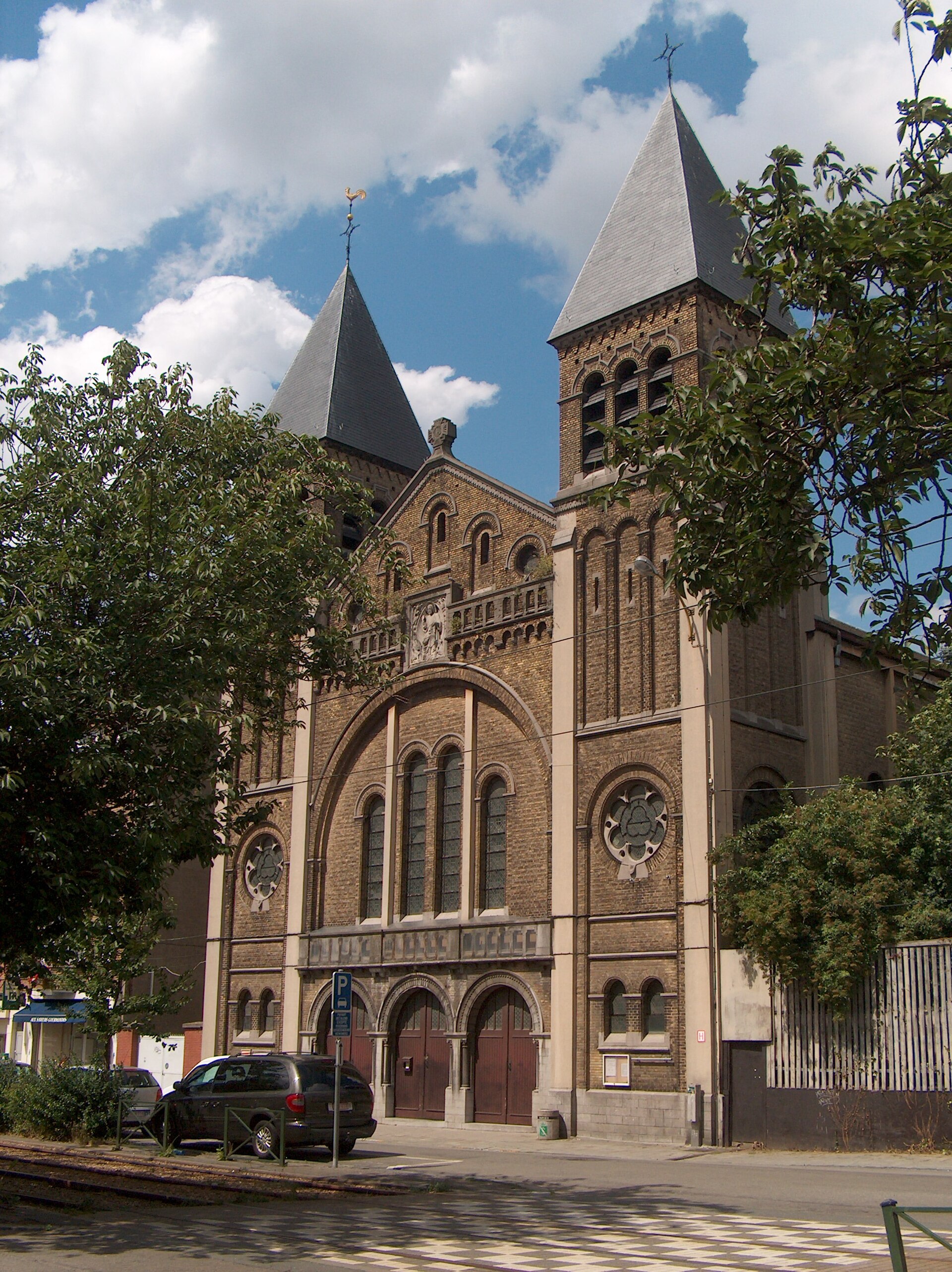
The Church of St. Teresa of Ávila stands on Avenue Rogier in the Brussels municipality of Schaerbeek (Dutch: Schaarbeek) and belongs to the Archdiocese of Mechelen-Brussels. It's a relatively young building by European church standards — a 20th-century structure that grew out of the rapid expansion of the Dailly neighborhood in the early 1900s.
How the parish began
The story starts in 1905, when Father Henri Heyters, a curate of the Saint-Servais parish, founded a new parish in the Dailly district at the request of the Archdiocese of Mechelen. A provisional neo-Gothic church was raised first, dedicated jointly to two patron saints: Teresa of Ávila and Alice. The arrangement was meant to be temporary, but the neighborhood grew so quickly that the modest building soon couldn't keep up with the number of parishioners.
A new church on Avenue Rogier
Once the provisional church on Avenue Dailly became too small, plans moved forward for a larger, permanent church — this time dedicated solely to Teresa of Ávila. It was completed in 1932 on Avenue Rogier, and this is the building that still serves the parish today. The design came from architect and building contractor Coomans, who gave the church a modernized Romanesque Revival form: simplified, solid volumes echoing medieval Romanesque architecture, without excessive historicist ornament.
Construction wasn't straightforward from an engineering standpoint. The plot chosen for the church sat on reclaimed, backfilled land with unstable soil. To give the building a solid footing, builders had to drive a foundation of concrete piles deep into the ground — a common but demanding solution for structures raised on filled or reclaimed terrain.
Inside the church
Among the notable furnishings is a statue of Our Lady with the Child, whose style stands apart from more traditional, stiffly hieratic Marian imagery. The figure is rendered in a more natural, lifelike manner, closer to a modern sculptural sensibility than to classic devotional conventions.
The church today
Beyond its original Roman Catholic parish role, the building today also hosts worship for a community following the Chaldean-Syriac rite (Mar Addai and Mar Mari), making it a meeting point for different liturgical traditions within a single Christian community in Schaerbeek.
The church sits in a densely built, urban part of the municipality, not far from other early-20th-century churches raised during the same wave of suburban growth in Brussels — including the Church of St. Alice on Avenue Dailly, a reminder of the parish's earlier home before the current building was completed.
Frequently asked questions
Where exactly is the church located? On Avenue Rogier (Rogierlaan) in Schaerbeek, one of the nineteen municipalities of the Brussels-Capital Region.
When was the current building built? In 1932. Before that, from 1905, the parish used a provisional church on Avenue Dailly.
What architectural style is it built in? A modernized Romanesque Revival style, designed by architect-contractor Coomans.
Why did construction require special foundations? The site was reclaimed, backfilled land with unstable soil, so the structure needed to rest on concrete piles driven deep underground.
Is it only a Roman Catholic church? Originally yes, but it now also serves a community of the Chaldean-Syriac rite (Mar Addai and Mar Mari).
Nearby places

Earn badges for the places you visit
Download NextOnTrip, discover new places and check off your trails.