About this place
Church of San Pedro is a Gothic parish church in Zumaia, a coastal town in the Basque Country, standing on a hill above the mouth of the Urola River. The building has watched over the town for centuries and remains one of its most recognizable landmarks, visible even from the nearby Flysch cliffs.
How old is the church?
The origins of the church are usually traced to the founding of Zumaia in 1347. One theory holds that it was built over an earlier monastery, Santa María, first mentioned in records from the 13th century. Certain architectural details, such as the lower section of the tower and its round arches, point to a genuinely medieval core.
The building's current appearance, however, owes much to a major renovation carried out in the 16th century. An inscription on the choir balustrade records that the lords of the Aguirre family commissioned the reconstruction of the church in 1530, and it is this rebuilding that shaped much of what visitors see today.
Why was the church built on a hill?
The site was chosen deliberately. The hill overlooks both the coastal town and the mouth of the Urola River, giving the community a natural defensive advantage. Like several other churches along this stretch of the Basque coast, San Pedro was designed with a watch-and-defense role in mind, reflecting a period when seaside settlements had to stay alert to threats arriving by sea.
What architectural style does it show?
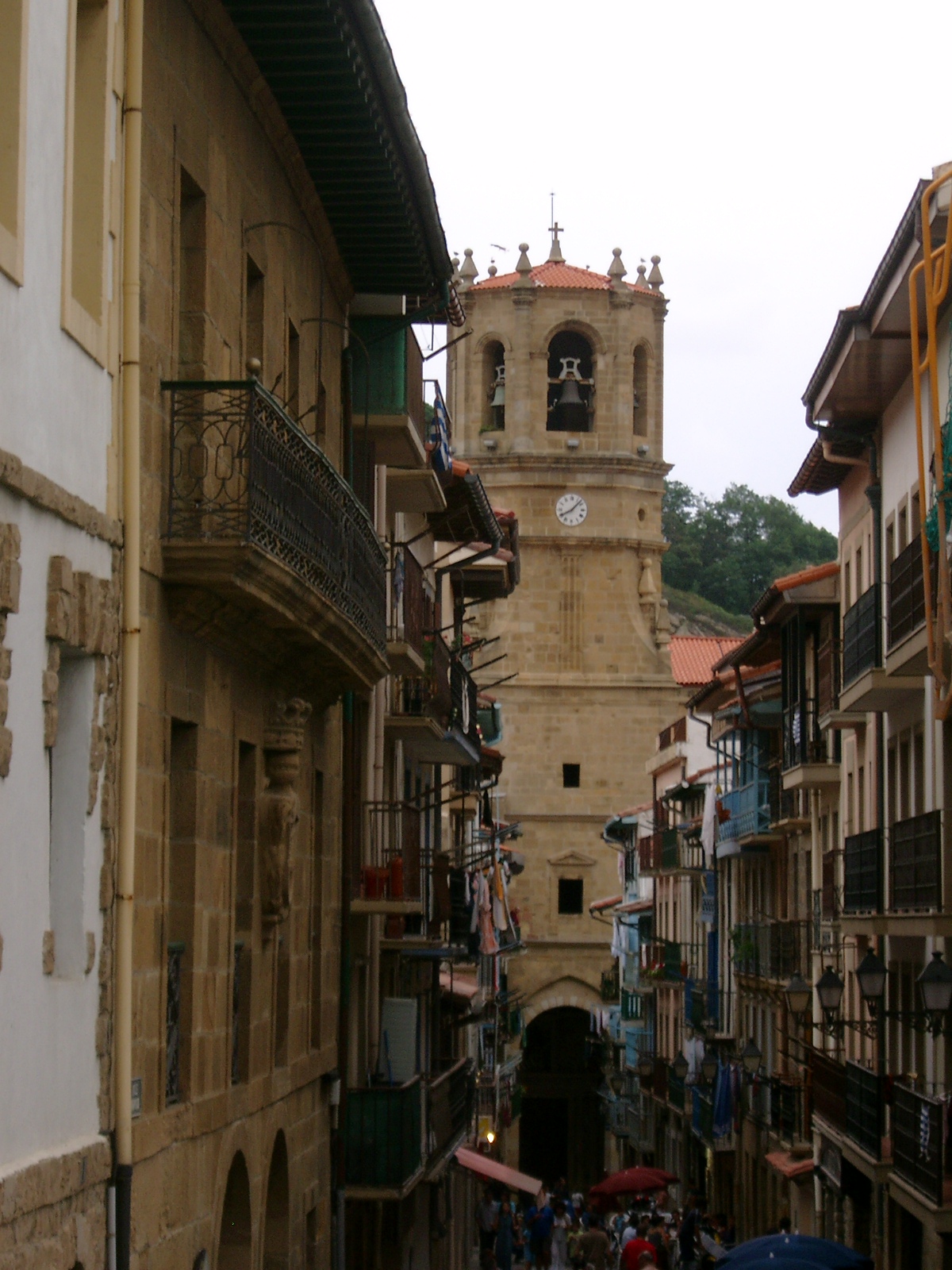
The church follows the Gothic style and was built with a single nave. Gargoyles break up the severity of the stone facade, and a square tower rises on the western side of the building, housing the main entrance. This restrained, single-nave layout is typical of defensive churches built along this coast, where practicality and defense often mattered more than decorative ambition.
What is inside the church?
The main treasure inside is a Romanist-style altarpiece dating from the late 16th century, the work of Juan de Antxieta, one of the leading sculptors of the Basque Renaissance. The altarpiece is considered one of the most valuable pieces in the church and draws particular interest from visitors curious about the region's religious art.
How do you get to the church in Zumaia?
The church sits on a hill in the center of Zumaia, close to the mouth of the Urola River, making it an easy landmark to spot while exploring the town. Thanks to its elevated position, the tower is visible from a distance, whether approached from the beach or from the seafront promenade.
Zumaia is best known for the Flysch rock formations, one of the most significant geological sites on the Basque coast, and for filming locations linked to the "Game of Thrones" series. A visit to the Church of San Pedro pairs naturally with either of those, letting travelers combine a walk along the cliffs with a stop in the town's historic center.
Frequently Asked Questions
When was the Church of San Pedro in Zumaia built? The church is generally linked to the founding of the town in 1347, though some elements suggest earlier medieval origins. Its current form largely dates from a 1530 reconstruction.
What architectural style is the church built in? It is a Gothic, single-nave church with a square tower on its western side and gargoyles decorating the facade.
What is the most important artwork inside the church? A late 16th-century Romanist altarpiece created by Juan de Antxieta.
Why does the church stand on a hill? Its position above the mouth of the Urola River was chosen for defensive and watch purposes for the coastal settlement.
Nearby places

Earn badges for the places you visit
Download NextOnTrip, discover new places and check off your trails.