About this place
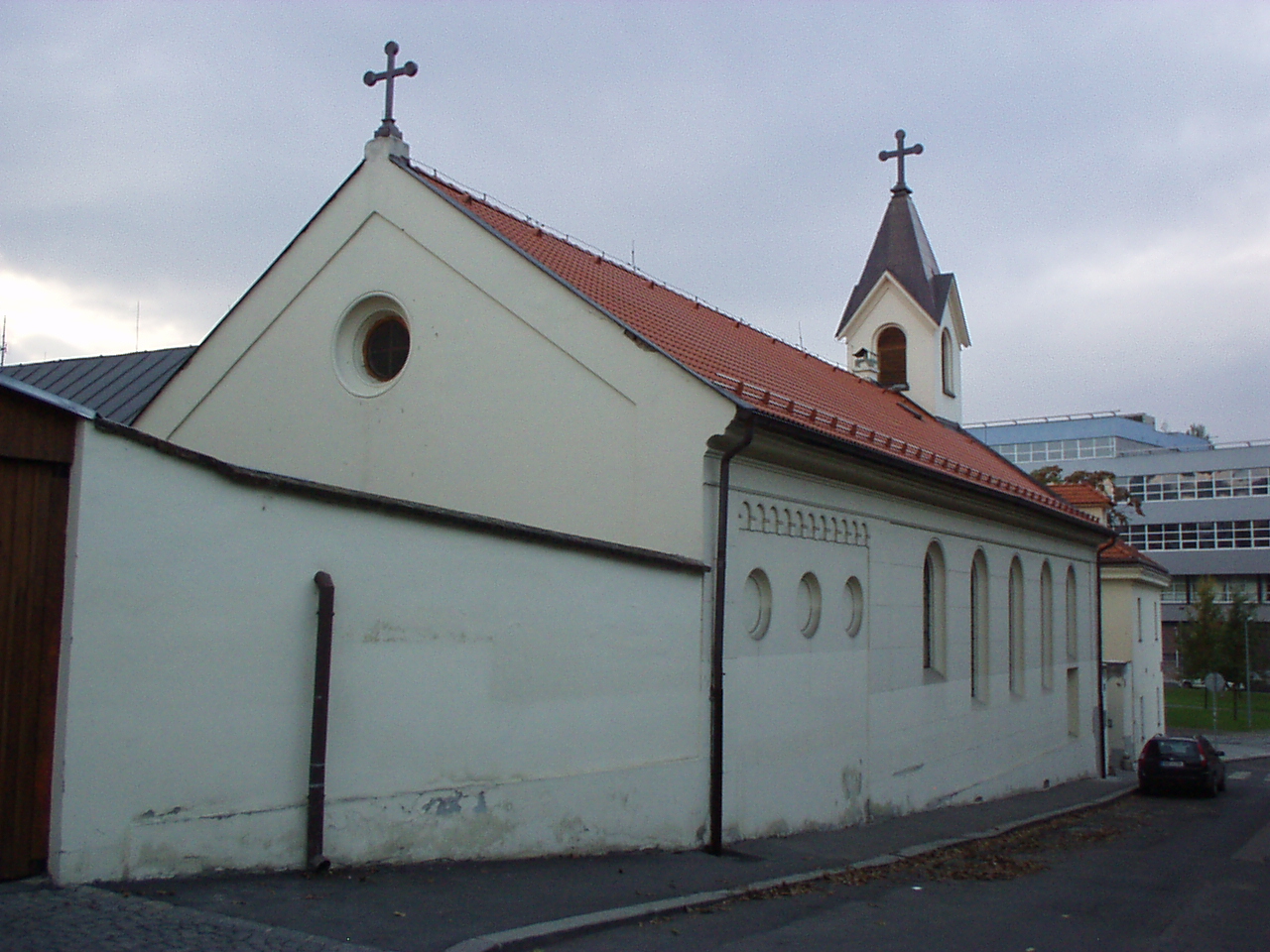
Church of Saint Matthias crowns a high promontory above the Šárka valley in Prague's Dejvice district, forming a landmark visible across the lower part of the valley.
Where exactly does the church stand, and why here?
The bluff overlooking the Šárka valley has been settled since the Bronze Age. Archaeological digs carried out here at the end of the 19th century uncovered bronze-smelting furnaces, cremation graves belonging to the Knovíz culture, and crouched-skeleton burials typical of the Lusatian culture, alongside finds from the later Slavic period. Long before any church stood here, the site already held settlement and ritual importance.
What legend explains why the church was founded?
Tradition holds that Duke Boleslav II ordered the first small sacred building — a rotunda or chapel — to be raised on this spot as early as 971. According to the story, the duke lost his way in the surrounding forest and arrived precisely where the warriors of Ctirad had been killed and buried after being betrayed by the beautiful Šárka during the so-called Maidens' War. A wild bear was said to guard their graves, and the duke was saved from danger by a vision of Saint Matthias. This legend explains both the church's dedication and its symbolic position above a valley tied to one of the best-known Czech myths.
How has the building changed over the centuries?
The first reliable written record of a church on this site dates to 1404, showing that the location served a religious function continuously for centuries afterward. That older church stood until 1770, when it was torn down and immediately replaced by a new late Baroque building, completed in 1771. This is the structure that still stands on the promontory today and remains a defining feature of the Dejvice skyline.
What is worth seeing inside?
The interior is decorated in the Rococo style, contrasting with the late Baroque exterior. The main altar, dedicated to Saint Matthias, is attributed to the painter Kristián Dittmann. It is also worth taking in the church's surroundings — right beside the building lies the historic Šárka cemetery, closely tied to the parish and to the long history of this hilltop.
What role does the church play in Prague's traditions?
The church was the traditional destination of the annual Saint Matthias pilgrimage, remembered for its gingerbread nativity scenes sold during the feast. While the large city fair that today carries the same name has since moved elsewhere in Prague, the custom's roots trace back to this hill above the Šárka valley and the veneration of Saint Matthias associated with it.
Frequently asked questions
Is this church connected to Prague's famous "Matějská pouť" funfair? Yes, historically. The church was the original destination of the Saint Matthias pilgrimage that gave the funfair its name, even though the large city-wide fair held under that name today takes place at a different site in Prague.
Is the current building the same one from the legendary founding in 971? No. The original 10th-century rotunda or chapel has not survived. The church standing today is a late Baroque building from 1771, erected after the demolition of an older church first documented in 1404.
Why was the church built on such an exposed hilltop? The high bluff above the Šárka valley had been settled and used for ritual purposes since the Bronze Age, and legend places Duke Boleslav II's saving vision of Saint Matthias at exactly this spot.
What else is worth seeing near the church? Right next to the building lies the historic Šárka cemetery, closely linked to the local parish and to the site's centuries-long history.
Nearby places

Earn badges for the places you visit
Download NextOnTrip, discover new places and check off your trails.