About this place
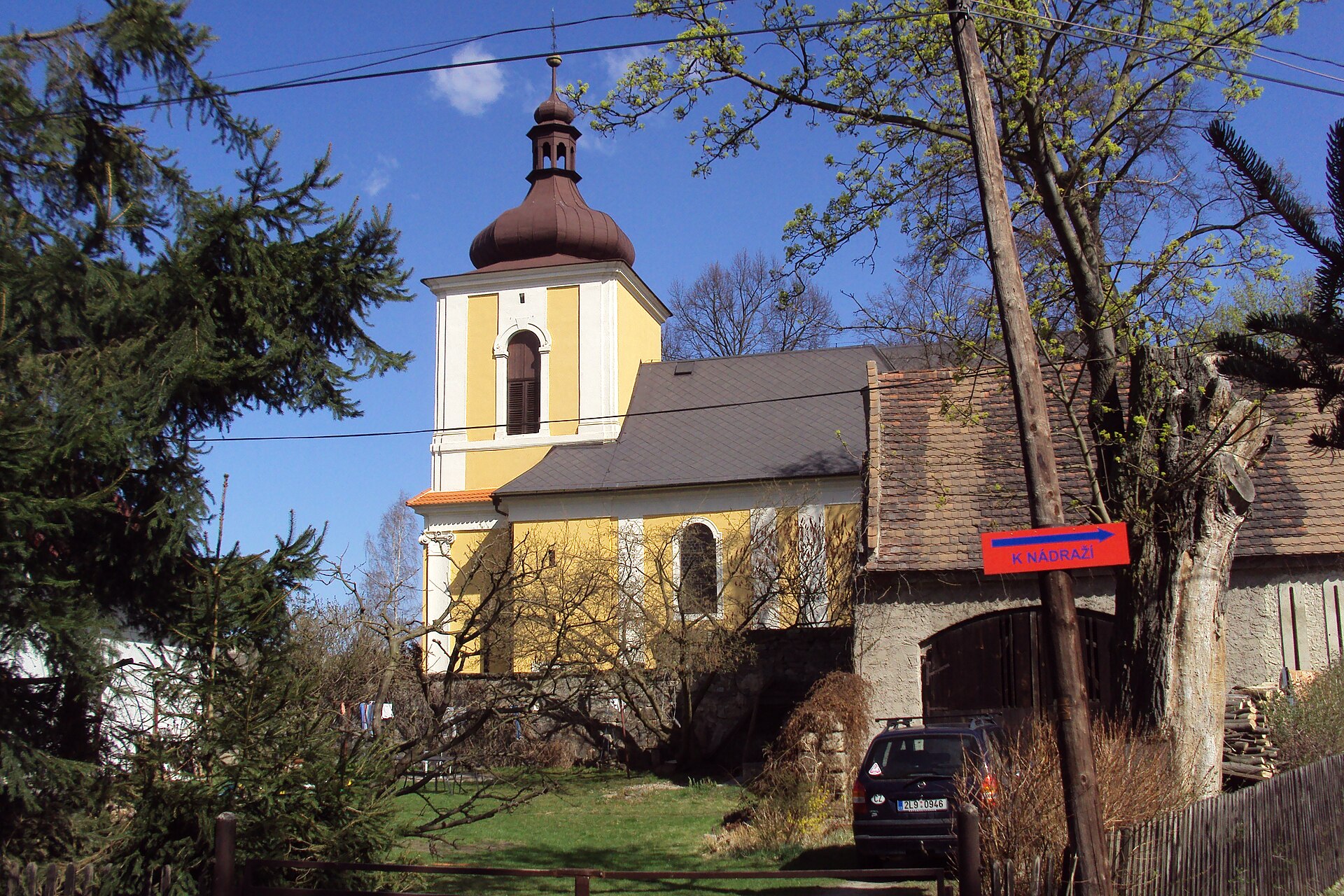
The Church of Saint Gall in Kuřívody, a village within the municipality of Ralsko in the Česká Lípa District (Liberec Region), is one of the most remarkable sacred buildings in northern Bohemia — not just for its age, but for the history it managed to survive. It stands at coordinates 50.585, 14.8039, on land that was, for decades, a closed military zone.
What is the history behind the church?
The church was most likely built in the second half of the 13th century as a Gothic building. It was originally dedicated to Saint George — an altar honoring Saint Gall was only added in 1653, and the church's rededication to him was first documented in 1714. In the first quarter of the 18th century the building was remodeled in Baroque style, and the bell tower, which still defines its silhouette today, dates from that same period.
The 20th century changed everything. After 1947, Kuřívody and the surrounding villages were absorbed into the vast Ralsko military training area, used first by the Czechoslovak army and later by Soviet forces stationed in the country. During the "normalization" period after 1970, most of the local heritage — including entire former villages — was heavily damaged or completely erased. The Church of Saint Gall was the only building to survive this era in a condition that later allowed restoration, and it remains the last surviving church within the former Ralsko military zone. Today it is protected as a Czech cultural heritage monument.
What can you see inside?
The real discovery came during restoration work in 2011, when conservators uncovered two layers of Gothic wall paintings dating from the 13th and 14th centuries. The older layer most likely depicts a heavenly scene with stars and constellations, while the younger layer includes the Archangel Michael weighing souls, a depiction of Saint Dorothy, and a temple offering scene. This find turned an unassuming village church into one of the more significant sites of Gothic wall painting in the Liberec Region — the frescoes are now the main reason to plan a visit here.
When is the best time to visit?
Because the church sits within a former military training ground, access is limited for most of the year and often restricted to the exterior only. The best opportunity to see the interior and the frescoes is during the recurring Svatohavelské slavnosti — open days dedicated to the church's patron saint, when the building is opened to visitors, typically with a guide. It's worth checking the schedule of this event before planning a trip to the Ralsko area, since interior access outside of it can be unpredictable.
How do you get to the church in Kuřívody?
Kuřívody lies within the municipality of Ralsko, in a quiet, sparsely populated part of the Česká Lípa District near the larger towns of the Máchův kraj (Máchа's Region). The most convenient way to reach it is by car, since public transport in the area is limited. The surrounding landscape — the former military training ground — still has a raw, partly abandoned character, which adds its own appeal for visitors interested in the region's 20th-century military history.
Frequently asked questions
Can the church be visited year-round? Not reliably — full access to the interior, including the Gothic frescoes, is mainly guaranteed during the organized open days (Svatohavelské slavnosti). Outside of these, visits can be restricted.
Why is it called the "Church of Saint Gall" if it wasn't originally dedicated to him? The church was originally dedicated to Saint George. An altar to Saint Gall was added in 1653, and the new dedication became established and was first recorded in written sources in 1714.
What is the main attraction of this site? The two layers of Gothic wall paintings discovered in 2011, dating from the 13th and 14th centuries, which depict scenes including the Archangel Michael weighing souls and Saint Dorothy.
Why is it called the "last" church in Ralsko? After the area was absorbed into the Ralsko military training zone in 1947 and suffered further damage during the normalization period after 1970, most local sacred buildings disappeared — the Church of Saint Gall is the only one that has survived to this day.
Nearby places
-

Church of Saint Wenceslaus
Dolní Krupá
-
Church of Saint Giles
Bezděz
-
Maria column in Bělá pod Bezdězem
Bělá pod Bezdězem
-
Church of Saints Peter and Paul in Mimoň
Mimoň
-
Church of the Assumption of the Virgin Mary (Okna)
Okna
-
Church of the Nativity of the Virgin Mary (Klášter Hradiště nad Jizerou)
Klášter Hradiště nad Jizerou
Earn badges for the places you visit
Download NextOnTrip, discover new places and check off your trails.