About this place
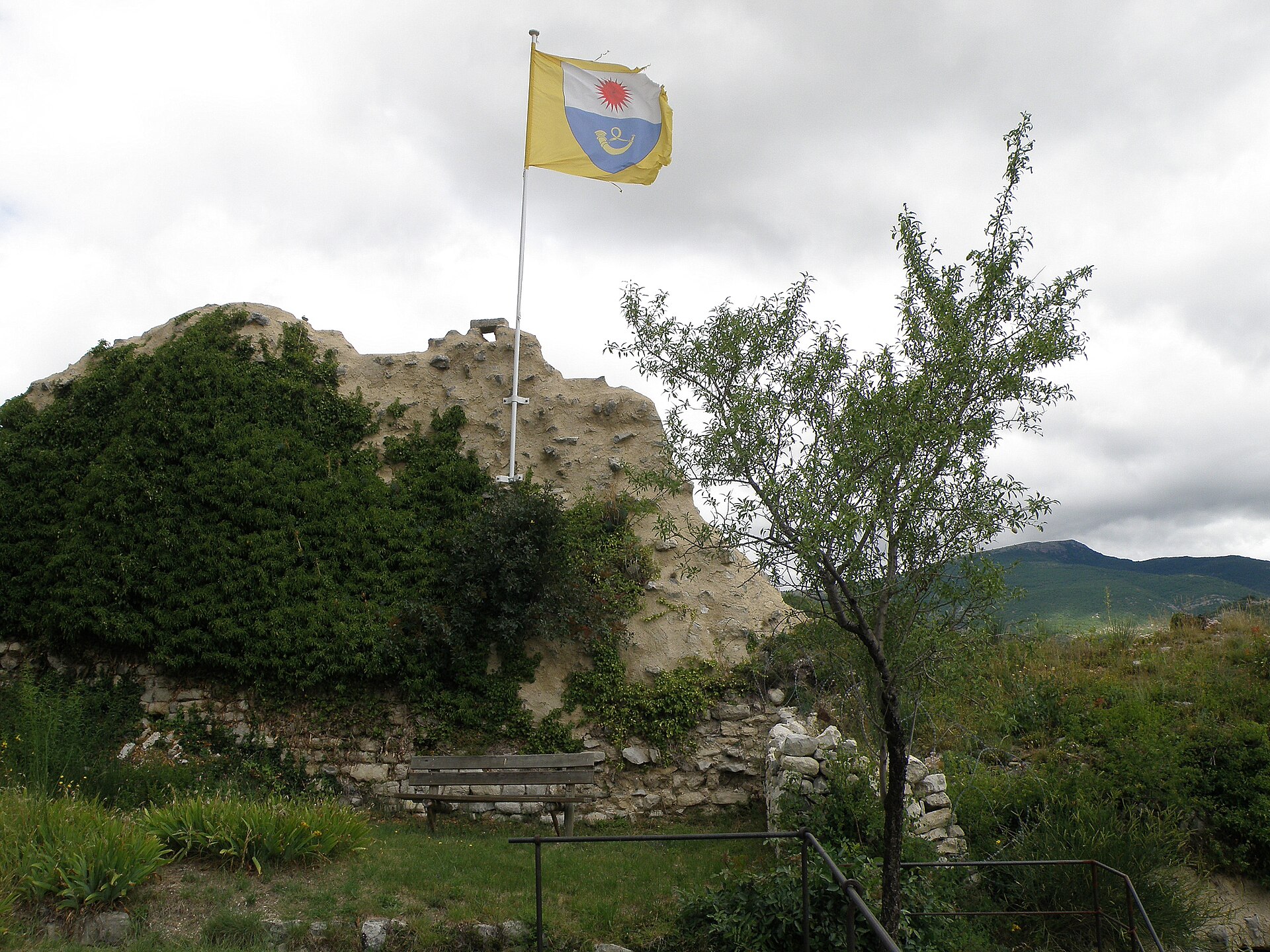
Château de Reilhanette is a medieval castle ruin overlooking the village of Reilhanette in the Drôme Provençale, set at the confluence of the Anary and Toulourenc rivers in the shadow of Mont Ventoux.
Where is it and how do you get there?
Reilhanette sits in the Baronnies area of the Drôme department, in the far southeast of France. The village occupies a junction of valleys, ringed by hills, with the castle ruins forming a landmark silhouette above the rooftops. A car is the easiest way in — the nearest larger towns are Montbrun-les-Bains and Sault, connected by winding local roads through the Baronnies hills. The region is popular with cyclists and hikers, so the drive itself is part of the appeal.
What will you see there?
The castle dates from the 12th century and passed through several hands over the centuries: the Sire of Montauban held it from 1276, the Mévouillon and Dupuy families took over in 1317, and it eventually came under the Barons of Dauphiné. Its downfall came in 1560, when royal troops destroyed the fortress — the ruins visible today date from that destruction. Locals later turned the castle mound into a viewpoint square, offering a panorama over the surrounding hills and valley, and it's now a favourite spot for a quiet picnic.
Reilhanette itself, nicknamed "Petite Reine" (Little Queen), has kept its medieval street layout intact. Its calades stand out — narrow, winding lanes paved with carefully fitted flat stones, originally designed to ease the passage of people, carts, and animals while limiting soil erosion. Most house façades still carry a medieval appearance, making a walk through the village feel like stepping back in time.
It's also worth stopping at the Church of Saint-Michel-et-Saint-Hippolyte, built from the 12th century onward. It has a square bell tower, a four-bay nave, and a Romanesque porch with rich carved decoration.
A curious footnote to Reilhanette's history: between 1971 and 1996, the village played a role in the Cold War as part of the Albion Plateau's nuclear defence system, serving as a firing control post for France's nuclear deterrent force.
When should you visit?
Spring and summer are the best times to come, when the surrounding fields fill with lavender and spelt — crops that have sustained the village's self-sufficient farming economy for generations. Summer also brings long daylight hours, ideal for hiking the hills and lingering on the castle square at dusk. Autumn offers a quieter visit, appreciated by photographers and anyone after a slower pace.
Frequently asked questions
Can you actually go up to the castle ruins? Yes — the castle mound has been turned into a public viewpoint square, open to visitors, with panoramic views over the surrounding countryside.
Where does the name Reilhanette come from? It most likely derives from the Latin word "rella" (plough), which evolved into "relha," then "Rellania" around 1227, before settling into the form Reilhanette from the 13th century onward.
What else is worth seeing besides the castle? Walk the narrow calade lanes and visit the 12th-century Romanesque Church of Saint-Michel-et-Saint-Hippolyte.
Is Reilhanette worth a long stay or just a quick stop? It's a small, quiet village — best suited to a few hours' visit combined with exploring the surrounding Baronnies hills, rather than a multi-day stay.
Nearby places

Earn badges for the places you visit
Download NextOnTrip, discover new places and check off your trails.