About this place
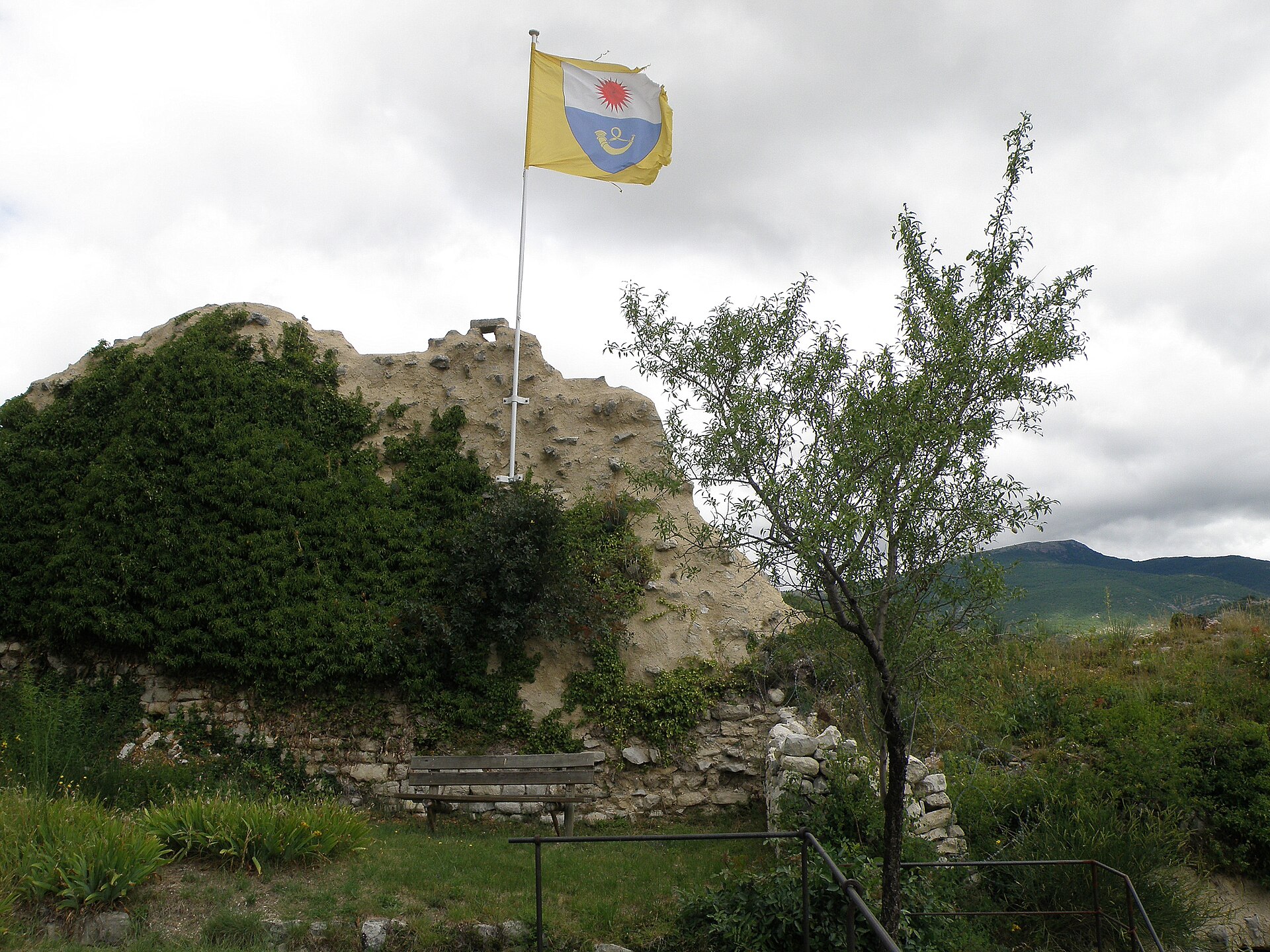
Château de la Gabelle is a 13th-century stronghold in Ferrassières, a village in the Drôme provençale, set between Mont Ventoux, the Lure massif and the Luberon. The château stands right in the middle of lavender country and is still run today by the family behind its farm and guesthouse.
Where does the château's name come from?
The name Gabelle refers to the historic French salt tax once collected in this region. The château was built by the du Puy-Montbrun family, local nobility, who chose a strategic site at the meeting point of three mountain ranges. In the 16th century the building served as a Huguenot stronghold - local accounts say it could shelter as many as 1,500 arquebusiers at once, which hints at the scale of its original fortifications.
How has the château changed over the centuries?
The property's fortunes shifted in 1838, when it passed to the family that first began growing lavender here on a serious scale. Their descendants still run the estate today - the current owners took over in 1963. The guest rooms and cottages on site were renovated between 1999 and 2002, blending the historic structure with the comfort visitors expect.
What can visitors see in the château and its grounds today?
The building is made up of several wings - north, south and north-east - plus a north tower with a built-in bread oven, still visible as part of the old farm. The grounds also hold a bergerie (sheep shelter), and a stone staircase, now partly ruined, leads up to a terrace. In spring 2025, a first restoration phase backed by the Mission Patrimoine programme was completed, covering the bergerie and structural work on three of the wings. A second phase, still underway, focuses on rebuilding the annex roof and stone staircase and securing access to the bread oven.
What is there to do on site?
Château de la Gabelle operates as a working farm with certified organic lavender production, still the family's core activity. Visitors will find a shop selling farm products, a table d'hôtes restaurant serving regional dishes, and on-site massage and reflexology treatments. The château is surrounded by extensive gardens, an avenue of century-old lime trees and open meadows, giving the grounds a quiet, working-farm feel rather than a typical sightseeing stop.
Why is it worth visiting?
Ferrassières sits at the heart of the Drôme provençale, a region known for large-scale lavender farming, which is why the area draws visitors especially in July when the fields are in full bloom. Château de la Gabelle combines genuine defensive history with a living agricultural tradition, setting it apart from purely decorative châteaux nearby. It suits travelers looking to experience rural Provence firsthand, not just take a photo of the walls.
Frequently asked questions
How old is Château de la Gabelle? It was built in the 13th century, at a strategic site between Mont Ventoux, the Lure massif and the Luberon.
Since when has the château belonged to its current family? The family acquired the estate in 1838 and started growing lavender there; the present owners have run it since 1963.
Can you stay overnight at the château? Yes, it offers guest rooms and cottages (gîtes), renovated between 1999 and 2002.
Is the château currently under restoration? Yes, a second restoration phase is underway, covering the annex roof, the stone staircase and access to the bread oven, following the spring 2025 completion of the bergerie restoration and structural work on three wings.
Nearby places

Earn badges for the places you visit
Download NextOnTrip, discover new places and check off your trails.