About this place
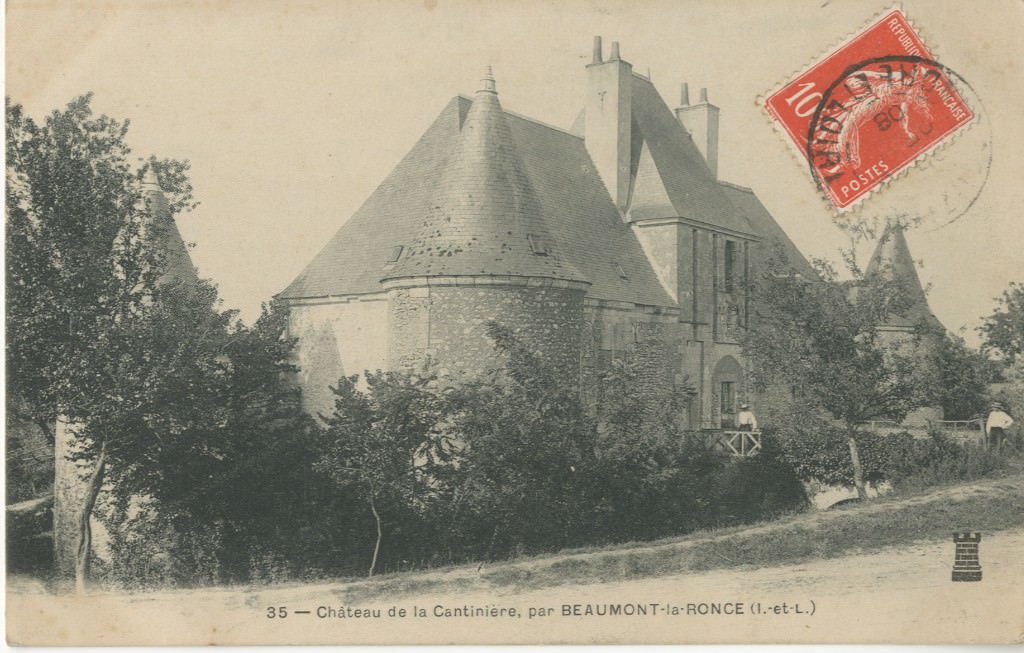
Château de la Cantinière is a Renaissance-era manor house standing just north of the village center of Beaumont-Louestault, a small commune in Indre-et-Loire, roughly 24 km north of Tours.
Where does the name come from?
The building takes its name from the old fief of La Cantinière, which in the medieval period fell under the châtellenie of Louestault - an administrative unit that first appeared in the 12th century. The land initially belonged to the barony of Châteauneuf in Tours, then passed to the almonry of the collegiate church of Saint-Martin in Tours, and in 1588 came into the hands of Pierre Molan, controller and general superintendent of royal finances. It was around that period that the present manor was built on the fief's grounds.
Who owned the manor over the centuries?
The current building dates to the end of the 16th century. Its first owners were the Lhuillier family, after which the estate changed hands several times - passing to the du Bouex family, then the Bouault family, and by the 18th century to the Bonnin de la Bonninière de Beaumont family, also linked to the nearby Château de Beaumont. This long chain of ownership explains why the structure blends features from different periods, from its defensive medieval origins to later residential remodeling.
What does the architecture look like?
La Cantinière was originally a fortified building, as shown by its surviving moats - now framing a terrace - and two towers. The south-facing facade follows a layout typical of French manor houses: a square main lodge flanked by wings ending in round towers of differing sizes. That asymmetry between the towers, one noticeably bulkier than the other, is one of the more distinctive architectural details of the ensemble and sets it apart from the more symmetrical residences of the same era.
Is the manor a protected historic monument?
Yes. An order dated 22 August 1949 listed the building as a monument historique. Protection covers the facades and roofs of the main building, the north-east tower, and the moat. The listing confirms the site's historical and architectural value, though - like many manors in the Touraine region - Cantinière remains private property.
What should you know before visiting the area?
Beaumont-Louestault sits in a quiet, rural corner of Indre-et-Loire, along the road linking Tours with the northern edge of the department. The commune is also home to the Château de Beaumont, the former seat of the Bonnin de la Bonninière family, so both sites can easily be combined into a single outing focused on the area's noble history. Given its private-property status, the best way to see La Cantinière is a relaxed drive-by through the surrounding countryside rather than an interior visit.
Frequently asked questions
When was Château de la Cantinière built? The present building dates to the end of the 16th century, replacing an earlier fortified fief tied to the châtellenie of Louestault.
Who owned the manor? Successively the Lhuillier, du Bouex, and Bouault families, and from the 18th century onward the Bonnin de la Bonninière de Beaumont family.
Is the building a listed historic monument? Yes, since 22 August 1949 - the facades, roofs, north-east tower, and moat are protected.
Where exactly is the manor located? In Beaumont-Louestault, in the Indre-et-Loire department, about 24 km north of Tours.
Nearby places

Earn badges for the places you visit
Download NextOnTrip, discover new places and check off your trails.