About this place
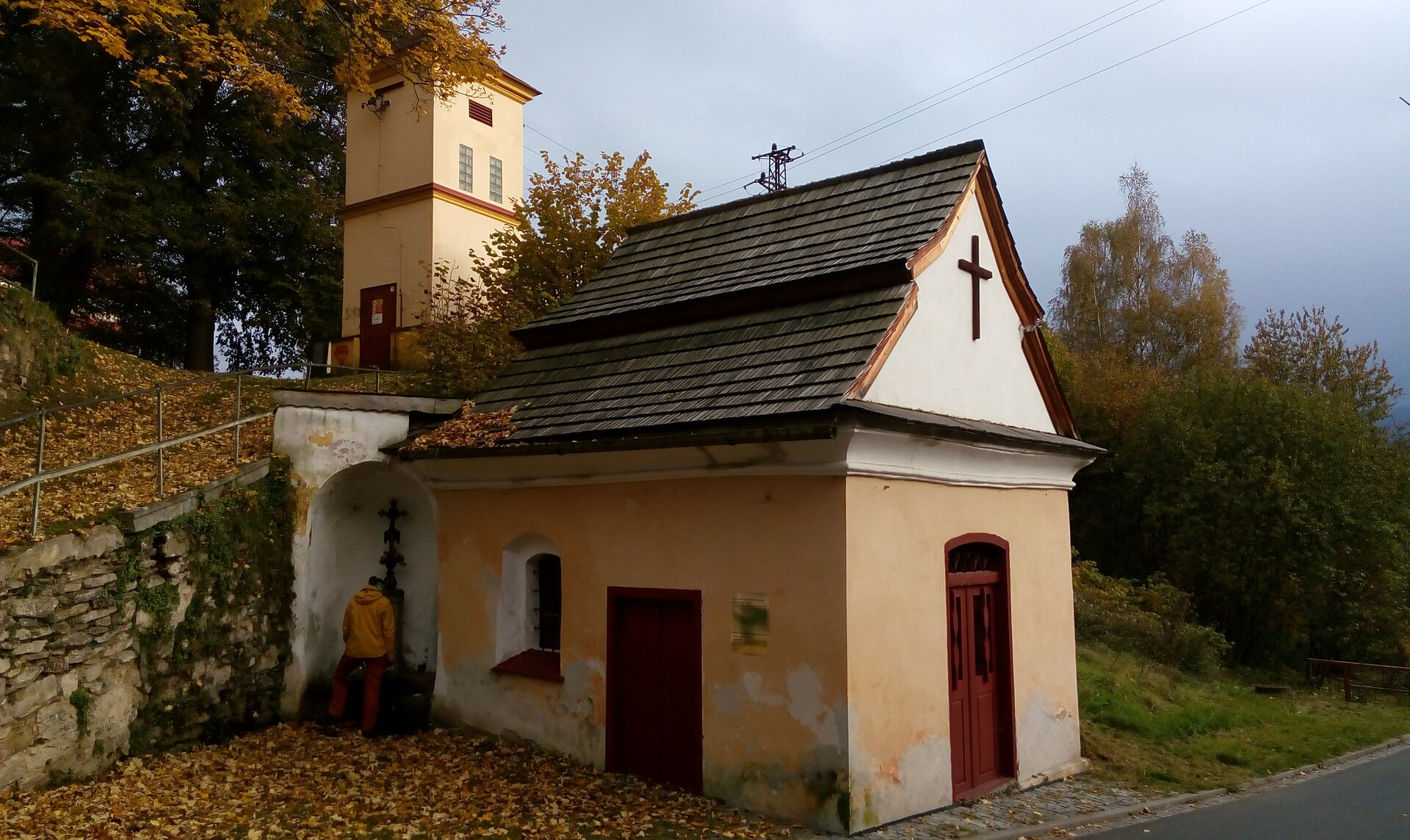
The Chapel of St. Anne is a small Baroque monument standing on a hill within a historic cemetery complex in Kašperské Hory, about 1.5 kilometers west of the center of this former gold-mining town in the Šumava (Bohemian Forest) region. The chapel sits right next to the Church of St. Nicholas, and together the two buildings form one of the area's most recognizable landmarks.
How old is the chapel?
Nobody knows the exact founding date. Historians believe the site may originally have held a medieval charnel house that was substantially rebuilt in 1757, giving it the Baroque look it still has today — though it's also possible the whole structure was built new that year. Either way, the chapel has served as a place of worship for close to three centuries and is closely tied to the mining history of Kašperské Hory, a town whose entire identity grew out of gold extraction.
What's inside worth seeing?
The interior features an illusionistic (trompe l'oeil) ceiling painting from 1756 by Josef Hager, a technique meant to visually expand the small space and add depth — typical of Baroque sacred art. The Baroque altar also draws attention: it once concealed a figurine of St. Anne "Selbdritt" (a depiction of St. Anne together with Mary and the infant Jesus) along with a carved wooden purgatory scene. St. Anne was venerated here as protector of families and patron of miners, a fitting choice in a town built entirely on gold mining.
What surrounds the chapel?
The chapel stands within an old cemetery whose history stretches back to the founding of Kašperské Hory itself. The graveyard is dotted with cast-iron crosses from the turn of the 19th and 20th centuries, a style typical of village and small-town cemeteries across the Šumava region. Headstones here bear both Czech and German names — until the end of World War II, the area around Kašperské Hory was home to a large German-speaking community, and the cemetery is one of the few places that quietly reflects that shared, if difficult, history.
How do you get there?
The chapel and cemetery sit on a hill at the western edge of town, within walking distance of the main square in Kašperské Hory. The route follows a scenic, gently climbing path through the edge of the settlement and greenery, opening up views over the town's rooftops and the surrounding Šumava hills. It's a natural stop for anyone exploring the town center on foot together with the nearby Kašperk Castle.
When is the best time to visit?
Because the site sits on an open hillside and combines a cemetery with a chapel, it's most pleasant to visit during daylight hours, outside the rainy autumn and winter months when the path can get slippery. Spring and summer also offer the clearest views over the town from the terrace by the chapel.
Frequently asked questions
Can you go inside the chapel? Access to the interior is often limited to occasional Masses and parish events, so it's worth checking locally in advance — but the cemetery grounds and the exterior of the chapel are freely accessible at any time.
What does the "St. Anne Selbdritt" figure represent? It's a traditional motif in sacred art showing St. Anne together with her daughter Mary and the infant Jesus, symbolizing family bonds — the reason St. Anne became the patron saint of families.
Is it worth combining with a visit to the Church of St. Nicholas? Yes, the two buildings stand right next to each other and form a single sacred complex. Seeing both takes little extra time and gives a fuller picture of the town's history.
Are there other attractions nearby? Kašperské Hory is a good base for visiting Kašperk Castle and the numerous hiking and cycling trails through the Šumava region, so the chapel is easy to fold into a longer day out in the area.
Nearby places

Earn badges for the places you visit
Download NextOnTrip, discover new places and check off your trails.