About this place
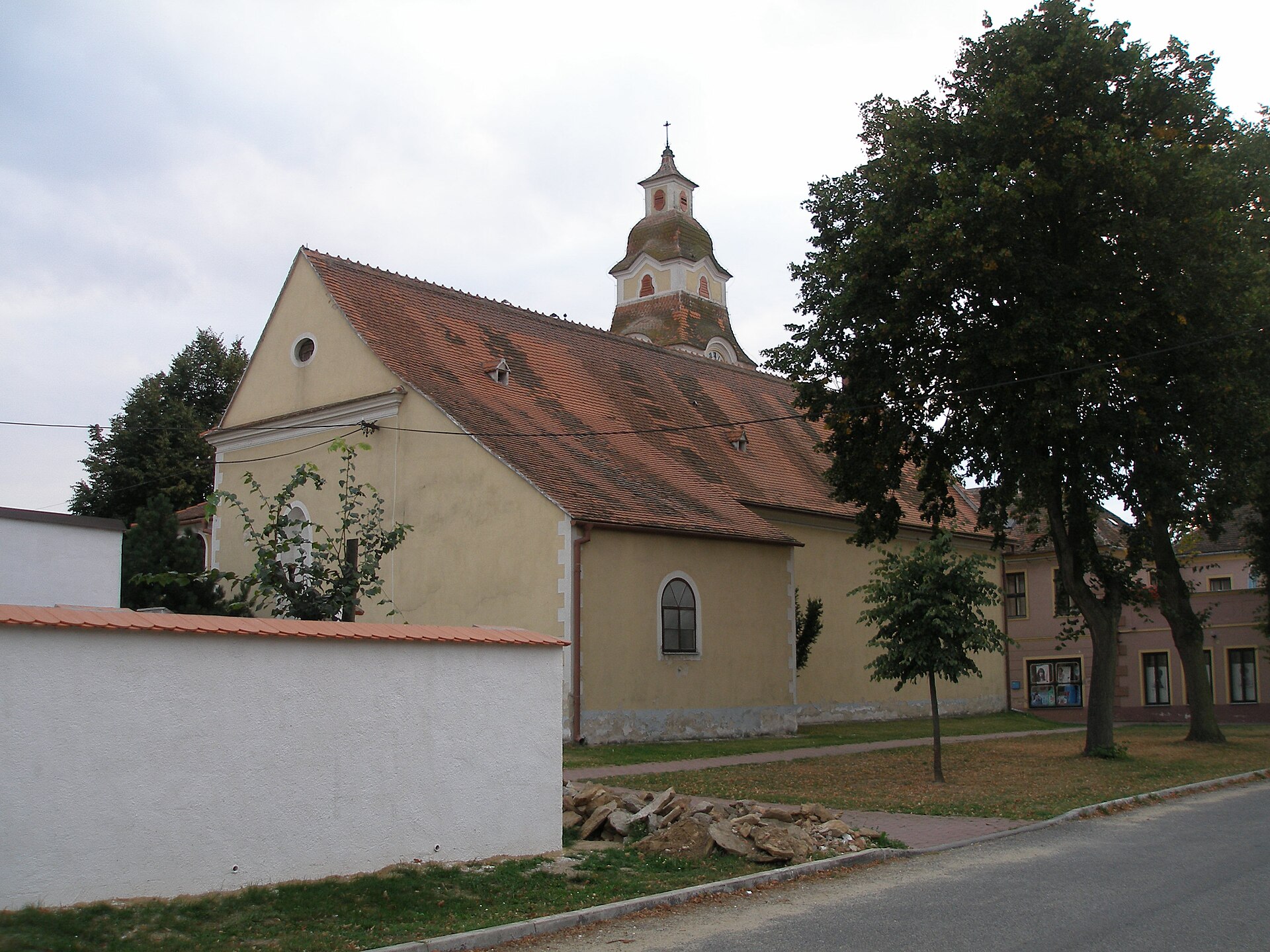
The Chapel of Our Lady of Sorrows stands in the middle of the almost circular village square in Čížov, a small settlement in the Znojmo district of South Moravia, close to the town of Vranov nad Dyjí and the Podyjí National Park. For more than two and a half centuries this modest chapel has marked the heart of the village.
Who built the chapel, and when?
The chapel was completed in 1756 at the initiative of Michael Anton of Althann (1716–1774), the second-to-last lord of Vranov nad Dyjí Castle, which had administered the village for centuries. The design is generally attributed to Matyáš Kirchmayer, a builder active in Vranov, although sources describe this attribution as likely rather than firmly documented. The village itself, known in German as Zaisa, is first recorded in 1323, so the chapel arrived after Čížov already had several centuries of history behind it.
What does the building look like?
It is an oriented, longitudinal structure raised on a polygonal plan, with a shallow apse attached at the chancel end. Above the west facade and main entrance rises a slender tower on a rectangular plan, open on every side, its semicircular-arched windows topped by a tented roof and a cross. The chapel started out simpler than it looks today: the tower was only added in 1787, and it still holds the two old bells installed at that time.
How has the interior changed over time?
In 1862 a sacristy was attached and the wooden choir loft was enlarged. Inside, frescoes depict God the Father, the Holy Spirit, and fourteen saints — a local reading of the cult of the Fourteen Holy Helpers, in which Saint Lawrence stands in for the more usual Saint Cyriacus. The chapel has never been wired for electricity, which helps it keep its plain, historical atmosphere.
Is the chapel still used?
It is not a parish church, but it still hosts occasional services, and its interior is sometimes used for small concerts. In 1990 the building underwent a thorough restoration carried out by a foundation dedicated to preserving church monuments in the Znojmo deanery, which is why it remains in good structural condition today.
Why is it worth a stop?
The chapel is one of the few landmarks on Čížov's round, historic village green, and it is a good example of the modest rural sacred architecture built across South Moravia in the mid-18th century. It also makes a convenient stop for visitors exploring the area around Vranov nad Dyjí and the Podyjí National Park — worth a short pause to look at the bell tower and the frescoes before continuing toward the nearby Austrian border.
Frequently asked questions
When was the chapel in Čížov built? In 1756, funded by Michael Anton of Althann, then lord of Vranov nad Dyjí Castle.
Who designed it? The design is attributed to Matyáš Kirchmayer, a builder based in Vranov nad Dyjí.
What is notable about the tower? It was added later, in 1787, and still contains the two historic bells installed at the time.
What can visitors see inside? Frescoes of God the Father, the Holy Spirit, and fourteen saints, including a local variant of the Fourteen Holy Helpers.
Is the chapel open for use? It hosts occasional services and concerts; it has no electricity, which preserves its historical character.
Nearby places

Earn badges for the places you visit
Download NextOnTrip, discover new places and check off your trails.