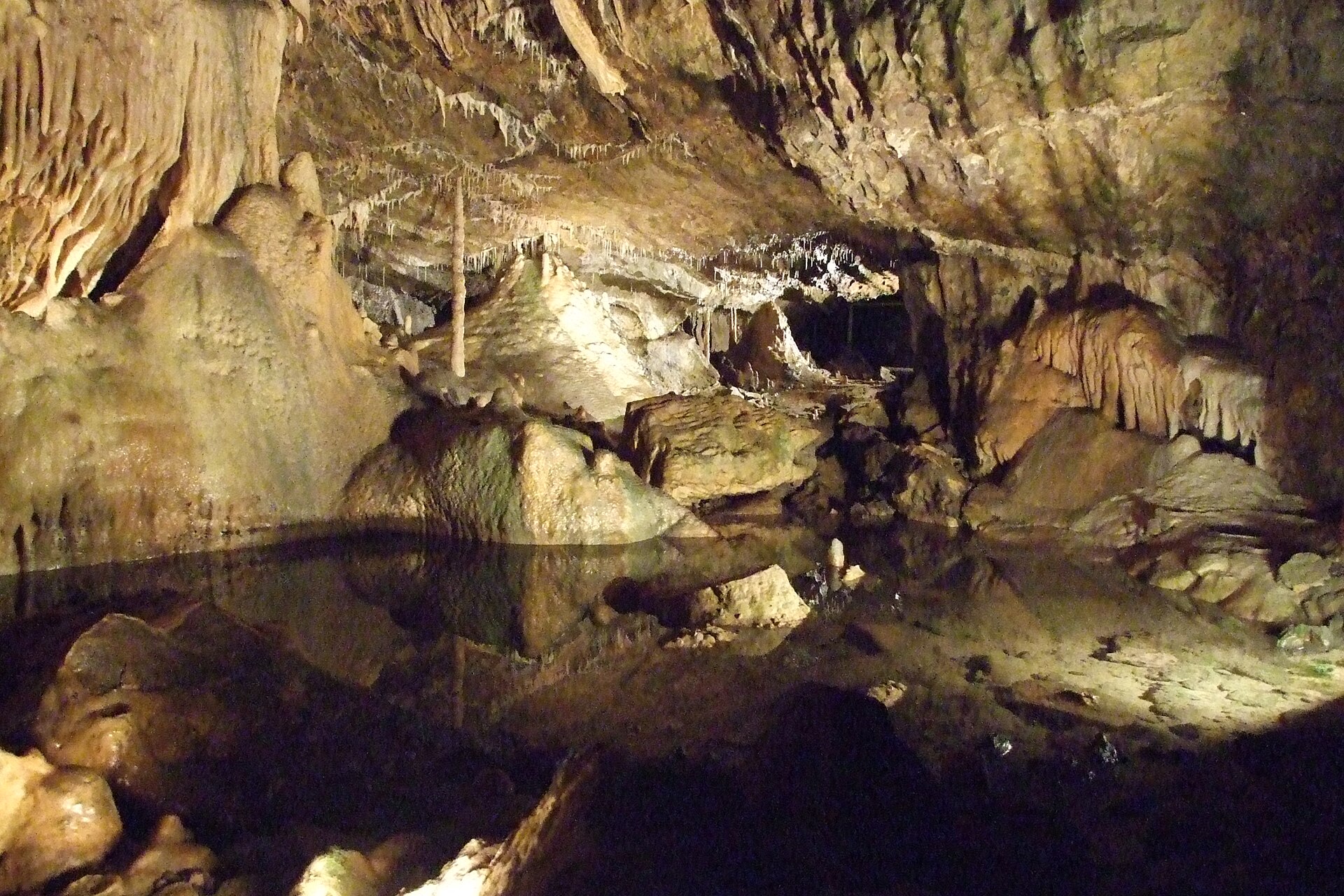
About this place
Caves of Hotton form a karst cave system tucked away near the town of Hotton in the Walloon region of Belgium. Carved out over long stretches of time by water working through limestone rock, the caves offer visitors a chance to step away from the surface world and into a quiet, dripping underground landscape shaped entirely by nature.
How large is the cave system?
The Caves of Hotton stretch for roughly 5 to 6 kilometers, making them one of the more extensive underground networks in this part of Belgium. The system descends to a depth of about 70 meters, so a visit involves a genuine sense of descent, moving from the surface down through successive chambers and passages.
What's at the bottom of the caves?
At the lowest point of the system runs an underground stream called Syphon. This flowing water is a reminder that the caves are not a static relic but an active geological feature, still shaped in part by the movement of water through the limestone. The sound of the stream accompanies visitors through the deepest sections of the network.
When were the caves discovered?
The caves were discovered in 1958. That timing places them among the mid-20th-century wave of speleological exploration that revealed many of the karst cave systems found across Wallonia and the wider Ardennes region, several of which were subsequently opened to public visits.
What kind of rock formations can you see inside?
Caves of Hotton are classified as speleothem caves, meaning their interior is lined with mineral formations built up as water carrying dissolved limestone drips from ceilings and walls over very long periods. These formations are the centerpiece of most karst cave visits and are the primary reason such caves attract geology enthusiasts and curious travelers alike.
Where exactly are the caves located?
The caves sit in Wallonia, close to the town of Hotton in Belgium's Luxembourg province, at approximately 50.259 latitude and 5.456 longitude. The surrounding area belongs to the hilly, forested Ardennes landscape, a region well known for its karst terrain and its concentration of caves open to the public.
Who should visit the Caves of Hotton?
Given the scale of the system — several kilometers of passages reaching down some 70 meters — the Caves of Hotton appeal to visitors with an interest in geology and speleology, as well as travelers looking for something different from the region's more typical hiking trails and historic architecture. It's a destination that rewards patience, both in the slow natural process that created it and in the quiet, careful walk through it.
Frequently asked questions
How old are the Caves of Hotton? The rock formations themselves developed over a very long geological timescale through the action of water on limestone, but the caves as a visitable site were only discovered in 1958.
Is there water inside the caves? Yes, an underground stream called Syphon flows at the bottom of the system, running through the deepest passages visitors encounter.
How deep do the caves go? The system reaches a depth of around 70 meters, making it one of the deeper cave networks in the Wallonia region.
Where are the caves in relation to Hotton? They are located right next to the town of Hotton, in Belgium's Luxembourg province, within the scenic Ardennes region.
Nearby places

Earn badges for the places you visit
Download NextOnTrip, discover new places and check off your trails.