About this place
Zboží Castle near Habry (Czech Republic)
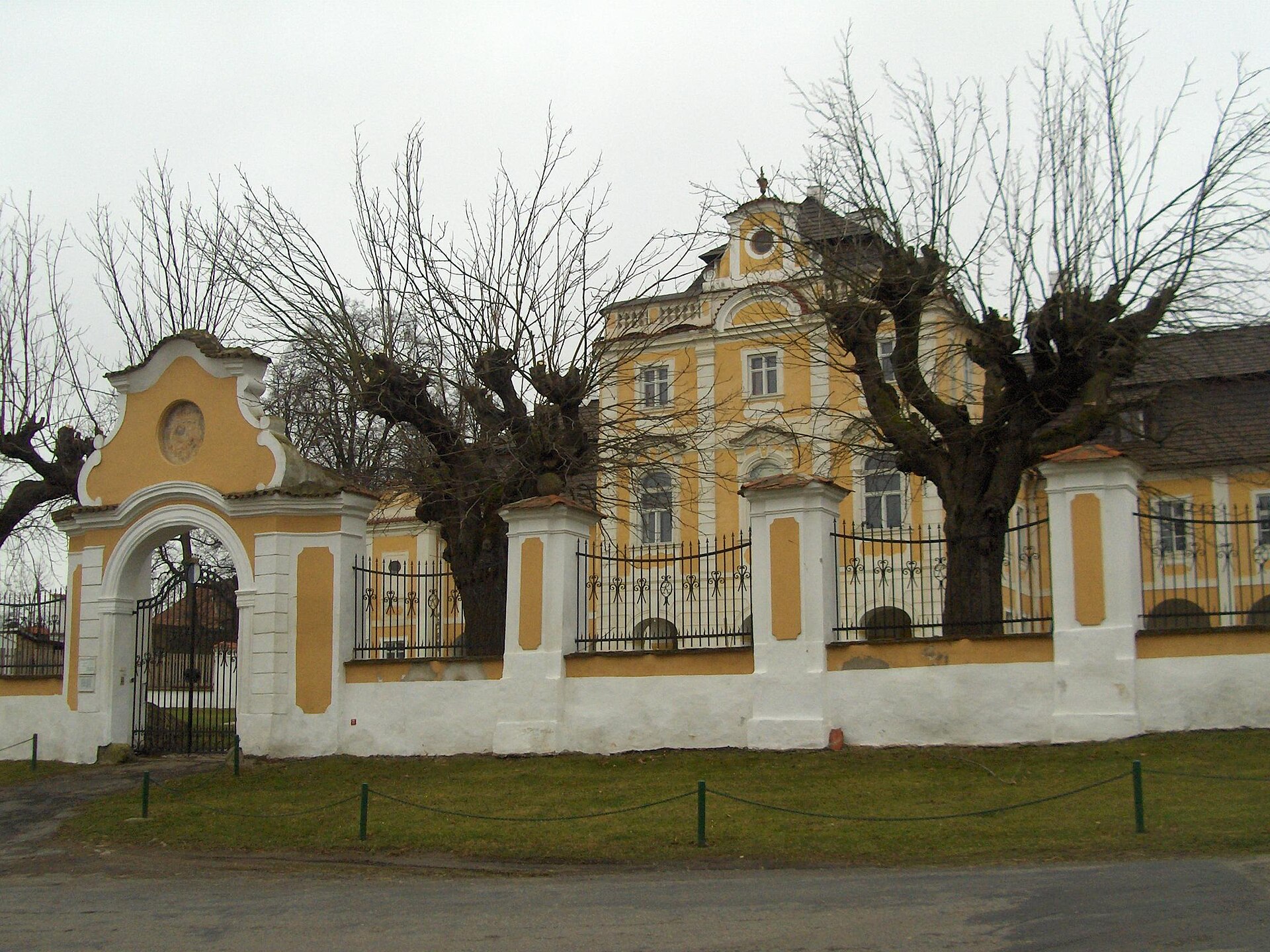
Zboží Castle is a small Baroque manor house standing on the village green of Zboží, today part of the town of Habry in the Havlíčkův Brod district, Vysočina Region. Surrounded by an extensive park, the building has served a social rather than touristic purpose for decades — it now houses a residential care home for people with disabilities.
Where exactly is Zboží, and how old is the settlement?
Zboží sits roughly 4-5 km south of central Habry, at an elevation of about 510 metres above sea level, close to coordinates 49.72°N, 15.46°E in the north-eastern part of the Vysočina Region, not far from the Kutná Hora district border. The village's first written mention dates to 1307, when Raimund of Lichtenburg exchanged it with the Vilémov monastery for other estates near Havlíčkův Brod.
Who built the castle, and how did it evolve?
The castle's present Baroque form dates from 1700-1702, when its owner Jan Vlasák Klusák of Kostelec had a single-storey, rectangular building with a mansard roof erected on the site. A chapel attached to the castle is first recorded in 1723. In 1780 the building was damaged by fire and subsequently repaired by its then owner. Earlier, before 1419, the estate had passed through the hands of Beneš of Tupadly and later the Trčka of Lípa family, who were also linked to the nearby Lipnice and Světlá estates. In 1752 Lidmila Palmová sold the property to Jan Adolf of Pötting.
What happened to the castle during the 20th century?
The building's twentieth-century history is eventful. In the early 1900s, owner Richard Moravetz turned it into a military hospital during the First World War. In 1925 a branch of the Red Cross bought the property and ran it as a youth sanatorium. During the Second World War, German military command used the building, and afterwards, in 1949, it housed the offices of an agricultural cooperative. In 1956 the castle became a retirement home, and since 1963 it has operated as a care facility for men with intellectual disabilities — a role it still holds today under the name "Domov ve Zboží."
Is the castle protected, and can visitors go inside?
The building has been listed as a Czech cultural monument since 1963, under registry number 44742/6-362. Because it functions as a social care institution, the castle is not open for tours — there are no exhibitions or guided visits, and access is reserved for residents and staff. Visitors can only view the single-storey structure with its mansard roof, and the surrounding park, from outside; the layout facing the village green still reflects its 18th-century design.
How do you get to Zboží, and is there anything nearby worth knowing?
Zboží lies within the municipality of Habry, reachable via local roads connecting Havlíčkův Brod with Světlá nad Sázavou and Čáslav. Habry itself has its own, larger Baroque castle, built in 1717-1720, which is open to the public as a museum — it's worth distinguishing this from the Zboží castle described here, despite the two buildings' proximity and similar architectural style.
Frequently asked questions
Can Zboží Castle be visited? No — for decades it has housed a social care home for people with disabilities, and it is not open to tourists.
When was the castle built? The Baroque building dates from 1700-1702, commissioned by Jan Vlasák Klusák of Kostelec.
Is the castle a protected monument? Yes, it has been listed as a Czech cultural monument since 1963.
How does Zboží Castle differ from Habry Castle? They are two separate buildings in the same municipality — Habry Castle (1717-1720) is a museum open to visitors, while Zboží Castle serves a social care function and is closed to the public.
What was the castle used for in the 20th century? It served in turn as a military hospital, a Red Cross youth sanatorium, German military command quarters during the war, agricultural cooperative offices, and finally a care home, a role it still fulfils today.
Nearby places

Earn badges for the places you visit
Download NextOnTrip, discover new places and check off your trails.