About this place
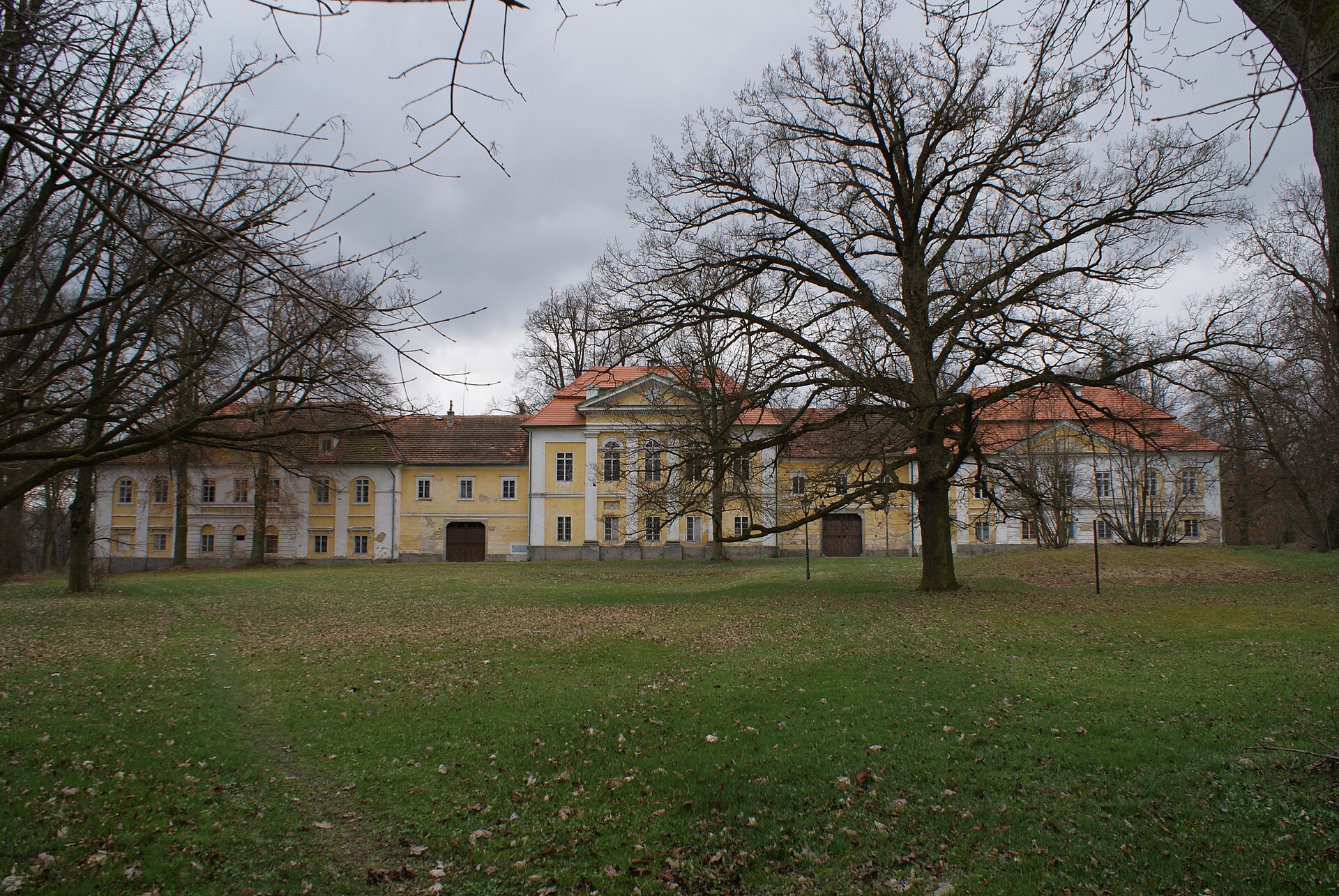
Rožmitál pod Třemšínem Castle sits right at the heart of the small town that shares its name, in the Příbram district of the Czech Republic. Behind its Renaissance facade lies a much older story, one that runs through medieval Bohemian nobility, the Prague archbishopric, and the upheavals of 20th-century Czechoslovakia.
What stood here before the castle?
The site's history begins in the early 13th century, when Oldřich of the Buzic family built a mud-and-timber stronghold on the spot. Oldřich was the first member of his line to adopt the name "of Rožmitál," which eventually gave the whole town its name. His descendants, the lords of Rožmitál, held the fortress for generations. Around 1347, they handed over half of the estate, together with a substantial portion of its lands, to the Prague archbishopric — an early link between this place and the church hierarchy that would shape much of its later history.
Which family shaped the castle we see today?
A central figure in the estate's history was Zdeněk Lev of Rožmitál, under whose ownership the main building of today's castle was constructed. It is worth noting that Johana of Rožmitál, who later became the wife of King George of Poděbrady, was born here around 1430 — a sign of how prominent the family was at the time. After Zdeněk Lev died in 1535, his sons inherited a heavily indebted estate and sold it to a new owner.
The real transformation came in 1555, when Florián Gryspek of Gryspach, a senior royal official, purchased the Rožmitál estate for 11,000 groschen. Between 1559 and 1564 he had the old fortress rebuilt into a Renaissance residence. The original oval defensive walls gave rise to the "Great Palace," which still forms the core of the castle complex today.
What happened after the Battle of White Mountain?
The Gryspek family held Rožmitál until 1621–1622. Following the Bohemian defeat at the Battle of White Mountain, the estate was confiscated and passed once again to the Prague archbishopric. It stayed in church hands for nearly three centuries, right up until 1948, when it was nationalized amid the postwar political changes in Czechoslovakia. Throughout that long stretch, Prague's archbishops regularly used the castle as a summer retreat away from the capital.
What can visitors see there today?
Since 1958 the building has been protected as a cultural monument. After years in which it was not always put to good use, a group of volunteers has looked after the castle since 2018, working alongside organizations dedicated to preserving Czech heritage. As a result, the castle has come back to life, hosting cultural events and welcoming visitors who can explore interiors shaped by several distinct periods — from the medieval foundations, through the Gryspek family's Renaissance rebuild, to the centuries under the Prague archbishopric before 1948.
The castle stands right in the town of Rožmitál pod Třemšínem, at the foot of the Brdy hills, making it a convenient stop for travelers exploring the wider Podbrdsko region.
Frequently asked questions
Who built Rožmitál pod Třemšínem Castle? The first structure, an earth-and-timber stronghold, was built in the early 13th century by Oldřich of the Buzic family. The Renaissance appearance the castle has today comes from a rebuild commissioned by Florián Gryspek between 1559 and 1564.
Is the castle connected to the Prague archbishopric? Yes. Half of the estate was already transferred to the archbishopric around 1347, and after the Gryspek family's property was confiscated in 1621–1622, the entire castle belonged to the Prague archbishops for nearly three centuries, until 1948, serving as one of their summer residences.
Can the castle be visited today? Since 2018 a group of volunteers has been taking care of the castle, and it is open to visitors, hosting cultural events throughout the year.
Where exactly is the castle located? The castle stands in the center of the town of Rožmitál pod Třemšínem, in the Příbram district, in the Podbrdsko region of the Czech Republic.
Nearby places

Earn badges for the places you visit
Download NextOnTrip, discover new places and check off your trails.