About this place
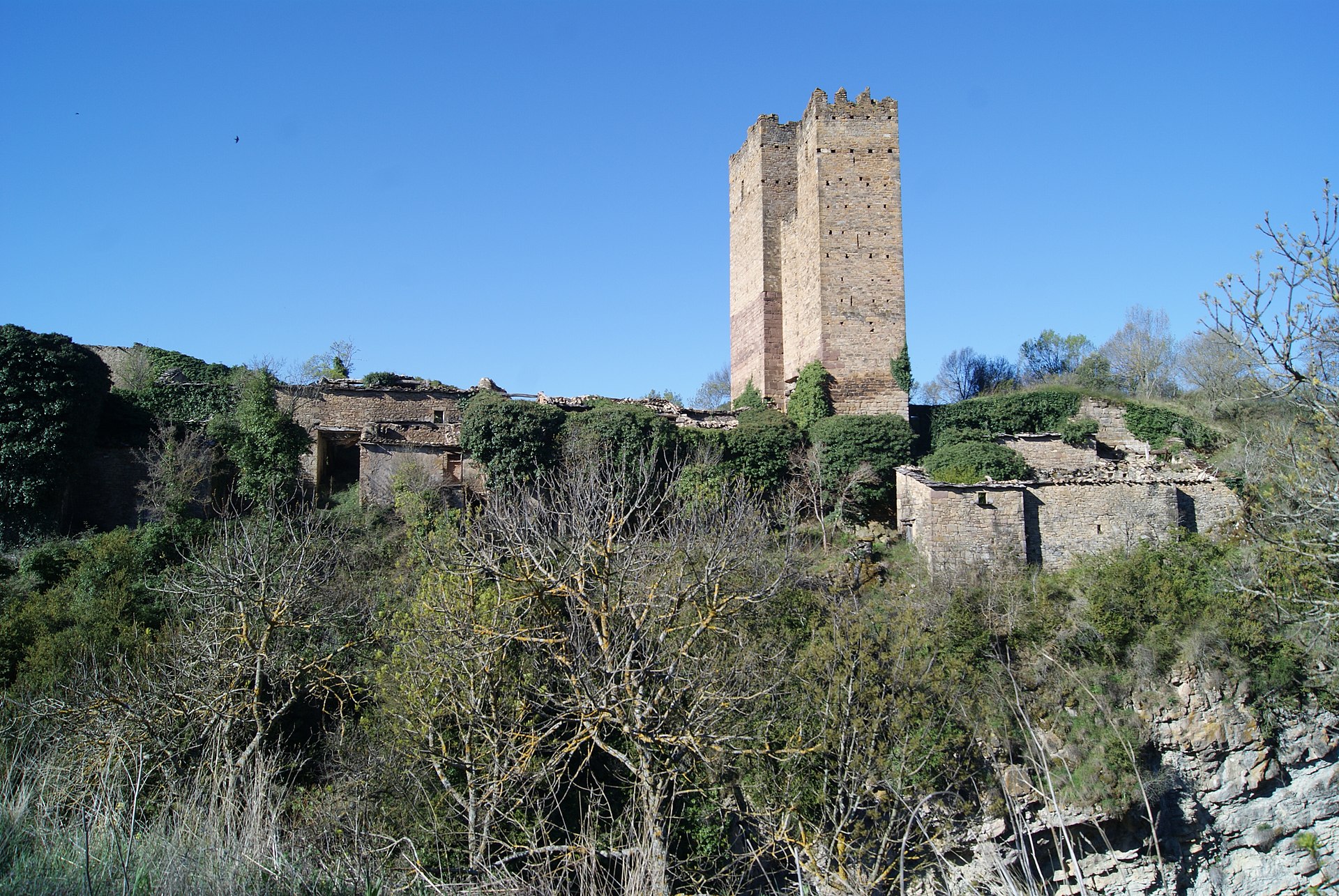
Castle of Ruesta stands above the once-abandoned village of Ruesta in the province of Zaragoza, in the Aragonese Pyrenees, right next to the Yesa reservoir. The fortress was most likely raised during the period of Muslim rule and later passed into the hands of the Christian Kingdom of Aragón as the Reconquista advanced. Over time a settlement grew up around its defensive walls, and the village's main street still runs in the shadow of the castle's towers today.
What will you see?
What survives of the castle today are mainly its distinctive towers and sections of defensive wall, parts of which have crumbled after centuries of exposure to the elements. The structure occupies the upper, western side of the village and looks down over it, offering views across Ruesta's rooftops toward the surrounding hills and the waters of the Yesa reservoir. Owing to its historical value, the castle is listed among Aragón's Bienes de Interés Cultural (Assets of Cultural Interest), a designation published in the Boletín Oficial de Aragón on 22 May 2006.
The village of Ruesta itself is as compelling as its castle. It was largely deserted in the second half of the 20th century as residents migrated to cities and the surrounding land was reshaped by the construction of the Yesa reservoir, which flooded part of the nearby terrain. Thanks to the efforts of a local association, the settlement has since been gradually restored, and today it functions as a stop on the French Way of the Camino de Santiago through Aragón, with a pilgrims' albergue operating out of the renovated buildings. Ruesta's restoration project was recognized with a Hispania Nostra award in May 2021.
How do you get there?
Ruesta lies within the municipality of Urriés, in the northern part of Zaragoza province, along the stretch of the Camino de Santiago that crosses Aragón toward Navarre. The village sits right beside the Yesa reservoir, making it a natural landmark for anyone travelling through this part of the Pyrenees. Access is via local roads connecting the villages of the Aragón river valley, and many visitors arrive on foot as part of a Camino de Santiago pilgrimage stage.
When should you visit?
The Aragonese Pyrenees have a continental mountain climate — summers are warm and dry, while winters can be cold and snowy, especially higher up the valley. Spring and autumn are the best seasons for exploring the castle ruins and the village, offering mild temperatures and the most scenic views of the surrounding hills and the Yesa reservoir. Summer visits should account for high daytime heat, while winter can make some of the surrounding trails harder to access.
Frequently Asked Questions
Can you visit the Castle of Ruesta? The ruins can be explored as part of a visit to the restored village, though mainly the towers and sections of wall remain — it's a scenic historical remnant rather than a fully restored monument.
Why was Ruesta abandoned? The village emptied out during the 20th century due to migration to cities and changes tied to the construction of the nearby Yesa reservoir; it has since been repopulated through a local initiative centered on serving pilgrims.
Is Ruesta on the Camino de Santiago? Yes, the village sits on the Aragonese stretch of the Camino Francés and offers a pilgrims' albergue in the restored village buildings.
What else is worth seeing nearby? The proximity of the Yesa reservoir and the mountainous landscape of the Aragón valley make the area appealing for hikers and anyone seeking views of the Pyrenees.
Nearby places

Earn badges for the places you visit
Download NextOnTrip, discover new places and check off your trails.