About this place
Castle of Argenteau stands above the valley of the Meuse in the village of Argenteau, part of the municipality of Visé in the French-speaking Belgian region of Wallonia. Although the building visitors see today dates only from the late 17th century, the site itself has a much longer story, stretching back to the earliest fortifications raised on the rocky spur overlooking the river.
How far back does the site's history go?
The first stronghold on this spot appeared as early as the 10th century, when a fortified post above the Meuse was built to help block raids into the region. The settlement of Argenteau itself is first recorded in written sources in 1070, described as a nominally independent fief of the Holy Roman Empire, though in practice it fell under the influence of the Duchy of Brabant. From the 11th century onward, the Prince-Bishop of Liège kept a garrison stationed at the castle, underlining how strategically important this river crossing was considered at the time.
Why was the castle destroyed and rebuilt so many times?
Argenteau's history is, in many ways, a history of repeated destruction and reconstruction. In 1343, the local lord Thierry d'Argenteau rebuilt the fortress, only for it to be torn down by forces from Liège just a few years later, in 1347. It was raised again at the end of the same century under Renaud IV and stood in that form until it withstood a siege by Spanish troops in 1634. An even heavier blow came in 1674, when, following the siege of Maastricht, French troops razed the medieval castle to the ground, along with the nearby fortress of Navagne.
Where does the current castle come from?
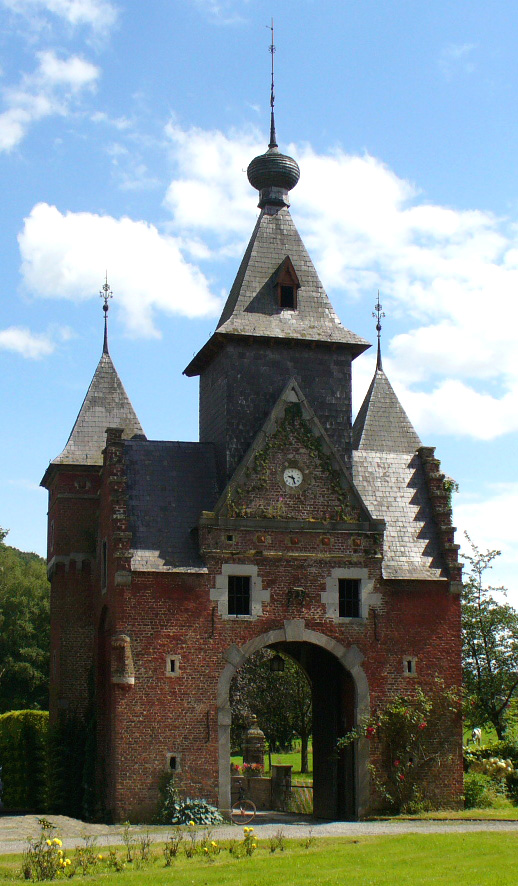
What stands in Argenteau today is not the medieval fortress but a residence built in 1683, which became the seat of the counts of Mercy-Argenteau. Among the family's most notable members was François de Mercy-Argenteau, who served as chamberlain at the court of Napoleon — a detail that ties the castle's story directly into the wider political history of Europe around the turn of the 19th century. The estate still preserves fortified farm buildings around the main residence, with the oldest sections dating from the late 17th and 18th centuries.
What makes the site notable today?
The castle sits directly above the Meuse, a position that for centuries determined its military value: controlling this stretch of river meant controlling a key regional communication route. For anyone interested in the history of Wallonia, the site offers a layered picture — medieval fortifications, the wars of the 17th century, and the baroque aristocratic residence that eventually rose from their ruins.
Frequently asked questions
Is the current castle medieval? No — the building seen today dates from 1683 and replaced an earlier fortress destroyed by French troops in 1674.
Who owned the castle? From the late 17th century, the residence belonged to the counts of Mercy-Argenteau, one of whom, François de Mercy-Argenteau, served as chamberlain to Napoleon.
Why was the castle destroyed so many times? Its strategic position above the Meuse made it a target in successive conflicts, from disputes with Liège in the 14th century to the Spanish siege of 1634 and its destruction by French forces in 1674.
Where exactly is the castle located? In the village of Argenteau, part of the municipality of Visé, in the province of Liège, in the Wallonia region of Belgium.
Nearby places

Earn badges for the places you visit
Download NextOnTrip, discover new places and check off your trails.