About this place
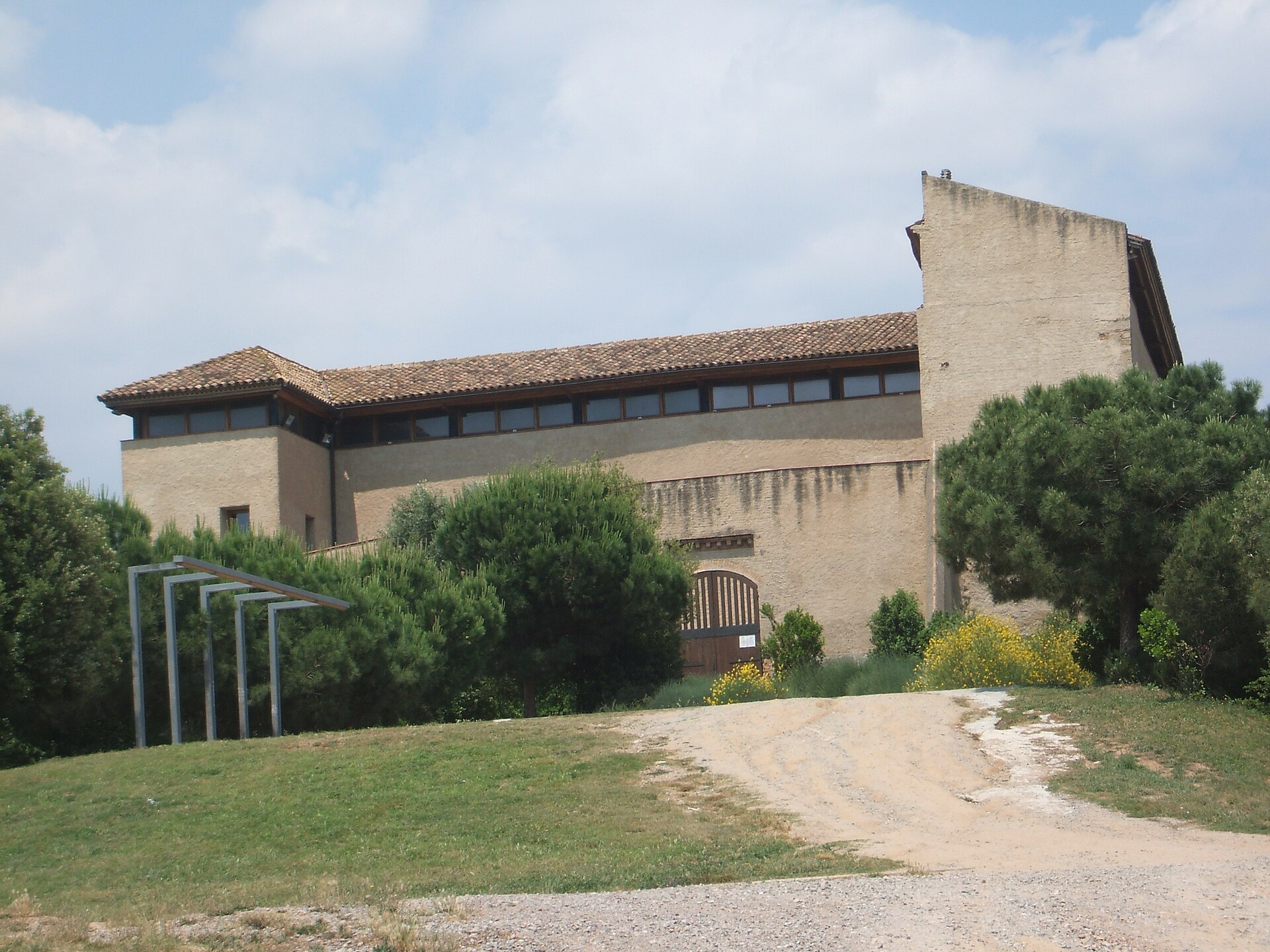
Castell de Rubí is a medieval castle standing on a low hill above a stream in Rubí, a town in the Vallès Occidental region roughly 20 km from Barcelona. Today it houses the town's municipal history museum.
Where does the site's history begin?
The land where the castle now stands appears in written records as early as 1002, when Pope Sylvester II confirmed the possessions of the Sant Cugat del Vallès monastery, which included the surrounding lands. An earlier stronghold, predating the present building, stood elsewhere near the hermitage of Sant Genís, forming part of a defensive line protecting the county of Barcelona from incursions to the south. By the 13th century, that first fortress had fallen into decline.
Who built the castle that stands today?
On 9 August 1233, King James I the Conqueror granted the knight Berenguer de Rubí permission to build a fortified house — a domus or casa forta — on a hill roughly 143 metres high, right beside the stream bed. That structure, reshaped many times since, forms the core of the castle visible today. Its purpose was both defensive, protecting its owner and the surrounding population, and residential, serving as the family seat.
How did the castle change over the centuries?
In 1361, the estate passed to the Torrelles family, who converted the fortified house into their family castle — after this point, the older stronghold near Sant Genís was abandoned for good. By the 15th century the building had lost its military role and was remodeled into a lordly residence, gaining Gothic windows and stone portals that survive to this day. The structure grew in stages: an L-shaped wing enclosed by a defensive wall came first, then the northern section was widened with a gallery, and a tower was added at the western corner, giving the whole complex its final U-shaped layout.
What happened to the castle in modern times?
In the 1980s, the building was acquired by Rubí's town council, which carried out its restoration. In 1996, it opened as an urban ecomuseum, and since 2000 it has operated as the Museu Municipal Castell (MMUC) — one of the larger regional museums in Catalonia, with a permanent exhibition tracing the history of Rubí from the Middle Ages to the present.
What can visitors see on site?
Visitors can explore the surviving wings of the old residence — west (the noble quarters), north, and east — arranged around a courtyard on the south side. Notable features include Gothic windows, stone portals, and the corner tower that marks the castle's final building phase. The interiors now serve as exhibition halls for the town museum.
Frequently asked questions
When was Castell de Rubí built? The building seen today dates from after King James I's authorization on 9 August 1233, though the site and an earlier stronghold nearby are documented as far back as 1002.
Who commissioned the castle? The knight Berenguer de Rubí received permission to build it; in later centuries it passed to the Torrelles family, who took possession in 1361.
Did the castle have a defensive purpose? Yes — it began as a fortified house (casa forta) protecting the area, but from the 15th century onward it gradually shifted toward a residential, seigniorial role.
What is there to see inside the castle today? The building houses the Museu Municipal Castell (MMUC), with a permanent exhibition on the history of Rubí, alongside preserved Gothic architectural features such as windows, portals, and a tower.
Nearby places

Earn badges for the places you visit
Download NextOnTrip, discover new places and check off your trails.