About this place
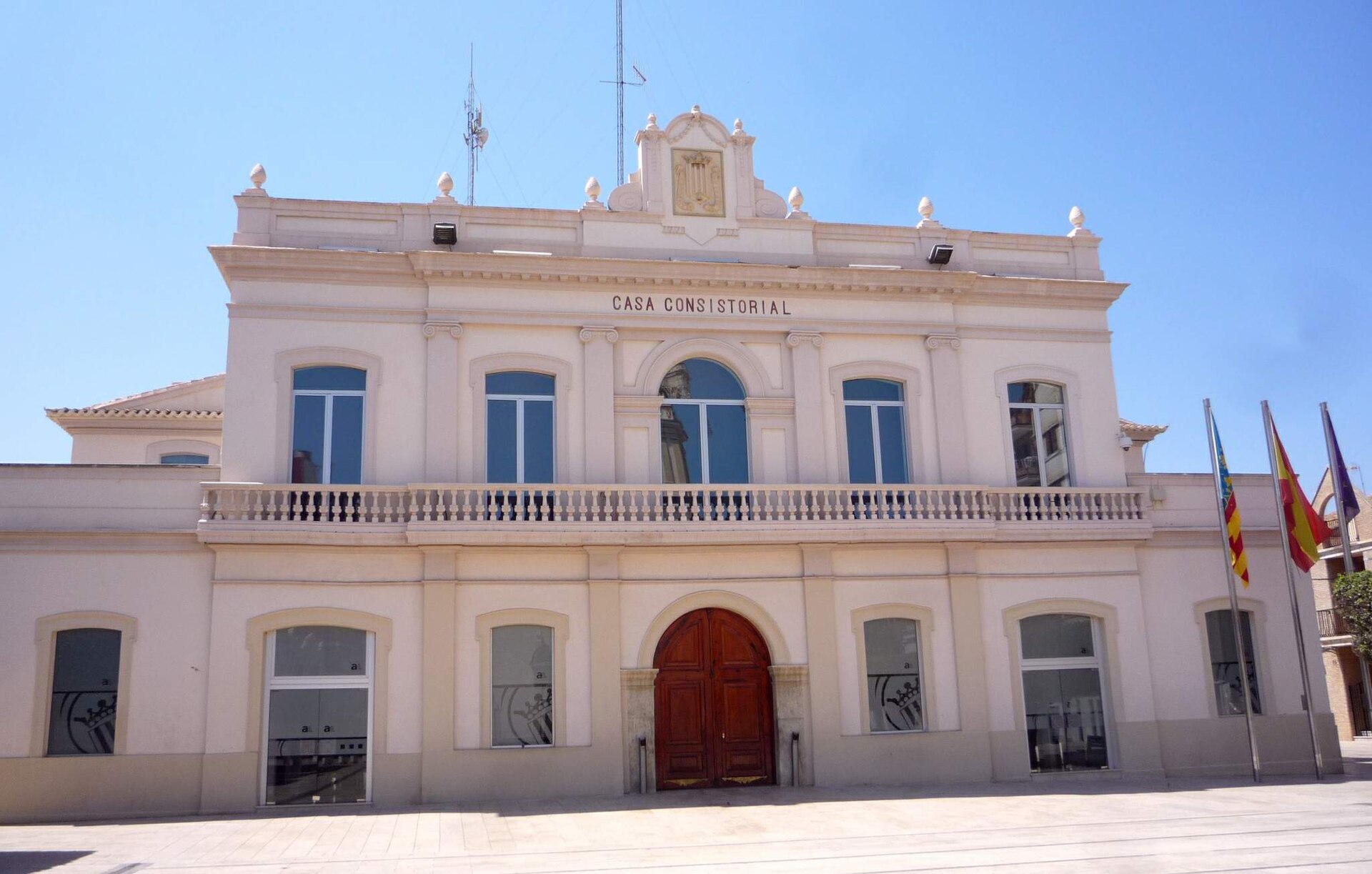
Casa Vivanco is a historic townhouse in the center of Catarroja, a town in the province of Valencia, standing on the old Camino Real — the historic thoroughfare around which the town's original core grew. The building dates back to the mid-18th century and has served for decades as the seat of the local municipal government.
How to get there?
Catarroja lies just south of the city of Valencia and is well connected by metro and local roads. Casa Vivanco sits right in the town center, on the former Camino Real, so once you arrive it's an easy walk to reach — simply head toward the historic core, where the oldest buildings are clustered.
What will you see?
The building follows a neoclassical style with decorative touches drawn from the late Baroque, a mix visible both in the composition of the facade and in its architectural details. Inside, the layout is rectangular, organized around a central courtyard that connects the various rooms. This arrangement was typical of wealthy merchant and bourgeois houses of the period, with the courtyard serving both as a passageway and as a representative space.
Originally, the building wasn't a residence in the modern sense — it was built for trading agricultural goods, chiefly olive oil and wine, along with silk, which was a major branch of the Valencian regional economy at the time. The current name dates back to the 19th century and comes from one of its owners, the widow of the Vivancos Ortiz family, during the period when today's square took shape along the Camino Real.
On October 19, 1981, Casa Vivanco was declared a historic monument of local significance by Spain's Ministry of Culture. The following year, on April 30, 1982, the town council of Catarroja acquired the building, and renovation works began that same August. Once the restoration was complete, the building was formally inaugurated on September 9, 1988, becoming home to the town hall, an exhibition space, and a public library — a role it still fulfills today.
When to visit?
Since Casa Vivanco is a working public building — housing a library and an exhibition hall — it's best to plan a visit on weekdays, when it's open to residents and visitors alike. It's worth checking the town's local events calendar, as the exhibition space regularly hosts temporary shows tied to regional history and culture. The Camino Real and the surrounding streetscape are also best appreciated in daylight, when the facade's details stand out clearly.
Frequently asked questions
What was the Casa Vivanco building originally used for? It served a commercial purpose, used for trading agricultural products — mainly olive oil, wine, and silk — rather than functioning as a typical residence.
Where does the name Casa Vivanco come from? The name dates back to the 19th century and refers to the widow of the Vivancos Ortiz family, who owned the property around the time today's square formed along the Camino Real.
What is Casa Vivanco used for today? Since 1988 it has housed Catarroja's town hall, an exhibition hall, and a public library.
Is Casa Vivanco a protected historic building? Yes, it has held the status of a locally significant historic monument since October 19, 1981, granted by Spain's Ministry of Culture.
Nearby places

Earn badges for the places you visit
Download NextOnTrip, discover new places and check off your trails.