About this place
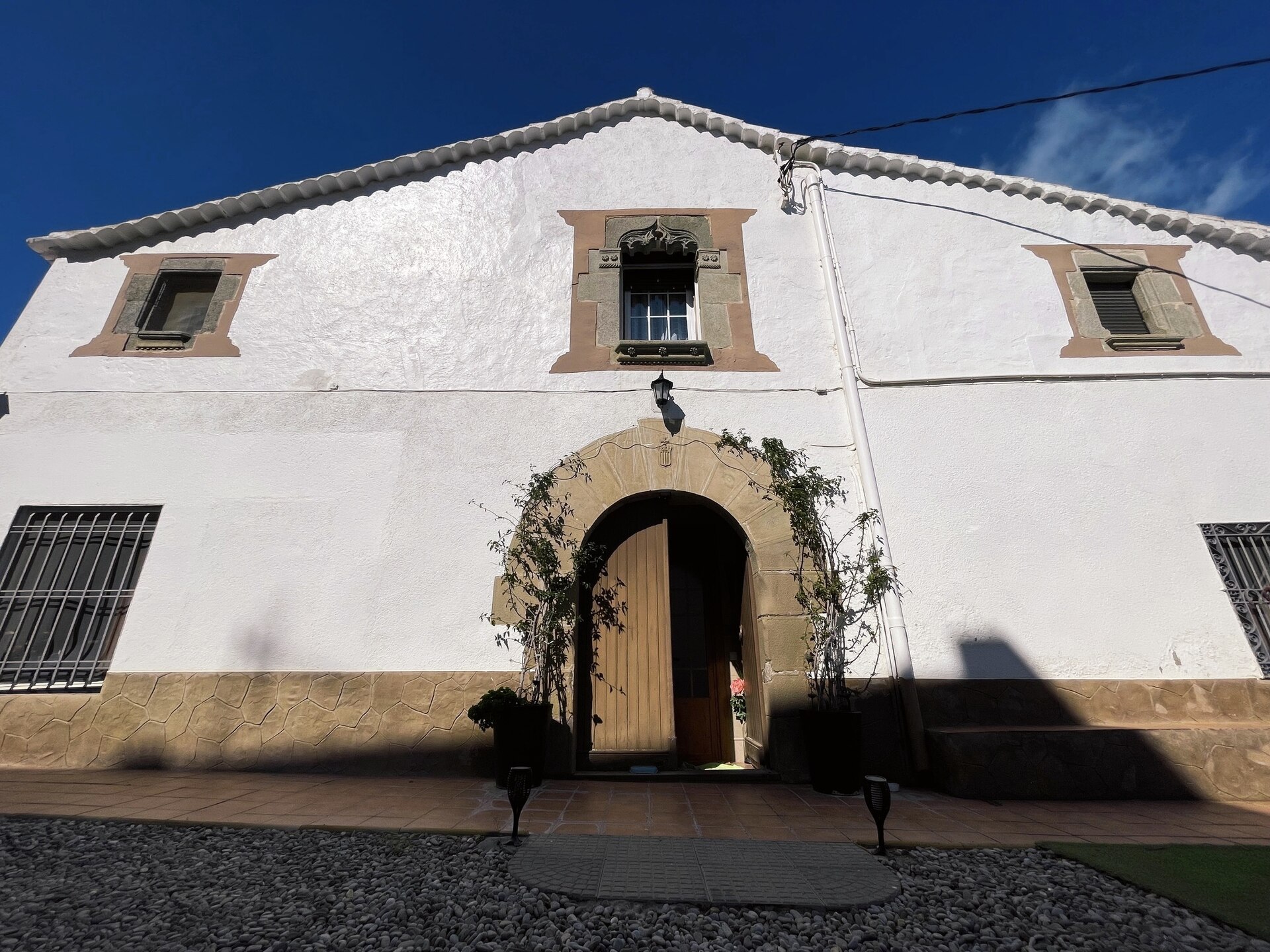
Can Cisa is a medieval farmhouse (masia) in Premià de Dalt, a small town in the Maresme district just north of Barcelona. Standing on Camí de la Font, the building is listed as a local cultural heritage asset, making it one of the more notable pieces of rural architecture in this part of Catalonia.
What kind of building is a masia, and what makes Can Cisa stand out?
A masia is the traditional Catalan farmhouse, combining living quarters and working spaces under one roof. Can Cisa follows the basilical layout: a ground floor, two upper storeys and an attic, topped by a gabled roof set perpendicular to the façade. The oldest parts of the structure date back to the 13th–15th centuries, though the building visible today is the result of additions made over several centuries, as new wings were attached to the original core. An old defense tower is also built into the complex, a reminder of the days when rural estates needed to protect themselves from raids.
How do you spot the oldest parts of the façade?
The oldest surviving section of the façade, probably dating from the 16th century, still has an arched doorway and two Gothic ogee windows. One of these windows was later widened, which is visible in the slightly irregular stonework around it. These details help visitors tell the original, earliest stretch of wall apart from the later additions surrounding it.
What is Can Cisa's connection to the sanctuary and the yearly festival?
Just above the farmhouse stands the Sanctuary of La Cisa, dedicated to the Mare de Déu de la Cisa (Our Lady of La Cisa). According to local legend, a shepherdess found an image of the Virgin at the spot where the Font de la Cisa spring now flows. The Gothic wooden carving that sits on the altar today, about 30 cm tall, dates from the first half of the 14th century. Every year on May 1st, the area comes alive for the Aplec de la Cisa, a centuries-old gathering built around a mass in honour of the Virgin, sardana and havanera dancing, a ceremonial dance performed by the town's giants to the sound of Goigs hymns, blessings, and offerings of light and flowers. The day also includes a craft fair, activities for children, paella, and sabres — sword-shaped sweet pastries handed out as part of the tradition.
How is Can Cisa used today?
Beyond its historical value, the farmhouse still plays an active cultural role. Since 1997, its surroundings have served as the setting for Premià de Dalt's Living Nativity Scene (Pessebre Vivent), one of the most cherished Christmas events in the whole Maresme region. Local residents re-enact the nativity story among the old stone walls, blending the site's architectural heritage with a living theatrical tradition.
How do you get to Can Cisa?
The farmhouse sits in Premià de Dalt, on Camí de la Font, close to the town centre. Its coordinates are 41.509879, 2.351879, which makes it easy to plan a walking or driving route from nearby Maresme towns such as Premià de Mar or Vilassar de Dalt.
Frequently Asked Questions
How old is Can Cisa? The core of the building dates from the 13th to 15th centuries, while its oldest surviving façade section, with the arched portal and Gothic windows, is generally dated to the 16th century.
Is Can Cisa a protected building? Yes, it is registered as a local cultural heritage asset, which requires its historic structure to be preserved.
What is the Aplec de la Cisa? It is an annual religious and popular festival held on May 1st at the sanctuary next to Can Cisa, combining a mass, sardana and havanera dancing, and a family fair.
Can visitors go inside Can Cisa? The farmhouse itself is privately owned and used for working purposes, but its surroundings and the adjoining sanctuary are open to the public, especially during the Aplec de la Cisa and the Christmas Living Nativity Scene.
Nearby places

Earn badges for the places you visit
Download NextOnTrip, discover new places and check off your trails.