About this place
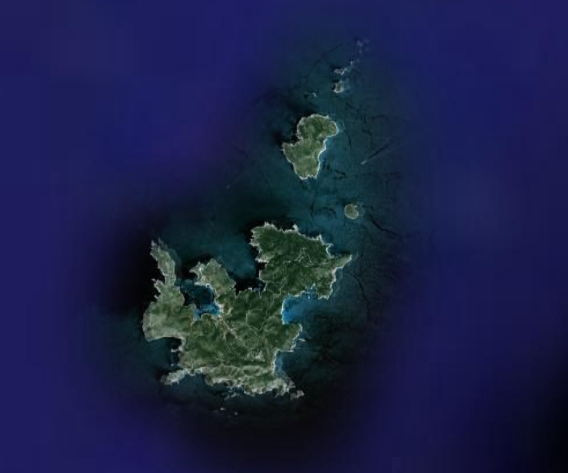
Cabrera is a small archipelago in the Mediterranean Sea, located roughly 18.5 km south of Mallorca, in Spain's Balearic Islands. Despite the name often being used as if it referred to a single island, it is actually a cluster of nineteen larger islands plus numerous small rocky islets, together covering only about sixteen square kilometres of land. The main island sits at coordinates 39.14°N, 2.95°E.
Why is Cabrera a national park?
The archipelago was granted protected status in 1991, becoming Spain's first maritime-terrestrial national park (Cabrera Archipelago Maritime-Terrestrial National Park). In 2019 the protected area was substantially expanded to 90,800 hectares, making it the largest marine national park in the western Mediterranean. Protection covers both the land area and the surrounding waters, which shelter exceptionally well-preserved Mediterranean marine ecosystems.
What is the history behind Cabrera?
The natural, sheltered harbour on Cabrera drew visitors for very different reasons over the centuries. In the thirteenth and fourteenth centuries it served Barbary pirates as a base for raids on the Mallorcan coast — a fortress was built on a hill above the bay to defend against them, and it went on to serve a defensive role for several more centuries.
The darkest chapter in the island's history dates to the Napoleonic Wars. In 1809, around 9,000 French prisoners of war were sent to Cabrera. Left without adequate supplies, shelter or care, they endured what has been described as five years of hell on the island. Only about 3,600 of them survived to return to France after a peace treaty was signed in 1814.
What can visitors see on Cabrera today?
Today the archipelago functions primarily as a nature sanctuary. Its isolation and protected status have preserved fragile Mediterranean island ecosystems that remain largely untouched by the mass tourism found elsewhere in the Balearics. Cabrera is part of the European Union's Natura 2000 network, underlining its importance for biodiversity conservation at a continental scale.
What wildlife lives on Cabrera?
The archipelago is an important refuge for birds, including species endemic to the Balearic Islands such as the Balearic warbler and the Balearic shearwater. Visitors and researchers can also observe Eleonora's falcons, ospreys, Audouin's gulls, cormorants and other shearwater species. This rich birdlife is one of the main reasons scientists and nature enthusiasts are drawn to Cabrera.
Frequently asked questions
Is Cabrera one island or an archipelago? It is an archipelago made up of nineteen larger islands and many smaller rocky islets, even though it is commonly referred to as "Cabrera island."
How far is Cabrera from Mallorca? The archipelago lies about 18.5 kilometres south of the Mallorcan coast.
When did Cabrera become a national park? It received national park status in 1991, and its protected area was significantly expanded in 2019.
What tragic history is linked to Cabrera? During the Napoleonic Wars, thousands of French prisoners of war were held here — of the roughly 9,000 sent in 1809, only about 3,600 survived to return to France.
Nearby places

Earn badges for the places you visit
Download NextOnTrip, discover new places and check off your trails.